How can an image be constructed from the traces we leave behind in the digital world? What is the relationship between a place, our direct experience of it, and the representations of it produced by the internet and artificial intelligence?
Digital Twin: AI & Creative Arts
DURATION > 1 WEEK
LANGUAGE > ENGLISH
WHEN > 12 – 16 JULY 2027
CAMPUS > ROME

From Urban Traces to Moving Images
The course explores the concept of the digital twin as a critical and creative practice: a narrative double constructed through images, information, memories and artistic choices. Individual and collective digital footprints become the starting point for research that combines OSINT methodologies — the collection and analysis of information from open sources — with audiovisual production using generative AI tools.
From Research to Audiovisual Experimentation
Through lectures, practical exercises and feedback sessions, participants will develop short audiovisual projects, from gathering source materials and generating images to editing and presenting their work on screen.
The programme includes a study visit to the MAM – Media Art Museum, focusing on the languages of digital art and the ways in which artworks are exhibited, as well as a research activity in the Testaccio neighbourhood, exploring the relationship between direct experience of a place and its digital representations. The course concludes with a presentation of the participants’ work at RUFA Space, the exhibition venue located at the RUFA Campus in Via degli Ausoni 7, through a collective audiovisual programme.
The course is aimed at students, emerging artists, photographers, filmmakers, designers and creatives interested in exploring artificial intelligence as a tool for artistic research and production. It is suitable for those wishing to develop an audiovisual project while combining technical experimentation with critical reflection on images, sources and the responsibilities involved in creative decision-making.
Course type: group – in person
Participants: Min. 8, Max. 20
Schedule: Monday to Friday, from 9 am to 5 pm
Duration: 12 – 16 July 2027
Cost: €850
Requirements/support: No prior experience with generative AI is required. Familiarity with node-based interfaces may be helpful for some practical exercises, but is not an entry requirement.
Language: Participants are required to have a good command of English.
Location: RUFA Campus; visit to the MAM – Media Art Museum; field research in the Testaccio neighbourhood
DAY 1 – IMAGES, DATA AND DIGITAL IDENTITY
– Introduction to the course, tools and final project.
– Digital twin and digital footprint: identity, memory and representation.
– Introduction to generative AI for images and video.
– Local environments and cloud services: operational differences, hardware resources and computational sustainability.
– Discussion of authorship, bias and the relationship between artistic intention and automated generation.
– Introduction to the working environments and verification of the technical setup.
– Guided exercises in image generation and transformation.
– Writing prompts, using visual references and evaluating results.
– Identification of initial research themes for individual or group projects.
DAY 2 – OSINT AND NARRATIVE DEVELOPMENT
– Introduction to OSINT methodologies for visual and textual research.
– Identifying, verifying and contextualising sources.
– Introduction to metadata, geolocation and archiving.
– Responsible use of information: privacy, consent, copyright and traceability.
– From data collection to the development of a narrative perspective.
– Definition of the project theme, also in relation to the subsequent research in Testaccio.
– Building an archive of images, texts and references.
– Selection of sources and concept development.
– Initial visual explorations using generative tools.
– Presentation of ideas and review with the lecturer.
DAY 3 – FROM GENERATION TO EXHIBITION SPACE
– Introduction to generative video production.
– Movement, duration, rhythm, visual continuity and the creation of short loops.
– Production of the first sequences using the selected materials.
– Preparation for the visit: an observation framework focusing on content, display devices, space and the viewer.
Study visit to the MAM – Media Art Museum.
– Observation and analysis of artworks and installations.
– The relationship between images, sound, technologies and exhibition space.
– Ways in which audiences experience and engage with artworks.
– Collection of notes and references relevant to the projects.
– Brief concluding discussion of the approaches observed.
The scheduled time includes travel and the museum visit.
DAY 4 – TESTACCIO: THE REAL NEIGHBOURHOOD AND ITS DIGITAL TWIN
Field research in the Testaccio neighbourhood.
– Introduction to the itinerary and research objectives.
– Guided exploration based on the project themes defined in previous days.
– Taking photographs, recording short videos and making notes.
– Comparing direct experience with online representations of the neighbourhood.
– Identifying details, absences and transformations to incorporate into the narrative.
The scheduled time includes travel and activities in the neighbourhood.
– Selection and organisation of the collected materials.
– Integration of original images into the sequences already in progress.
– Generative processing and audiovisual editing.
– Working on rhythm, transitions, visual consistency and the relationship with sound.
– Introduction to content management in Resolume Arena.
– Project review and definition of the final collective programme.
DAY 5 – FINALISATION AND PRESENTATION AT RUFA SPACE
– Completion of the edits and final review with the lecturer.
– Exporting videos according to the agreed specifications.
– Organisation of the collective programme, titles and project descriptions.
– Preparation of a short presentation of the creative process.
– Submission of files and technical checks for screen playback.
Participation in the final presentation of the works at RUFA Space, at the RUFA Campus in Via degli Ausoni.
– Final preparation of the space and playback tests.
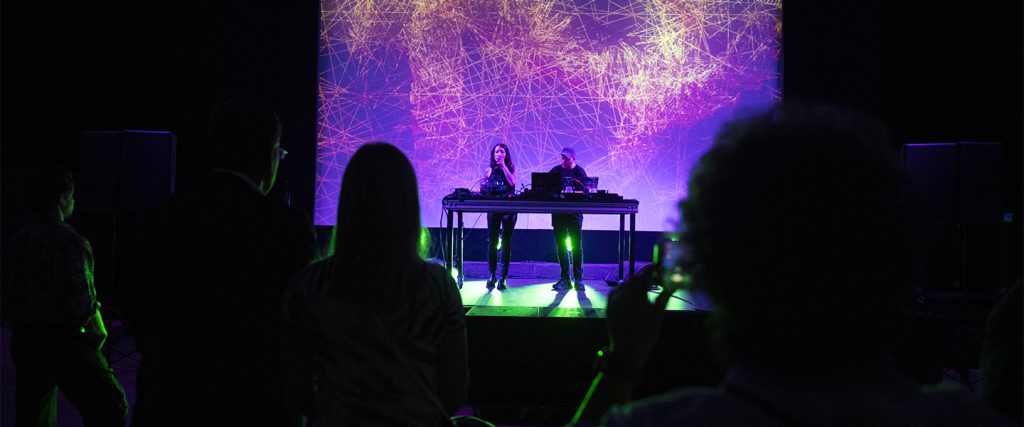
– Presentation of the works on screens as part of a collective audiovisual programme.
– Sharing research processes, materials used and artistic choices.
– Discussion with the audience about the projects and the role of AI in the creative process.
– Documentation of the presentation and conclusion of the workshop.
Manuel La Rosa (1969) trained as an instrumentalist in a family with a strong artistic and musical tradition. His encounter with the first personal computers marked the beginning of a journey that took him from the saxophone to digital experimentation, from the Commodore 64 to cloud technologies, exploring the expressive potential of new tools.
He was involved in the early development of network infrastructure in Italy, working with satellite connections, submarine cables and radio systems. His interest in the transformations brought about by the Internet led him to explore digital identity and the voluntary disclosure of personal data. Alongside his technical work, he has contributed to raising awareness through seminars and conferences focused on digital literacy and privacy protection.
Today, his research focuses on artificial intelligence and the pervasive presence of data in everyday life. He serves as artistic director of conferences that bring science and spirituality into dialogue, and as technical director for multimedia galleries, working on video mapping and interactive installations.
In his teaching, he favours learning through practice and discussion, combining artistic research with technological experimentation. Computers, cyberspace, AI and sensors become tools for exploring new visual territories through a transdisciplinary approach.
Natural Artists for Artificial Panoramas encapsulates his vision: a human artistic sensibility engaging with artificial landscapes.
RUFA Winter-Summer Course Students and Alumni: 10%
RUFA Students and Alumni: 50%
Very early bird: by 31 December – 15%
Early bird: by 31 March – 10%
Multiple courses/group/family package: contact corsibrevi@unirufa.it
Participants who enrol in a Bachelor of Arts or Master of Arts programme after completing the course will receive a 10% reduction on their first-year tuition fees at RUFA.
RUFA has established agreements with several accommodation providers. For further information, please contact corsibrevi@unirufa.it
Request information
Hai domande sul mondo RUFA? Siamo qui per orientArti!
Il nostro team orientamento è qui per te tutto l’anno, pronto a rispondere ad ogni tua domanda.