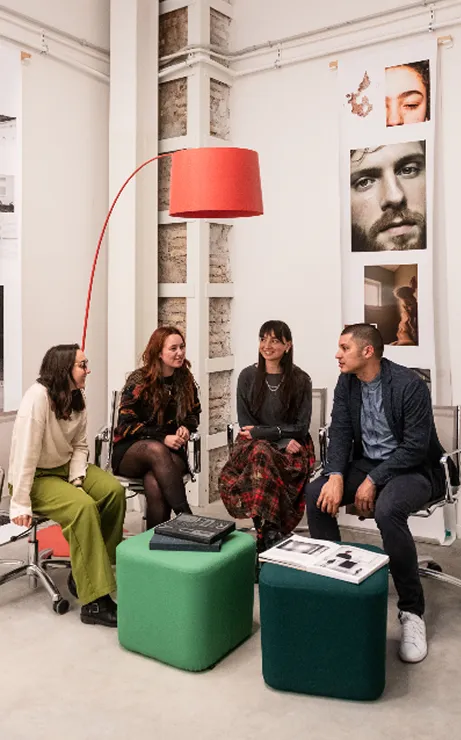
PAINTING – SCULPTURE – PRINTMAKING – PERFORMANCE ART
Fine Arts
You will deepen your artistic research in the field of Fine Arts, choosing between contemporary painting, performance art, sculpture and printmaking. You will explore connections between image, body, material, space and printmaking techniques, combining tradition, contemporary practices and visual innovation. You will develop a personal artistic language capable of transforming ideas, marks and materials into works, installations and actions with strong expressive and design value. Through four distinct pathways, you will be able to broaden your method, refine your vision and shape a conscious, recognisable artistic project open to dialogue with the contemporary art scene.
DURATION > 2 YEARS
LANGUAGE > ENGLISH
COURSE START > OCTOBER
CAMPUS > ROME
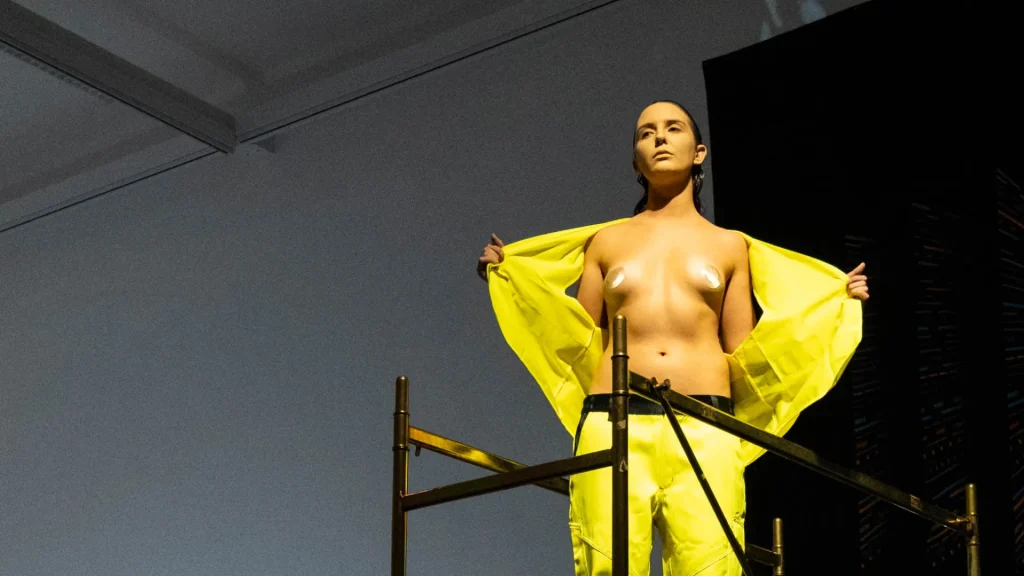
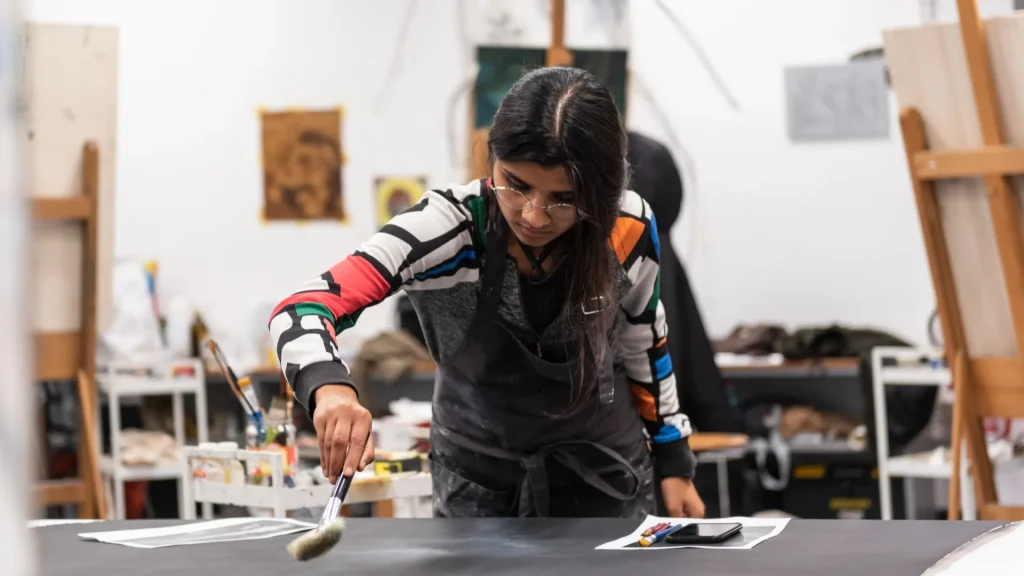
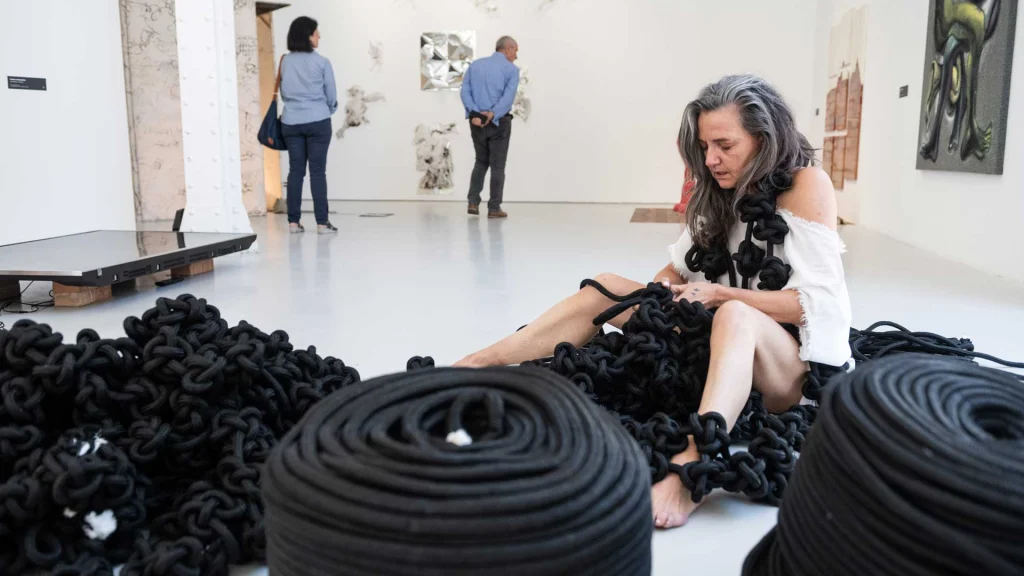
The art of breaking boundaries
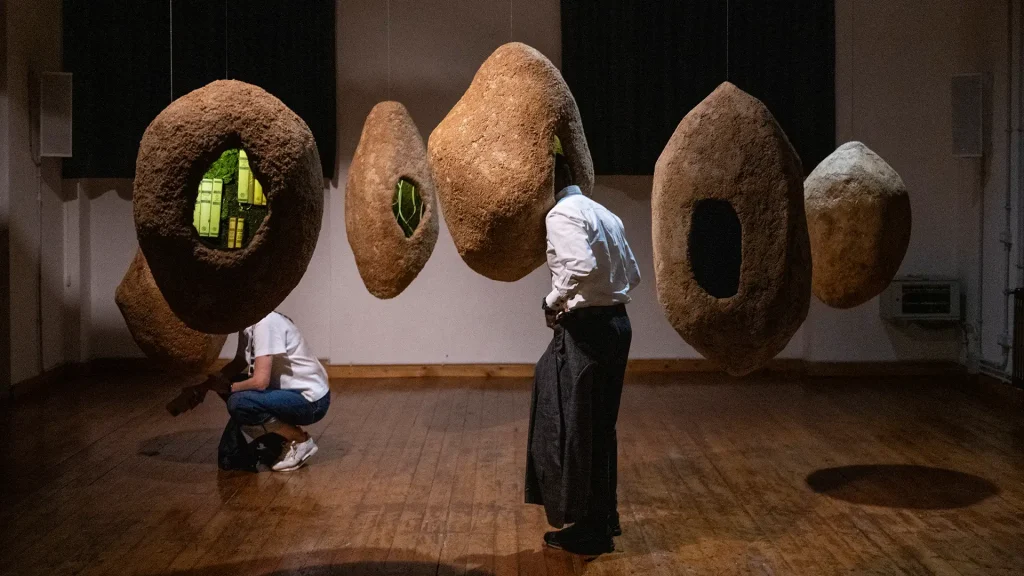
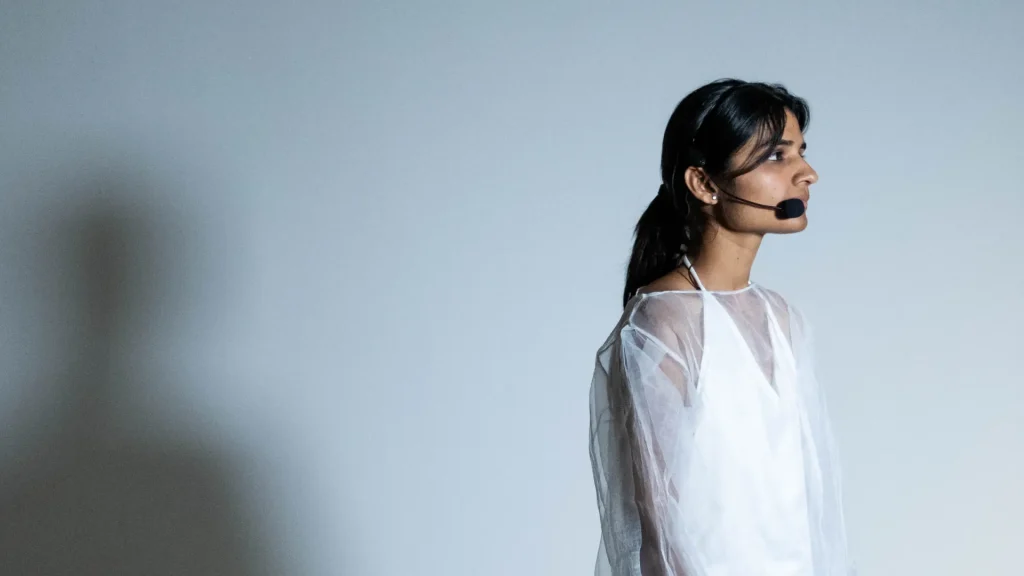
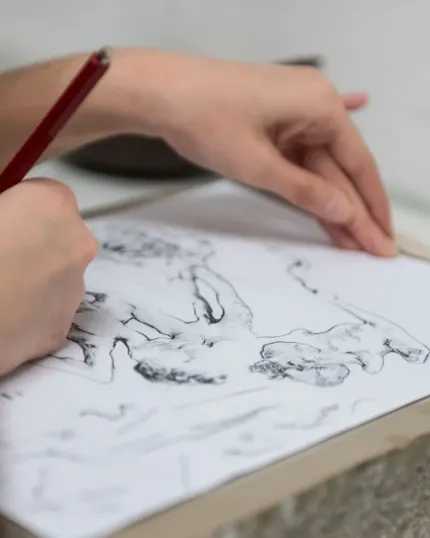
Each pathway opens up a different way of relating to the artwork: painting works with the power of the image and gesture, performance with the body as a living presence, printmaking with the mark and printing processes, sculpture with material that occupies and transforms space.
From personal research to professional practice
The programme is designed for candidates with a university background in any discipline or a RUFA course who wish to consolidate a mature creative practice.
The masterclasses of the Master’s Degree Programme in Fine Arts enrich the educational experience through intensive activities, shared projects and experimental practices. They are intensive weeks of production and exchange: not simply lessons, but workshops led by international artists and professionals, where each student works on concept, method, process and final presentation. Through reviews, individual and collective work, curatorial practice and project critique, the Master’s Degree Programme brings you into direct contact with the real languages of contemporary art: installation, performance, video art, printmaking, exhibition space and cultural production.
At the end of the two-year programme, you will be a multidisciplinary artist, capable of developing works, installations, performance actions and visual projects in dialogue with galleries, cultural institutions, publishers, creative companies and contemporary art contexts.
Curriculum
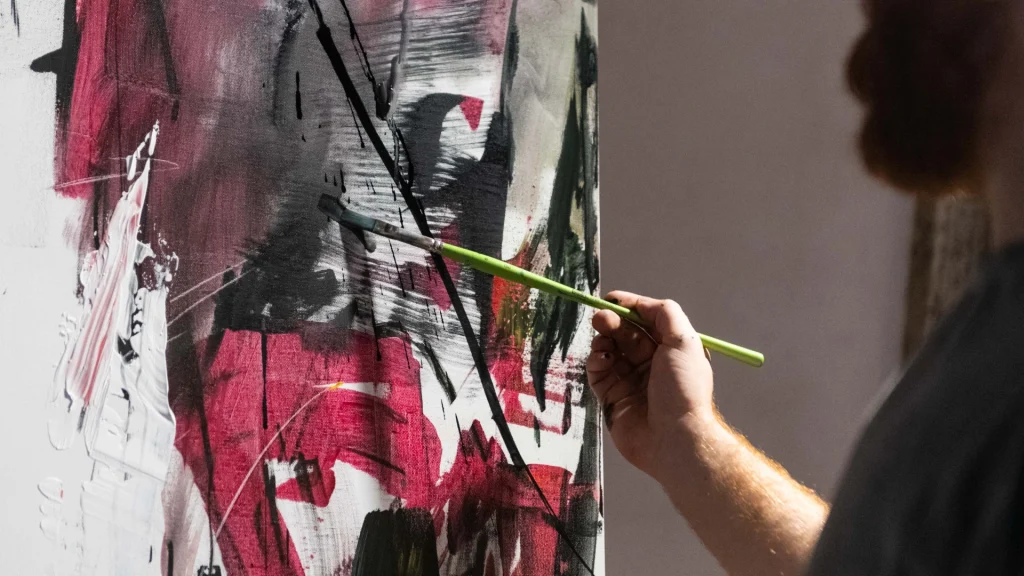
PAINTING
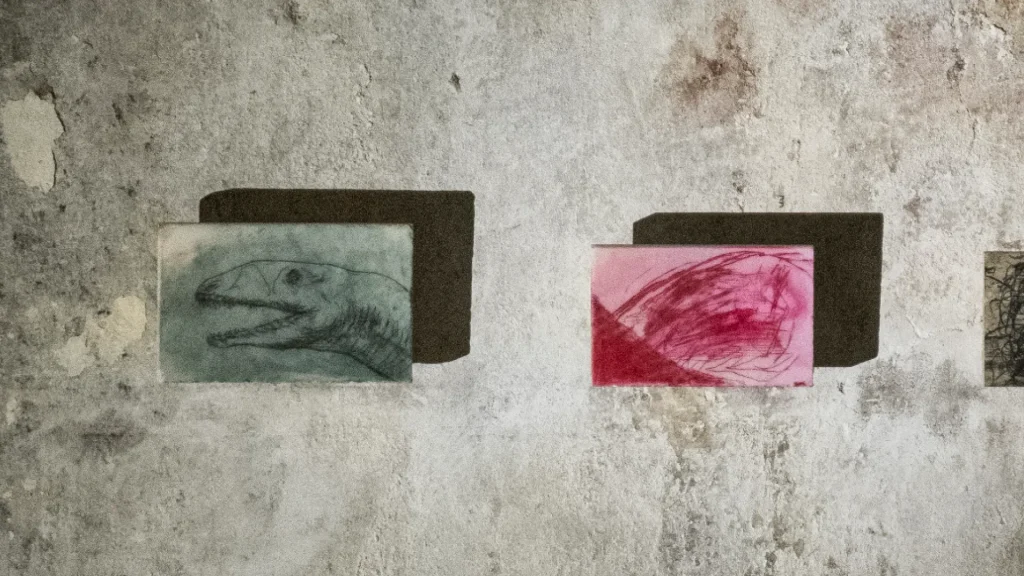
The Painting curriculum is designed for those who want to explore contemporary painting as a living language, open to dialogue with image, body, material and space.
The programme begins with the study of the fundamental structures of representation, from iconography to anatomical drawing, and progresses towards the most current practices in visual research. Painting is approached not only as a technique, but as a method of thinking, capable of generating works, image series, installations and site-specific projects.
Through dialogue with disciplines such as the phenomenology of contemporary arts, art management, printmaking and performance practices, you will develop a distinctive personal practice. You will learn to build a mature painting project, from the concept stage to production and the critical presentation of the work.
The curriculum prepares you to engage with galleries, residencies, awards, independent spaces and cultural institutions, with stronger technical and artistic awareness. It is the ideal pathway for those who want to transform their artistic practice into a strong, independent and professional visual position.
SCULPTURE
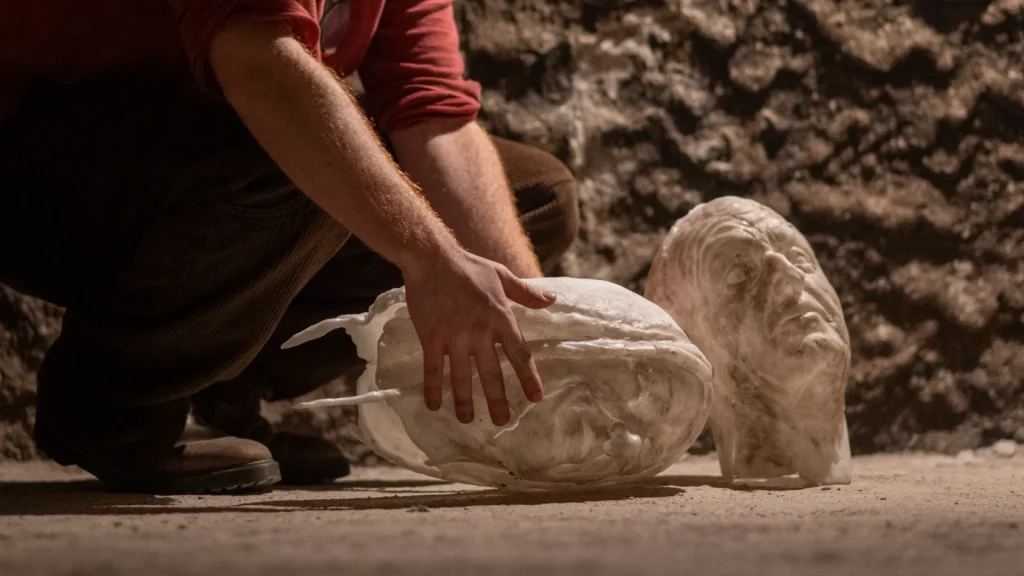
The Sculpture curriculum leads you to explore material as a space for thought, design and transformation.
You will work on the relationship between form, volume, environment and installation, learning to create works capable of physically inhabiting space and altering its perception.
The programme explores sculpture techniques in depth, while connecting them with contemporary languages such as performance, installation, public art, video art and site-specific practices. Sculpture is understood as an open field: not only an object, but a spatial device, experience, intervention and relationship between body, materials and place. Through theoretical and practical disciplines, you will develop a broader awareness of production processes, exhibition processes and critical processes connected to three-dimensional work. You will learn to design, produce and present complex works, engaging with exhibition spaces, urban contexts, cultural institutions and professional scenarios in contemporary art. It is the ideal pathway for those who want to transform material into a personal, solid artistic language open to experimentation.
PRINTMAKING
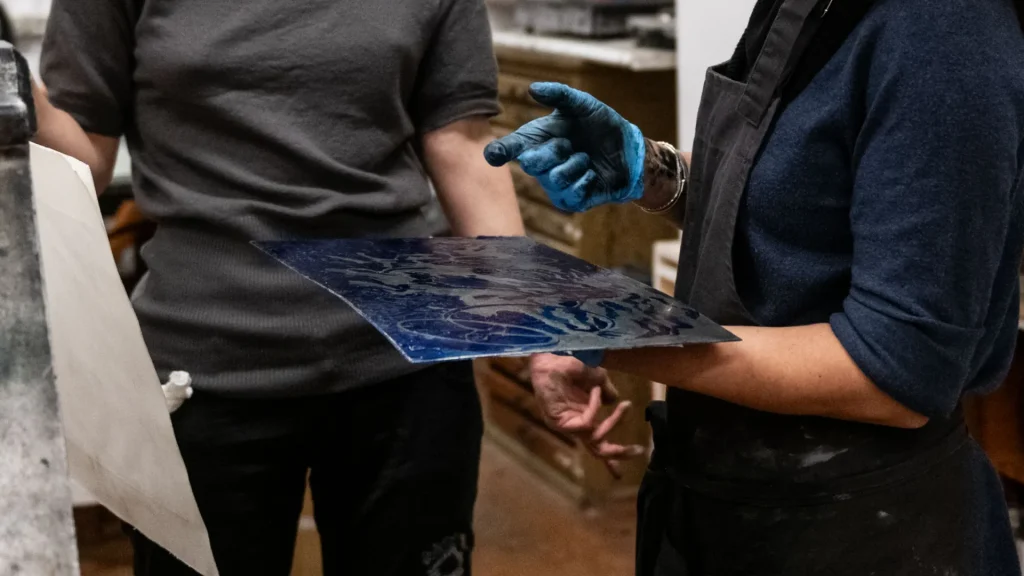
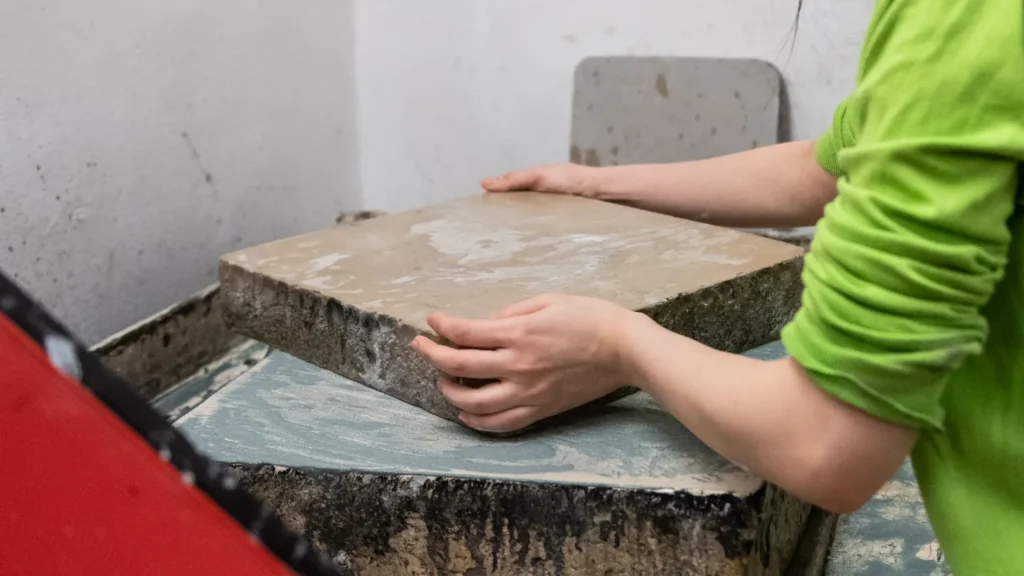
The Printmaking curriculum is designed for those who want to explore the mark, printing and the reproducible image as tools for contemporary artistic research.
The programme combines traditional and experimental techniques, from printmaking to intaglio practices, illustration and possible connections with art publishing. Printmaking is not treated as a simple technical application, but as a language capable of generating works, editions, artist’s books, visual projects and material experiments. Through the study of printing processes, composition, the mark and dedicated technologies, you will develop a precise and distinctive personal practice.
The curriculum prepares you to work across the studio, project development and the art system, with attention both to the craftsmanship of the process and to the possibilities offered by visual innovation. You will be able to connect printmaking, painting, sculpture, performance and publishing practices, broadening your professional field towards galleries, publishers, fine art print studios, museums and cultural projects. It is the right pathway for those who seek want to transform the mark into an authorial, technical and contemporary language.
PERFORMANCE ART
The Performance Art curriculum is designed for those who want to use body, time and space as central tools in their artistic research.
The programme guides you in the development of live actions, performance practices, temporary works and relational devices capable of involving audience, environment and context.
Performance is approached as a language of contemporary art, but also as a critical practice for exploring identity, memory, politics, presence, relationships and human experience.
Through an approach combining theory, experimentation and production, you will learn to design a performance from the initial concept to its final presentation. Work with the body does not remain isolated, but enters into dialogue with painting, sculpture, installation, video art, sound, writing and exhibition space. Reviews, masterclasses and workshops will help you define a personal method capable of supporting both individual research and engagement with the international art scene. It is the most suitable curriculum for those who want to develop a radical, interdisciplinary and genuinely contemporary artistic practice.
QUALIFICATION
Master’s Degree
120 CFA
FUTURE CAREERS
- Visual and Performance Artist
- Contemporary Art Curator and Gallerist
- Art Director and Cultural Project Manager
- Cultural Manager
- Printmaking and Graphic Arts Artist
- Gallerist
- Consultant for Contemporary Art Events and Exhibitions
MAIN DISCIPLINES
- Illustration
- Sculpture Techniques
- Painting
- Printmaking Techniques
- Performance Techniques for Visual Arts
- Multimedia Installations
- Psychology of Art
- Art Management
A study method designed for you
LEARNING BY DOING
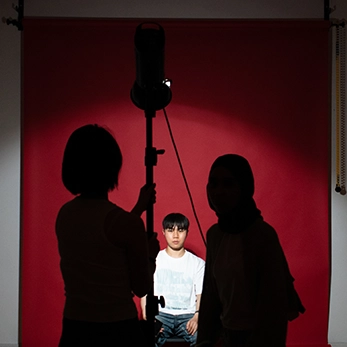
In RUFA, you learn by doing. Alongside the solid foundation of a university-level education, you will develop a hands-on approach that allows you to work on real projects, experiment, and build immediately applicable skills. Each course helps you transform ideas into prototypes, artworks, videos, concepts, installations, or products.
EXTRA DIARY
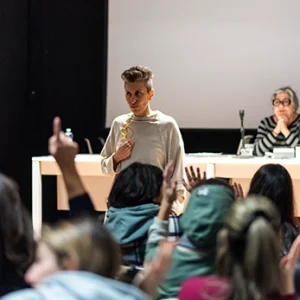
Workshops, laboratories, exhibitions, talks, and collaborations with companies are an integral part of the learning experience. The classroom opens up to the professional world and becomes a space where you engage every day with professionals, creative directors, artists, and designers. This allows you to understand how the industry you want to grow in truly works.
RESEARCH AND CROSS-POLLINATION
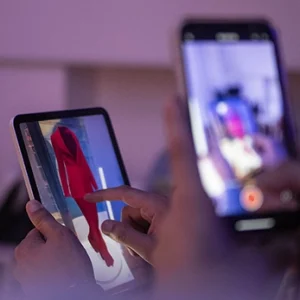
Every discipline becomes a space for experimentation. RUFA encourages you to blend languages, visions, techniques, and tools, combining artistic tradition with technological innovation. Here, you can explore, experiment, create connections, and find your own creative identity.
Requirements
ITALIAN STUDENTS
- Bachelor’s degree or equivalent qualification
- Portfolio
EU AND NON-EU STUDENTS
- First-cycle degree valid within the Italian education system
- Portfolio
- B2 certificate in the language of the course
Following admission, NON-EU students will be required to begin the procedure for obtaining a study visa.
Study plan
The RUFA Master of Arts requires students to earn 60 academic credits for each academic year. To obtain the qualification, students must complete the entire study programme, earning a total of 120 CFA (Academic Credits).
Attendance is compulsory for all classes at RUFA’s campuses.
| PAINTING | PAINTING - PERFORMANCE ARTS SPECIALISATION | SCULPTURE | PRINTMAKING | |
|---|---|---|---|---|
| SUBJECT | ECTS / HOURS | ECTS / HOURS | ECTS / HOURS | ECTS / HOURS |
|
Study of the body as a container of real and imaginary space. Drawing is intended as an instrument of knowledge and to overcome boundaries.
| 8 / 100 | 8 / 100 | 8 / 100 | 8 / 100 |
|
Working on printmaking personal and collective projects, in a permanent investigation of the contemporary condition with a free and open approach to suggestions and contaminations from other artistic and communication disciplines.
| 8 / 100 | - / - | 8 / 100 | 12 / 150 |
|
Through practice and research, reaching a full awareness of the students’ deep creative needs, in order to understand which are the most appropriate tools of expression to finally create highly eloquent works.
| 12 / 150 | 12 / 150 | - / - | 6 / 75 |
|
The development of a personal research through a project-homage to the city of Rome, focusing on the relationship with the city's aspects.
| - / - | - / - | 12 / 150 | - / - |
|
Learning and using art history examples together with multiple performance art tools to create artworks. Practicing how to think and write critically about performance art and developing the feeling of how to curate and document this particular and ephemeral art. Performance art practice will be examined in relation to other disciplines like theatre, dance, video art, photography, architecture, fashion, as well as its impact on popular culture.
| - / - | 8 / 100 | - / - | - / - |
|
Learning and using art history examples together with multiple performance art tools to create artworks. Practicing how to think and write critically about performance art and developing the feeling of how to curate and document this particular and ephemeral art. Performance art practice will be examined in relation to other disciplines like theatre, dance, video art, photography, architecture, fashion, as well as its impact on popular culture.
| - / - | 6 / 75 | - / - | - / - |
|
Learning and using art history examples together with multiple performance art tools to create artworks. Practicing how to think and write critically about performance art and developing the feeling of how to curate and document this particular and ephemeral art. Performance art practice will be examined in relation to other disciplines like theatre, dance, video art, photography, architecture, fashion, as well as its impact on popular culture.
| 6 / 75 | 6 / 75 | 6 / 75 | 6 / 75 |
|
The most famous artistic movements from the nineties to the contemporary, the different techniques used for settings. Developing final projects based on site specific working practice in order to define and confront the space.
| 6 / 75 | 6 / 75 | - / - | - / - |
|
Experiencing the art of illustration applied to different sectors, from the illustrated book, to the editorial illustration for magazine, in order to develop a personal taste and style. Lab activities: the creation of short editorial projects for different targets and all the dynamics of storytelling.
| 6 / 75 | - / - | - / - | 6 / 75 |
|
Working on personal and collective projects, in a permanent investigation of the contemporary condition with a free and open approach to suggestions and contaminations from other artistic and communication disciplines.
| - / - | - / - | - / - | 8 / 100 |
|
Developing the awarness, through lab practice, of various problems and working methods connected to the most common materials used in sculpture and the art field in general. The different steps of working processes and their specific tools.
| - / - | - / - | 6 / 75 | - / - |
|
3Ds Max and V-ray: from modelling two-dimensional shapes and tridimensional primitives to complex and more organic objects and how to exchange and import files from other programs into 3ds Max. Learning how to render in a photorealistic way bringing the real camera rules in the computer field of application.
| - / - | - / - | 6 / 75 | - / - |
|
The psychology of art through the lenses of historical formalism, Freudian and post-Freudian psychology, perception, visual studies and recent applications of the neurosciences to the visual arts. Developing students’ critical thinking, and their self-awareness about their own practices, as makers and as viewers.
| 6 / 45 | 6 / 45 | 6 / 45 | 6 / 45 |
|
Fostering students’ creativity through a variety of critical, historical and practice-based theory, in order to aid in the ability to effectively organize and communicate their artistic research, as well as those of others as art teachers and art educators.
| 6 / 45 | 6 / 45 | 6 / 45 | 6 / 45 |
| English for artistic communicazione | 2 / - | 2 / - | 2 / - | 2 / - |
| 3 one week Masterclass** | - / 150 | - / - | - / 150 | - / 150 |
| PAINTING | PAINTING - PERFORMANCE ARTS SPECIALISATION | SCULPTURE | PRINTMAKING | |
|---|---|---|---|---|
| SUBJECT | ECTS / HOURS | ECTS / HOURS | ECTS / HOURS | ECTS / HOURS |
|
The image and its simulacrum are the fundamentals of the use of photography in this course designed to support an interdisciplinary educational journey. The course includes a theoretical-historical part and a laboratory part, in which each student will work on a personal project.
| 8 / 100 | 8 / 100 | 8 / 100 | 8 / 100 |
|
The interdisciplinary language that connotes contemporary art is one of the starting points of the second year of painting. Each student will develop a research aimed at the realization of a personal project, which will be developed in different declinations during the year.
| 12 / 150 | - / - | - / - | - / - |
|
The most famous artistic movements from the nineties to the contemporary, the different techniques used for settings. Developing final projects based on site specific working practice in order to define and confront the space.
| 12 / 150 | 12 / 150 | - / - | - / - |
|
The second year of Printmaking continues the first year by working on printmaking personal and collective projects, in a permanent investigation of the contemporary condition with a free and open approach to suggestions and contaminations from other artistic and communication disciplines.
| - / - | - / - | - / - | 12 / 150 |
|
Intensification of the study of the relationship between content and design in order to deal, in an exclusive approach, with the places of future interventions.
| - / - | - / - | 12 / 150 | - / - |
|
In line with the concept of Expanded Field, in the course of experimental printmaking, an interdisciplinary approach will be followed which will lead each student to deal with innovative areas of printmaking to create of one or more personal projects.
| - / - | - / - | - / - | 6 / 75 |
|
Phenomenology as a methodology for understanding the change in visual arts. In-depth study of the art key players of the nineteen-hundreds and the new millennium and the related extralinguistic contaminations. The study of the deviant characters and movements of the history of art will be the starting point for a reflection on contemporary styles, techniques and practices, themes and ideas of art design.
| 6 / 45 | 6 / 45 | 6 / 45 | 6 / 45 |
|
Adobe Photoshop: from the study of basic processes for color correction and processing techniques for developing raw files, up to photomontage and composite images.
| 6 / 75 | 6 / 75 | 6 / 75 | 6 / 75 |
|
Exhibition and analysis of curatorship today, from the preparation to the communication of an exhibition. Analysis of the art system: galleries, museums, the network, roles. Writing a portfolio with statements and developing the ability to entertain a Studio Visit with a curator. Exhibition exercise, from communication to installation, through the development of a theme concerning the student’s personal poetics.
| 6 / 45 | 6 / 45 | 6 / 45 | - / - |
| Elective educational activities | 6 / - | 6 / - | 6 / - | 6 / - |
| Language skills - Internships - Workshops | 6 / - | 6 / - | 6 / - | 6 / - |
| 3 one week Masterclass** | - / 150 | - / - | - / 150 | - / 150 |
| Thesis | 10 / - | 10 / - | 10 / - | 10 / - |
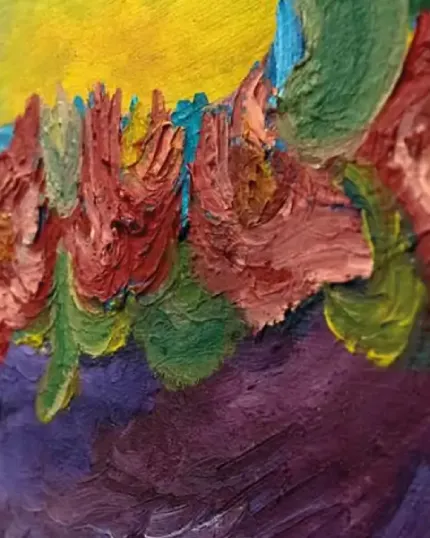
Student projects

Community Voices

RUFA and Yale University: PERFORMANCE CLUSTER 2025

RUFA exhibition at MAXXI: UNSTABLE REALITIES
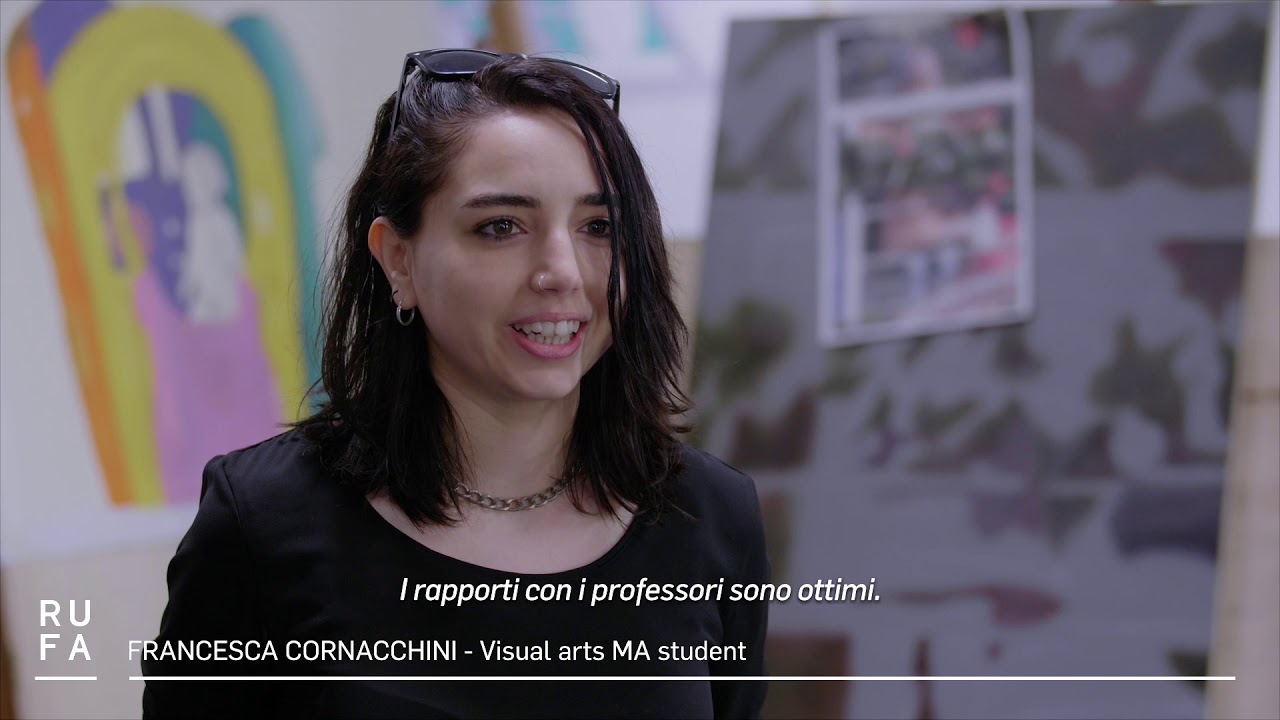
Discover the Master’s Degree Programme in Fine Arts in two minutes

Request information
News and Events
-
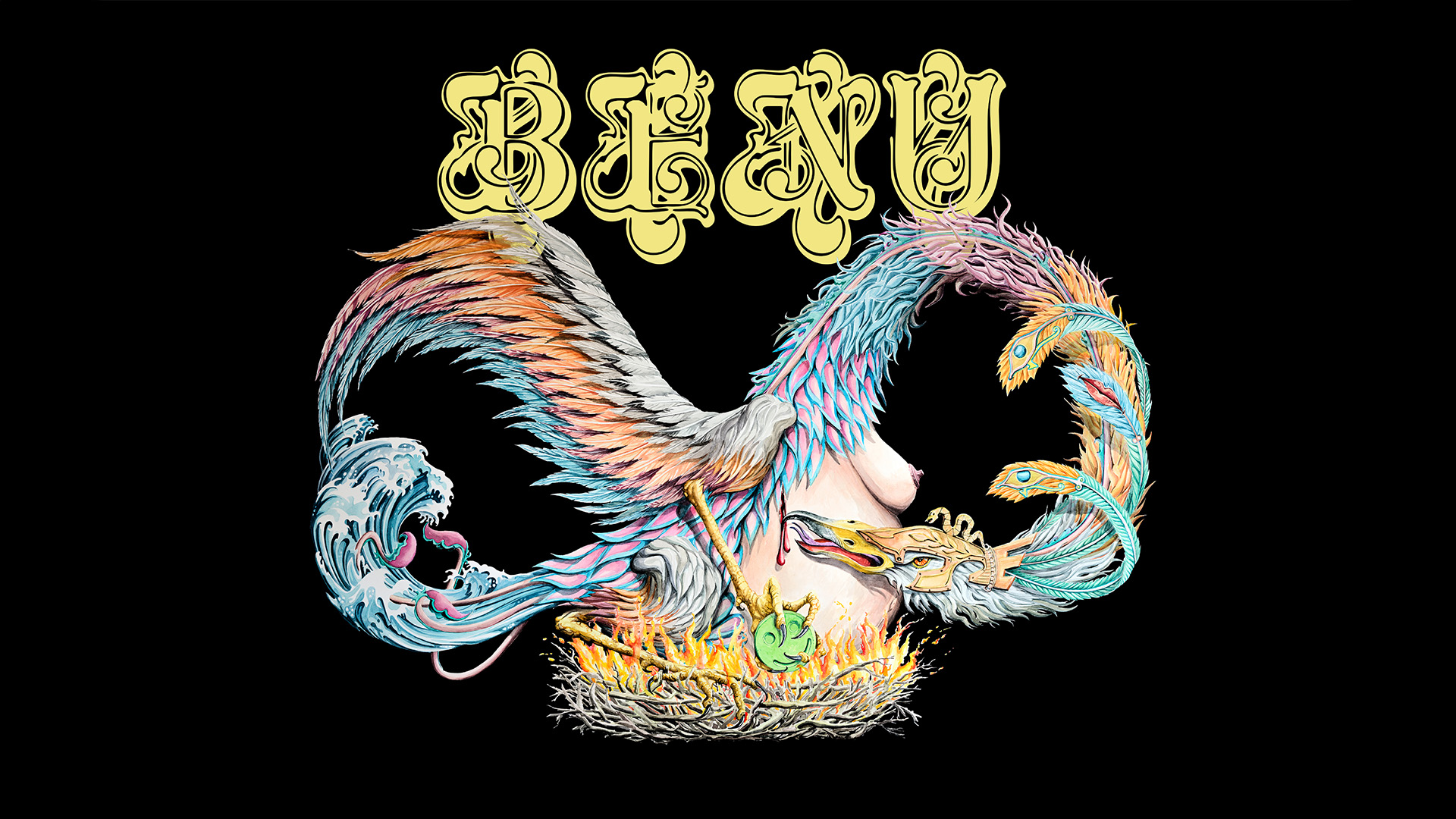
BENU: Eugenio Tibaldi’s exhibition at Fondazione Pastificio Cerere
-
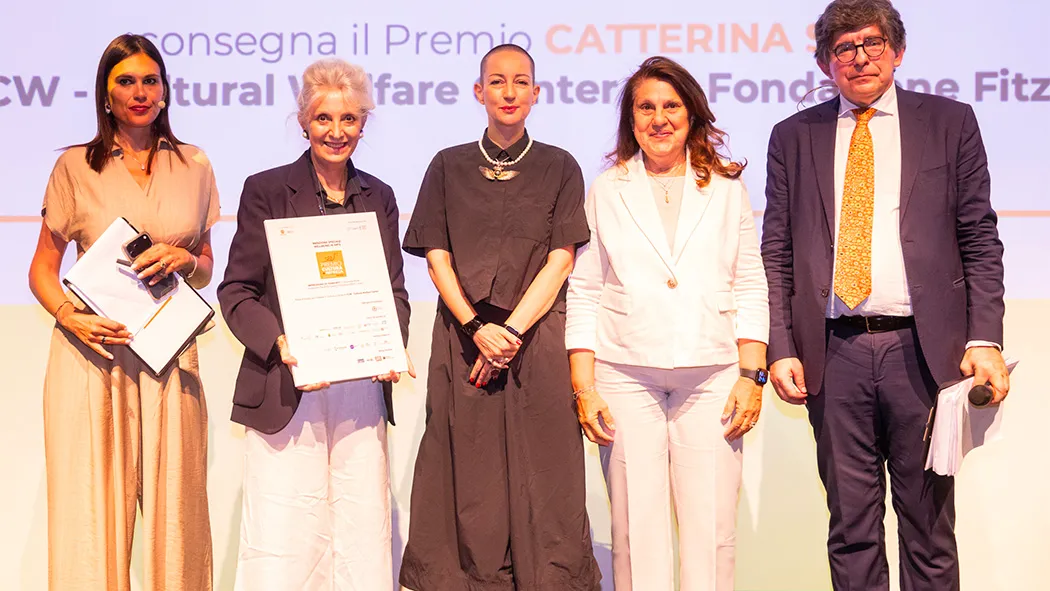
RUFA Receives Recognition at the 2025–2026 CULTURA + IMPRESA Award
-
Student Programme Edition #1 – Spores
-
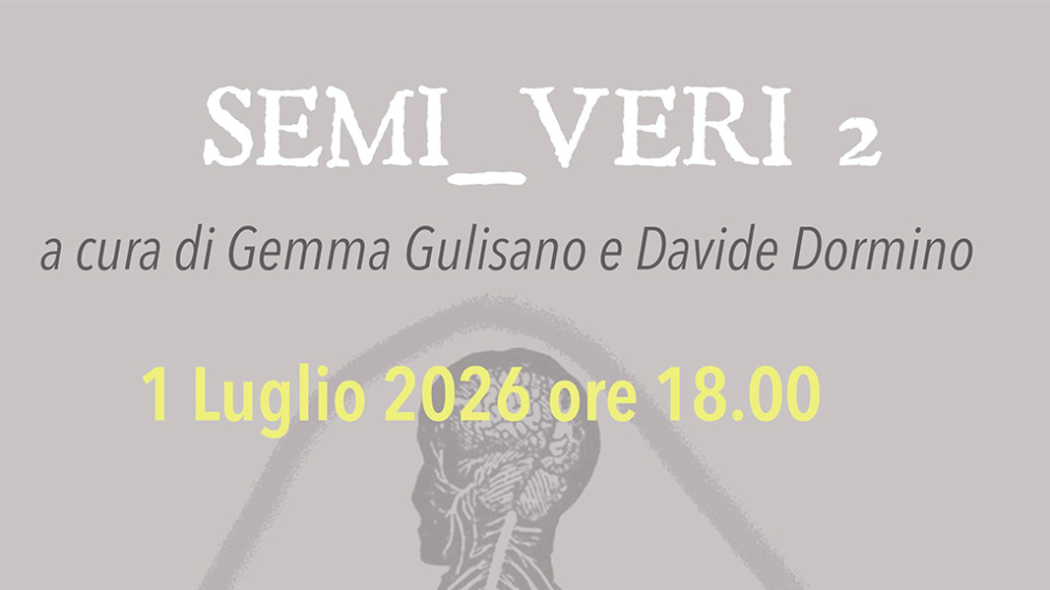
“Semi – Veri #2”: Sculptural Practices in the Making
-
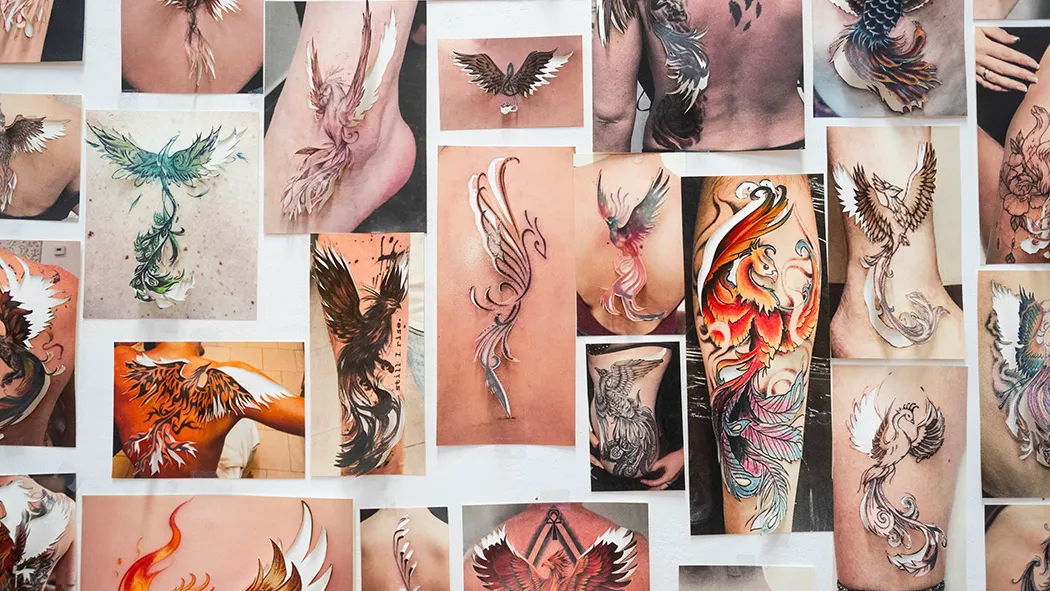
Phoenix, Myth and Identity: a Masterclass with Eugenio Tibaldi
-
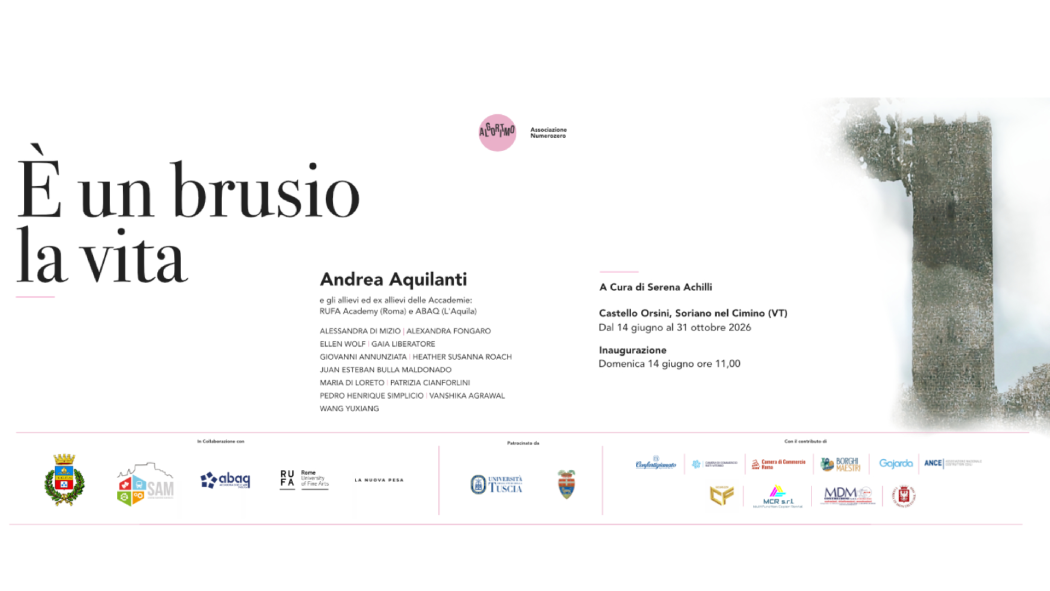
È UN BRUSIO LA VITA
Do you have questions about the RUFA world? We are here to guide you!
Our guidance team is here for you all year round, ready to answer all your questions.