Fundamentals of Printmaking
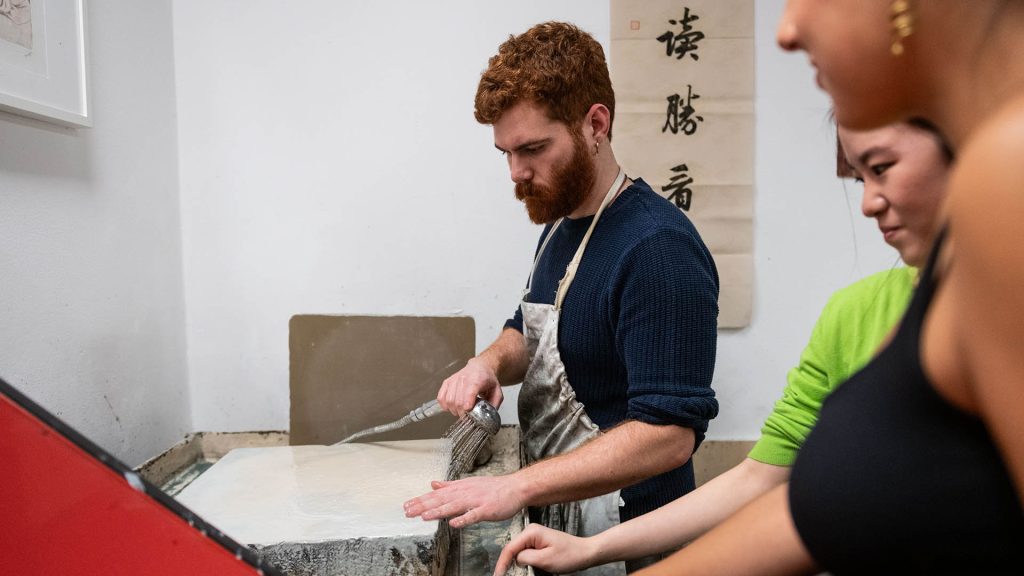
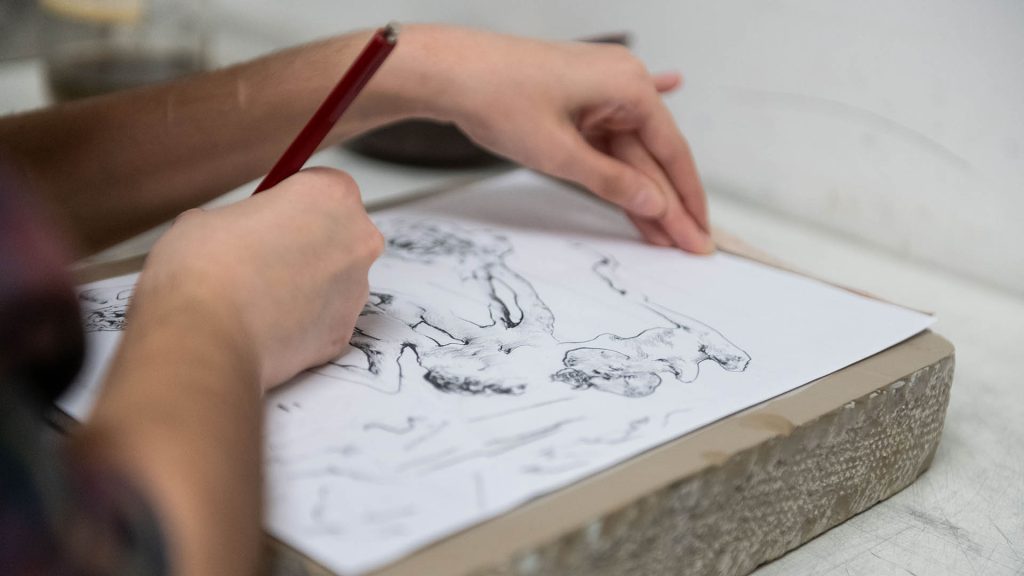
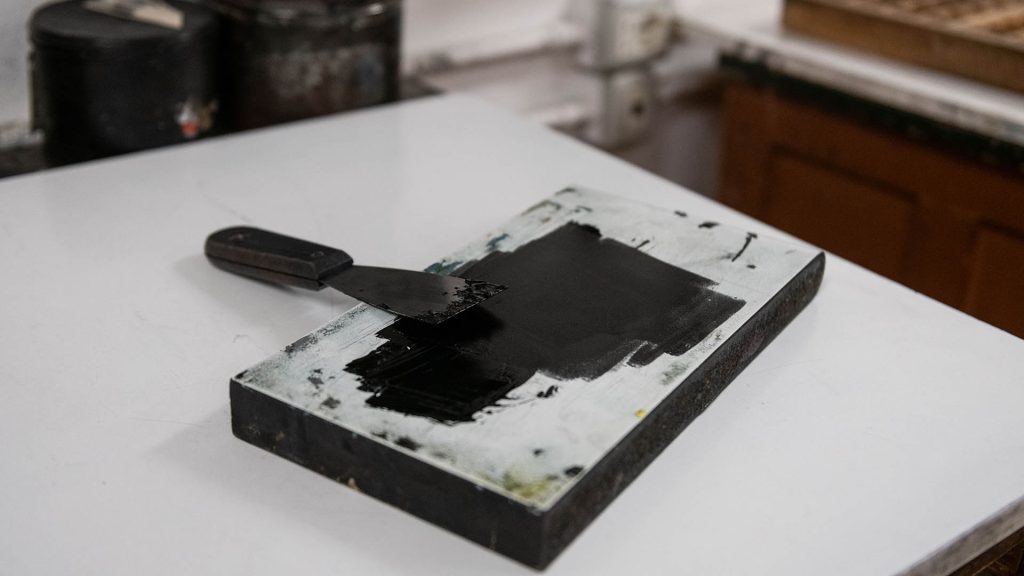
It is an ancient practice, a place where mark-making meets matter and ink flows across paper like a thought taking shape. The two-dimensional image emerges from the working of different materials: zinc, copper, wood, and many others, shaped with the aim of generating reproducible images.
Engraving the vision
A process of precision, a gradual refinement in which gesture becomes the protagonist. At RUFA, we put into practice the art of time and patience, of the unexpected becoming beauty, of the plate telling different stories each time. Printmaking is a language that is both ancient and modern, made up of engravings, scratches and reliefs. It occupies the subtle boundary between craftsmanship and poetry, between process and vision: you work with your hands, but explore through your inner gaze.
At the end of the course, participants will receive a certificate of attendance, which may be used for the possible recognition of 1 CFA academic credit.
A graphic bestiary of marks and drawings
The Printmaking course aims to introduce students to the fascinating world of special graphic techniques, less conventional forms of expression than drawing and painting, yet equally evocative and intriguing. Through an in-depth exploration of techniques such as woodcut, monotype, drypoint and collagraphy, students will have the opportunity to experiment with ancient techniques through new visual languages, stimulating their creativity and encouraging them to broaden their expressive possibilities.
Course type: group – in person
Participants: Max. 15
Attendance: weekly, Saturdays from 2.30 pm to 6.30 pm
Duration: 8 lessons – 32 hours total
Cost: €490.00 in a single payment or two instalments of €250.00
Materials: to be purchased by the student
Requirements/materials: none
Language: Italian
Lecturer: Davide Miceli
Campus: RUFA – Via Degli Ausoni, 7 Rome
Scheduled annual sessions: Winter Session > 9 January – 27 February 2027
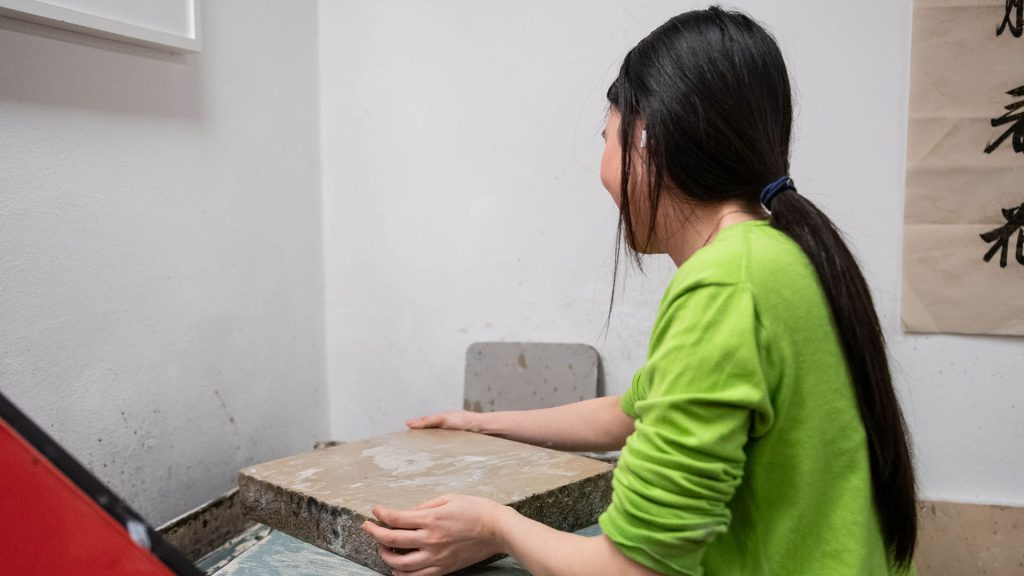
The course focuses on practical, workshop-based activities. The techniques have been selected for their accessibility and ease of use, allowing students to continue their research independently even outside the academic environment. Although complex equipment is not required, RUFA’s workshops will remain available throughout the course, particularly the Printmaking Lab at the former Pastificio Cerere.
The natural world – and the animal world in particular – will be proposed as a source of inspiration for the graphic projects, thanks to the richness of forms and colours it offers, which can easily be interpreted in a personal way. From the third lesson onwards, students who wish to do so may develop an individual project in line with their artistic interests, subject to approval by the lecturer.
Lesson 1 – Introduction to printmaking
Guided tour of the workshop with an introduction to printmaking machinery and tools, together with an overview of the history of the medium.
Lesson 1 – Introduction to trace monotype
The first exercise involves using an acetate sheet inked with a rubber roller, onto which a sheet of tissue paper is placed. Students create a drawing on the reverse of the paper using various tools, revealing the printed image at the end of the process.
The activity focuses on exploring the indirect mark and the element of surprise typical of monotype printing.
To complete the lesson, each student will create a drawing at home inspired by a marine species, with particular attention to its silhouette. This work will form the basis of the second exercise.
Lesson 2 – Monotype with an intaglio press
The technique of monotype printing through selective removal of ink from the plate is introduced, using rags, brushes and other tools.
This is followed by a demonstration of the printing stages, including registration, paper cutting and use of the press.
Second exercise: starting from the sketches produced in the previous lesson, students create a stencil on an acetate sheet, which is then cut out, inked with different colours and printed onto a single support. Depending on the time available, the exercise may be repeated to explore formal and colour variations in greater depth.
In preparation for the following lesson, students are asked to collect two Tetra Pak containers to use as printing plates and to produce new sketches inspired by the world of insects.
Lesson 3 – Collagraphy
The lesson begins with a practical demonstration of collagraphy, a technique that makes it possible to create a wide range of textures and effects using different materials and tools.
Third exercise: students work on their Tetra Pak support, reinterpreting the insect sketches they have developed. The inking and press-printing stage is carried out with individual guidance.
For the following session, students will prepare a new drawing inspired by an animal or plant of their choice.
Lesson 4 – Introduction to woodcut
The session begins with a group review of the sketches and an introductory presentation on woodcut, including historical and visual references.
This is followed by a practical demonstration of how to use gouges to create the printing block.
Fourth exercise: students carve the wooden block based on their sketches and print manually on tissue paper using a wooden spoon.
Lessons 5 and 6 – Drypoint
Introduction to the drypoint technique with historical references and analysis of original plates. Students prepare their own Plexiglas plate through filing and finishing with a scraper and burnisher.
Fifth and sixth exercises: students create portraits in pairs, taking advantage of the transparency of Plexiglas. Alternating between the roles of artist and model, they complete the drawing on the plate, proceed with the engraving and finally print it using the press under supervision.
Lessons 7, 8, 9, 10 – Final project
The final four lessons are dedicated to creating a concluding project, choosing from the following options: • Collective printed bestiary
Creation of a collective artist’s book through woodcut printing on tissue paper, hand-bound using a Japanese binding technique. The cover is printed on thicker paper using one or more intaglio techniques. At the end of the course, each participant receives a copy of the book. • Large collective prints
Creation of large-scale printed compositions inspired by the exercise from the second lesson but with greater compositional complexity. This project allows for an introduction to the carborundum technique and the combination of multiple techniques within a single work. • Guided individual project
Independent development of a personal project based on the techniques learned during the course. The project is defined during an initial discussion with the lecturer and supported throughout the key stages of the process, while maintaining continuous opportunities for discussion and tutoring.
MATERIALS:
Materials provided by RUFA
Wooden or linoleum blocks for woodcut
Tissue paper
Work gloves and disposable gloves
A4 acetate sheets
1 mm thick Plexiglas plates
Recommended materials for personal use (to be purchased by the student – remain their property)
Woodcut gouges
Engraving needles
Printing paper sheets (minimum 5 per student; white Fabriano Unica 50×70 cm paper is available at RUFA for €1.00 per sheet)
Materials to bring from home
Sketchbook or drawing paper (printer paper is also sufficient)
Pens, pencils and permanent markers of the student’s choice
Recycled Tetra Pak
Wooden kitchen spoon
JANUARY
09/01/27
16/01/27
23/01/27
30/01/27
FEBRUARY
06/02/27
13/02/27
20/02/27
27/02/27
A Rome-based artist active in the fields of sculpture and printmaking, Miceli trained at RUFA, where he earned a degree in Sculpture (2023) and in Printmaking (2024). His artistic research moves naturally across different disciplines, with a career that includes solo and group exhibitions, artist residencies and participation in high-profile competitions. He has collaborated as a specialised technician with internationally renowned artists including Giuseppe Gallo and Adam McEwen. Alongside his artistic practice, he is active in academia at RUFA, where he assists Davide Dormino in the Sculpture department and Maria Pina and Gianna Bentivenga in the Printmaking department. In 2024, he led the Roman Post-Cards workshop, focused on synthetic lithography, for a class from the American Academy in Rome. With RUFA Short Courses, he officially begins his teaching activity. He collaborates regularly with the Lorcan O’Neill gallery, where he oversees the installation of exhibitions and works by internationally renowned artists.
RUFA Students and Alumni: 50% discount
Former RUFA Short Courses and Summer Academy students: 10% discount
University students: 5% discount (upon presentation of a valid university student record)
Course packages/groups/families: contact corsibrevi@unirufa.it for tailored solutions and free guidance on the best combination of courses for each semester
Request information
Hai domande sul mondo RUFA? Siamo qui per orientArti!
Il nostro team orientamento è qui per te tutto l’anno, pronto a rispondere ad ogni tua domanda.