40TH CYCLE
Cross Innovation Design for Cultural Industries (PhD)
Cross Innovation Design for Cultural Industries is RUFA’s innovative industrial PhD programme, promoted in collaboration with Cappelli Identity Design and the Archivio Storico Olivetti Association.
An advanced research programme that connects design, cultural heritage and emerging technologies. The aim is to transform archives, objects, places and memories into new cultural experiences that are accessible and interactive.
RESEARCH
3 YEARS
CAMPUS
ROME
SCHOLARSHIPS AVAILABLE
4 – 24/25 procedure concluded
PARTNERS
Archivio Storico Olivetti
Cappelli Identity Design

Design and culture, beyond memory
Cultural heritage is not a static image of the past. It is living material, capable of generating new relationships, new languages and new forms of knowledge.
The PhD explores how design can make archives, collections and historical records accessible again. Artificial intelligence, 3D digitisation, augmented reality and virtual reality become tools for research, interpretation and storytelling.
Educational project and course objectives
The PhD combines theory, design practice and applied research. It trains researchers capable of addressing complex problems, working across different disciplines and developing verifiable solutions.
The programme explores the relationship between design, technological innovation, communication, cultural policies and heritage management, and is structured into seven stages.
The modules address theories of design and innovation, interdisciplinary research methodologies and the management of cultural and creative industries.
Particular attention is given to applied digital technologies, including artificial intelligence, augmented reality and virtual reality.
Theoretical knowledge is tested through practical activities and intensive workshops.
PhD students design interactive cultural experiences, innovative products and applications based on immersive technologies.
Research is developed with companies, archives and cultural institutions. PhD students work on real needs, test hypotheses and produce transferable outcomes.
Projects may involve museums, galleries, archives, digital platforms and cultural engagement systems, with opportunities to exhibit and perform internationally.
Engagement with national and international researchers and experts provides opportunities to update methods, tools and references.
PhD students can present their work and contribute to contemporary academic debate.
The programme develops management skills, leadership, communication abilities and professional ethics.
Sustainability, inclusion and social responsibility accompany every stage of the design process.
The thesis represents an original contribution to the field of Cross Innovation Design for Cultural Industries.
The work integrates theoretical research, experimentation and design production, under the supervision of the Faculty Board.
Collaborations, periods spent within companies and relationships with cultural institutions foster engagement with both the research and professional worlds.
The programme prepares students to take on positions of responsibility in academic, cultural and industrial organisations.

Cappelli Identity Design is an international multidisciplinary design studio operating worldwide from its offices in Rome and Turin.
Through its Design and Strategy departments, two perspectives that work in parallel and constantly influence one another, it develops strategic, distinctive and contemporary visual identities.
The studio owns the Dynamic Brand methodology, a design approach that makes identity consistent across all its expressions and capable of evolving over time. It develops projects in brand identity, marketing and social media strategy, visual design, publishing and interaction design.

Olivetti Archives collects, studies and promotes the documentary heritage of the historic company, a major international protagonist of the twentieth century.
Projects, images and records tell the story of a business model founded on the encounter between culture, innovation, social responsibility and design.
A living legacy, deeply connected to its territory yet capable of expressing values and visions of international significance, which continues to inspire scholars, designers and new generations.
One of the most important documentary collections dedicated to twentieth-century business culture and design.
QUALIFICATION
Doctor of Philosophy (Ph.D.)
Third-cycle academic qualification
FUTURE CAREERS
- 3D Digitisation and Modelling Specialist
- AR and VR Application Developer
- Interactive Exhibition Curator
- Urban and Museum Installation Designer
- Multimedia Communication Specialist
- Cultural Innovation Project Manager
- Cultural Heritage Enhancement Consultant
- Creative Director
- Art Director
- Interaction Designer
- UX/UI Designer
- Copywriter
MAIN DISCIPLINES
- Design and innovation
- Applied digital technologies
- Cultural heritage management and enhancement
- Interdisciplinary research methodologies, communication and multimedia storytelling.
Skills and research areas
The PhD trains professionals capable of moving between critical thinking, design and technological experimentation.
| SUBJECT | ECTS |
|---|---|
|
Film photography and the role of the director of photography. The study of the equipment available in relation to film needs. Lighting and related staging exercises: morning, day, evening, night, indoor, outdoor, natural or artificial lighting.
| 8 |
|
In-depth study of the blend of video art and cinema, focusing on the evolution of the audiovisual sector: from Gene Youngblood's Expanded Cinema to computer art, virtual reality, live media performance and live cinema.
| 6 |
|
To know the work of the scriptwriter in its various stages of development. To become familiar with the script from the point of view of the various professionals involved in the audiovisual product.
| 6 |
|
Study of the world of cinema according to a vision of cyclical and no longer linear development: the idea of eternal return and continuous inspiration from past stylistic elements. Thought, imagination and consciousness, the essence for the reading of modern cinema.
| 6 |
|
Through the analysis of classic and contemporary films, the dramaturgical techniques necessary for the development of a screenplay will be illustrated, starting from an idea, with the aim of consolidating the writing techniques. Creation of short films lasting a maximum of 10 minutes following all the production phases: from the research of the cue, the conception, the writing, the preparation, the staging, up to the editing, the post-production, the sound and also the distribution.
| 12 |
|
The study of various works by directors of the past and present within a path aimed at supporting their own personal artistic and technical research. Deepening of the personal author's look.
| 6 |
|
Study of the role of the editor and the editing styles to be put into practice with different materials that will be edited: continuous/discontinuous editing, narrative, discursive and matching editing. The practical part of the course will be carried out through exercises on editing software for the production of commercials, video clips, television series, films and documentaries.
| 6 |
|
Study of the production from the idea of the subject to the final realization of a film and its theatrical release: management of the screenplay from an organizational point of view, elaboration of a cost estimate and knowledge of financial dynamics, management of the technical path of the film project, management of the relationship with the director, the cast and the notion of copyright, knowledge of the post-production path and respect for legislative, union and economic regulations.
| 6 |
|
Study and deepening of themes and topics concerning the artistic field with the use of different linguistic registers and styles to improve one's communication skills in English.
| 4 |
These skills can be applied in museum, urban, educational and social contexts. Design thus becomes a tool for creating relationships: not only form and function, but also experience, storytelling and transformation.
To explore programmes related to these fields, visit the Visual and Innovation Design and Multimedia Design and Creative AI programmes.
Research developed with companies and institutions
The industrial nature of the PhD makes it possible to connect research with real processes, organisations and needs.
Cappelli Identity Design contributes expertise in multidisciplinary design, strategy and the development of dynamic identities. The Archivio Storico Olivetti Association provides access to a heritage that tells the story of the encounter between design culture, business, technology and social responsibility.
RUFA brings these contributions together within a multidisciplinary environment. The result is a research space in which memory becomes design and innovation gains cultural depth.
Alignment with NRRP objectives
The innovative PhD Programme in “Cross Innovation Design for Cultural Industries” concerns disciplinary and thematic areas consistent with the needs of the country, with particular emphasis on promoting economic development, the production system, the conservation and enhancement of cultural heritage, and innovation.
The Programme aims to develop specific, broad, original and high-quality teaching and research activities, consistent with the Standards and Guidelines for Quality Assurance shared at European level (ESG).
The methods for coordinating and carrying out research activities, as well as the incentive mechanisms designed to promote technology transfer and the development of research outcomes, are agreed with the Partners in order to enhance the results and ensure their circulation according to the principles of “Open science” and “FAIR Data”.
The Programme includes periods of study and research within a company and abroad for a minimum of 6 months and a maximum of 18 months over the three-year period, in addition to advanced language and IT training activities for research management and the enhancement of its results.
The PhD Programme in CROSS INNOVATION DESIGN FOR CULTURAL INDUSTRIES (DOT2449NEF) is accredited for the legally recognised Academy of Fine Arts in ROME “Rome University of Fine Arts” by Decree No. 1412 of 27/07/2024 of the Minister of University and Research, starting from the PhD cycle activated in A.Y. 2024/2025, following the favourable opinion of ANVUR.
RUFA PhD students
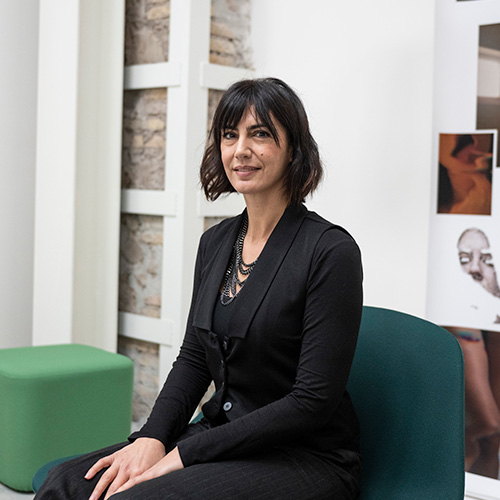
SILVIA CASSETTA
Architect and Designer focusing on Dance and Space
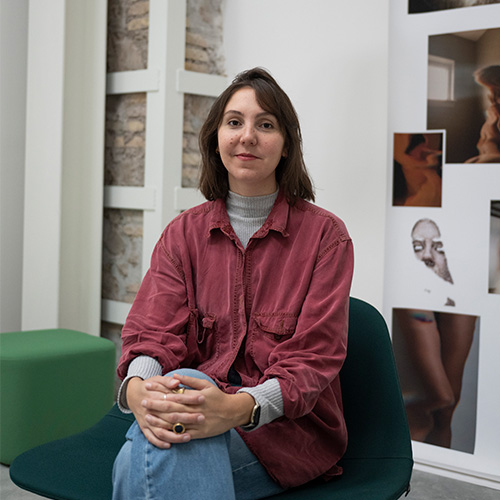
NICOLE MARTINET
Experience designer
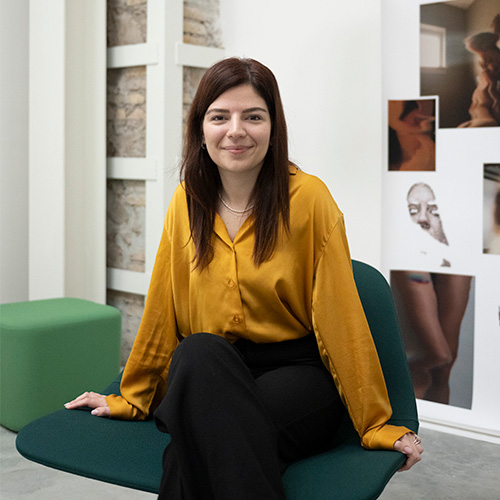
FLAVIA SOFTA
Visual designer
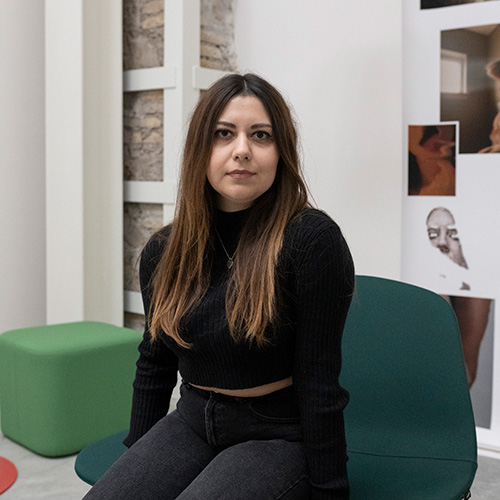
REBECCA SCARINCI
Screenwriter and Cultural Heritage Communicator
Hai domande sul mondo RUFA? Siamo qui per orientArti!
Il nostro team orientamento è qui per te tutto l’anno, pronto a rispondere ad ogni tua domanda.