
How can brands become more resilient, regenerative and prepared to face future challenges?
A systemic approach to resilience, innovation and long-term prosperity.

How can brands become more resilient, regenerative and prepared to face future challenges?
A systemic approach to resilience, innovation and long-term prosperity.
Moving beyond the idea of sustainability as an ancillary business function, Marco Guarna examines how design, business strategy and performance management can be integrated to generate long-term value for companies, institutions, communities and the environment.
This systemic and interdisciplinary approach lies at the heart of the RUFA Academic Master in Design Management, a one-year programme designed to train professionals capable of leading innovation processes and organisational change.
The RUFA Academic Master in Design Management aims to identify and develop management practices that can enable organisations in every sector to translate the theoretical concept of prosperity into concrete industrial processes.
These practices are rooted in the principles of the circular economy and are particularly relevant not only to the design community, but also to executives and managers working in finance, research and development, production, innovation and strategy.
For prosperity to become a concrete and beneficial objective for the industrial system, companies must identify the practices capable of supporting their transition from extractive, high-risk organisations to resilient and regenerative economic actors.
This transformation requires far more than environmental commitments or isolated sustainability initiatives. It calls for a profound reassessment of the way brands create value, manage resources, set priorities and measure their performance.
A circular approach to brand and business management can be structured around five main stages.
The first step is to assess the environmental, economic and operational risks associated with the current business model. At the same time, organisations must identify opportunities to generate new margins, reduce dependence on finite resources, increase resilience and develop new forms of value for customers and stakeholders.
Circularity should not be treated as an isolated initiative, but should become a defining element of the organisation’s overall strategy. This means setting clear priorities and integrating circular economy objectives with financial planning, innovation, product and service development, operational processes and long-term organisational goals.
Organisations need measurable indicators that allow them to assess their performance in relation to circularity. Defining appropriate KPIs is essential for monitoring progress, understanding the impact of decisions and linking environmental objectives to operational and financial results.
Data and indicators are genuinely useful only when they are integrated into effective performance management systems. Measurements must guide concrete actions, decision-making processes and control functions, enabling organisations to adapt their strategies and progressively improve results.
External communication represents the final stage of the process. It enables organisations to share commitments, results and objectives with customers, investors, institutions and stakeholders. Communication, however, must be based on measurable actions and verifiable data rather than generic statements or isolated sustainability messages.
These five stages should not be regarded as a strictly linear sequence.
They are iterative and adaptive steps that influence and reinforce one another. Circular transformation is a multidisciplinary process that cuts across different departments, in which every decision can generate multiple interconnected effects. For this reason, guiding a company towards prosperity and resilience requires a systemic and holistic approach.
Finance, design, production, research, innovation and communication must work in a coordinated manner, sharing information and responsibilities across the organisation. The circular economy cannot therefore be regarded as a function entrusted to a single department. Rather, it is a management model capable of redefining the relationships between resources, products, services, organisations and society.
One of the most common mistakes is to regard the circular economy as an additional function to be simply inserted into an existing business model.
When circular practices are applied retrospectively to an operating system designed primarily for short-term growth, rapid expansion, market disruption and the maximisation of shareholder value, the results can be contradictory. The organisation may improve certain aspects of its environmental performance and achieve greater regulatory compliance. At the same time, however, it may experience negative economic consequences or a weakening of its financial position.
This is the condition we might describe as the “circular economy experienced as a burden”. Such an outcome is far removed from the principles originally developed by the pioneers of the circular industrial economy. The aim is not to make businesses less competitive or more financially vulnerable.
On the contrary, the circular economy should help organisations increase their chances of economic success while reducing exposure to operational, environmental and financial risks.For this to happen, circularity must be integrated from the outset into the organisation’s strategy, business model and decision-making processes.
Technology alone is not the solution
Another recurring mistake is to respond to the poor performance of a circular economy strategy simply by introducing new technologies. Technology can certainly support innovation, efficiency and measurement processes. However, when it is implemented without a systemic transformation of the organisation, it rarely succeeds in addressing the root causes of the problem.
In some cases, technological solutions may even generate new negative externalities or rebound effects, reducing the expected sustainability benefits. Even temporary gains in efficiency or competitiveness may quickly fade when the organisation has not redesigned its processes, priorities and value-creation model.
Innovation should therefore be understood as the result of integrating technology, management, design, organisational culture and strategic vision. Technology becomes truly effective when it forms part of a coherent system rather than being used as an isolated solution.
The circular economy offers businesses the opportunity to rethink the relationship between economic performance, environmental responsibility and social impact.
It requires organisations to move beyond individual sustainability measures and adopt a broader perspective based on an understanding of systems, interdependencies and long-term value creation.
Design Management plays a crucial role in this transformation. By integrating research, strategy, design and business, design managers can help organisations understand complex contexts, identify emerging needs and turn data and insights into concrete, measurable and sustainable solutions.
Their role is not limited to managing products or visual identities, but extends to the design of services, experiences, organisations, processes and business models. From this perspective, design becomes a strategic tool for building organisations that are more resilient, responsible and capable of generating genuine, shared prosperity.
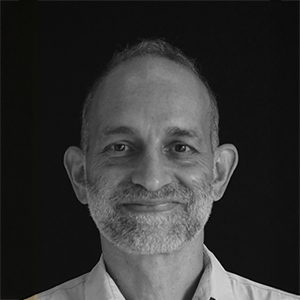
Marco Guarna is the Coordinator of the RUFA Academic Master in Design Management.
His teaching and research focus on the circular economy, innovation strategies and systemic management models capable of integrating economic resilience, environmental responsibility and long-term value creation.
The RUFA Academic Master in Design Management focuses on design-led innovation.
The programme teaches students how to interpret complex systems and transform emerging needs, behaviours and scenarios into strategies capable of generating value for businesses, institutions, communities and individuals.
Students work across design, business and technology, developing useful, accessible and sustainable experiences and solutions.
Through an interdisciplinary, project-based approach, the Master trains professionals capable of leading innovation processes, coordinating different areas of expertise and supporting organisations through change.
Language: English
Location: Rome
Duration: 12 months
Teaching hours: 500
Internship hours: 250
Qualification awarded: First-Level Academic Master
Academic credits: 60 CFA
Next intake: January 2027
Applications for the January 2027 intake are open.
Discover the RUFA Academic Master in Design Management and apply for the admission test.