

Cinema Degree: How to Turn a Passion into a Profession
Becoming a director, writing a screenplay, directing the cinematography of a film, working in editing or designing the sound of a story. Those who choose to study Cinema often start with a specific passion, but do not always know all the professions and skills that can turn that interest into a career.
The audiovisual sector is also changing rapidly. Cinema, series, streaming platforms, documentaries, music videos and new digital formats coexist in an increasingly complex market. The tools are changing, from digital cameras to artificial intelligence, but one ability remains essential: having something to say and knowing how to turn it into images, sounds and stories.
Studying Cinema therefore means much more than learning how to use a camera. It means developing your own perspective, understanding the language of film and gaining hands-on experience across every stage of production.
What do you study on a Cinema degree?
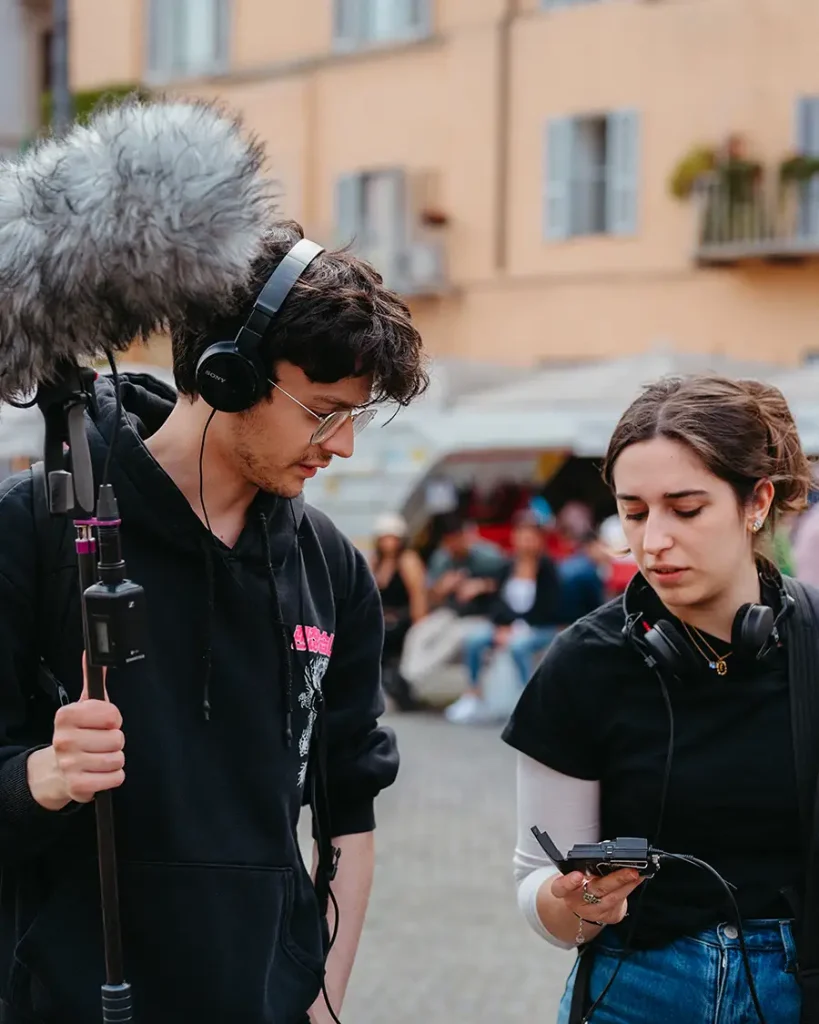
A film is created through the combination of many different skills. For this reason, film education should provide an understanding of both the creative aspects and the technical and production-related elements.
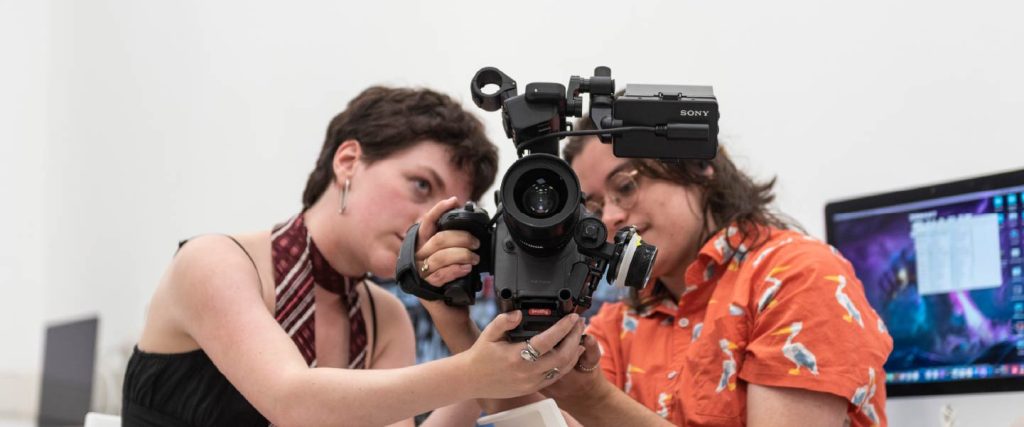
On the RUFA Cinema degree, students study directing, screenwriting, cinematography, photography, shooting techniques and editing, sound design, production and post-production, combining theory with practical classes, workshops and projects.
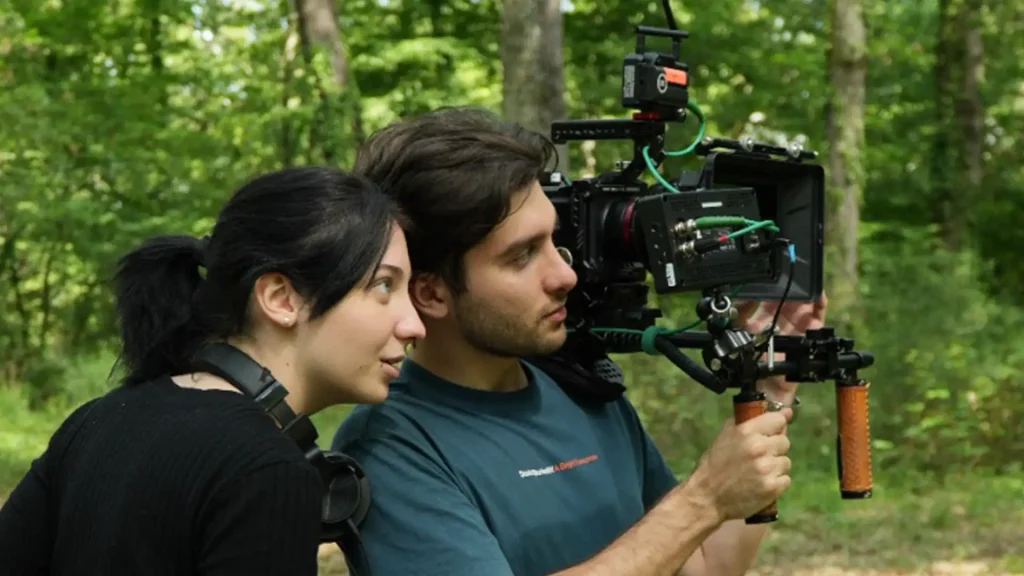
One of the key elements is learning by doing. From the very first year, students work on writing story concepts, treatments, screenplays and storyboards, progressing to the production of a short film or audiovisual project and experiencing different roles within a film crew.
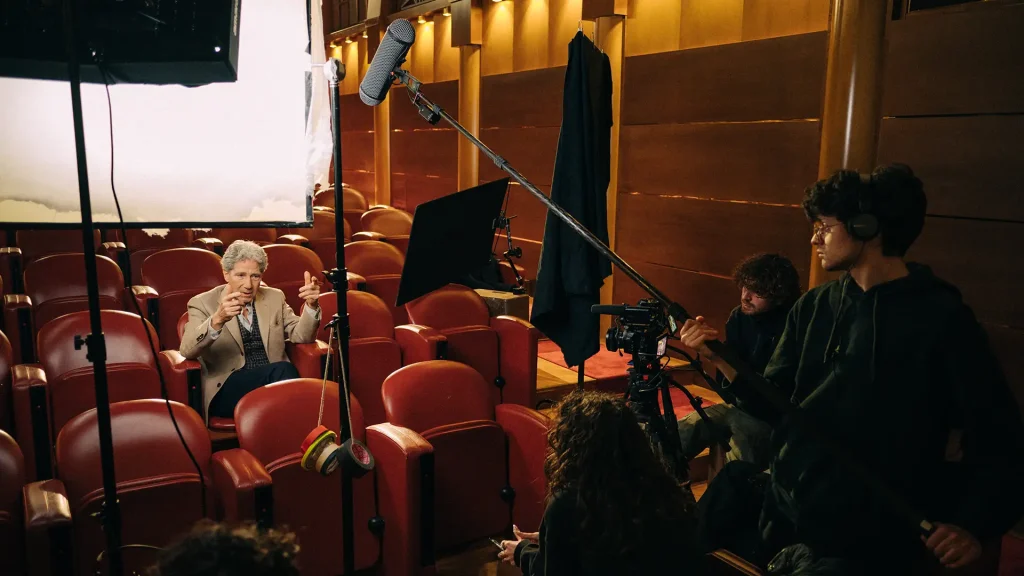
Working on set means gaining a practical understanding of how to direct an actor, how light and sound can transform a scene and its atmosphere, how a production is organised and how editing can change the rhythm of a story.
It is also the best way to gradually discover which profession within the film industry best matches your skills and aspirations.
Becoming a director: technical skills are not enough
Learning how to use a camera is important. But knowing how to use a tool does not automatically mean knowing what you want to say.
For those who want to become directors, this is the crucial step: moving from simply watching images to learning how to create them consciously.
This is also emphasised by Andrés Rafael Zabala, coordinator of the RUFA Cinema course and a director of documentaries, commercials and independent feature films. His MALLEUS received awards for directing and for the film itself at Fest Film International in Edinburgh. Zabala is also the author of the book Registi disobbedienti. La cinematografia di ieri e di oggi oltre le regole:
“The rules of cinematic language must be understood in depth, including in order to break, transcend and reinvent them. Among the multitude of films released every year, now more than ever a young filmmaker must find a distinctive personal style in order to stand out, even — indeed, above all — by challenging the conventions of classical cinema and the rules of the market.”
What careers can you pursue after a Cinema degree?
Cinema is not only about directing. An audiovisual production requires professionals with a wide range of different skills.
Career opportunities include director, screenwriter, director of photography, assistant director, editor, sound technician and production manager, as well as roles within production companies, festivals and the wider audiovisual industry.
This is why, during your studies, it is important to understand the different departments and learn how to work together. The myth of the solitary director, after all, does not stand up well to the reality of a film set.
This is also highlighted by Livia Barbieri, coordinator of the RUFA Master’s Degree in Film Arts, who trained in production at the Centro Sperimentale di Cinematografia and worked with Claudio Giovannesi on Fratelli d’Italia, Alì ha gli occhi azzurri and Fiore. At RUFA, she has also taken part in interdisciplinary projects, including a collaboration with Balletto di Roma to explore contemporary dance through the language of film.
“A film begins with an idea, but it survives thanks to those who know how to carry it through. We ask students to think like filmmakers and work as a crew: the vision is personal, but cinema is always collective.”

Cinematography and sound: storytelling beyond directing
Directing is only one way of telling a story. Cinematography, for example, uses light, colour, composition and camera movement to shape how a scene is perceived.
Francesco Pennìca, lecturer on the Cinema course and tutor on the RUFA Master’s Degree in Film Arts, graduated in cinematography from the Centro Sperimentale di Cinematografia under the guidance of Giuseppe Rotunno and has worked across feature films, documentaries, music videos, advertising and television.
“Technology changes every year, but light continues to tell a story. A camera can record anything; deciding what to show and what to leave in the shadows is a narrative choice.”
The same applies to sound. Dialogue, ambience, music and silence do not simply accompany images: they help shape their meaning.
From your first short films to a professional portfolio
Working on productions during your studies also allows you to start building a showreel, an essential tool for anyone who wants to work in the audiovisual sector.
Short films, documentaries, screenplays, directing exercises, editing work and crew-based productions gradually become ways to showcase your skills and professional identity.
In some cases, projects developed during students’ studies continue their journey beyond the Academy.
This was the case for Elia Canevascini, a RUFA graduate whose documentary Lääne/Vostok (West/East), originally developed as a graduation project, was selected for the Pardi di Domani section of the Locarno Film Festival.
Another example is Sim Levi Tezel, a graduate of the RUFA Cinema degree. After completing her studies, she continued working in directing and screenwriting and, in 2026, won the Mattador International Screenwriting Award for Best Feature Film Screenplay with Costantinopoli.
These two different experiences show how education can become the starting point for developing a personal creative and professional path.

Festivals, industry and networking: taking a film beyond the classroom
Learning how to make a film is only part of the journey. It is equally important to understand how a work reaches audiences, festivals, producers and distributors.
RUFA develops collaborations with industry organisations such as Rai Cinema, Fandango, Lucky Red, Cattleya, MTV, Minerva Pictures and Milano Film Fest, complementing teaching with workshops and meetings with professionals.
One example is RUFA On Screen, the showcase dedicated to works by students and alumni.
In 2026, Nuovo Cinema Aquila in Rome hosted 28 works selected from 66 submissions by students from RUFA courses in Cinema, Film Arts, Computer Animation and Visual Effects, and Photography and Audiovisual.
During the event, students had the opportunity to engage with professionals such as Matteo Rovere, Carolina Crescentini, Daniele Ciprì and Mirko Perri, as well as producers and distributors.
RUFA On Screen also involved organisations such as Rai Cinema, Esen Studios, Sayonara Film, One More Pictures, SCAI Comunicazione, Lers Film and Allegorie Film. The awards included one-year distribution contracts designed to support selected works through national and international festivals.
This is where a project created during your studies can begin to engage directly with the industry.

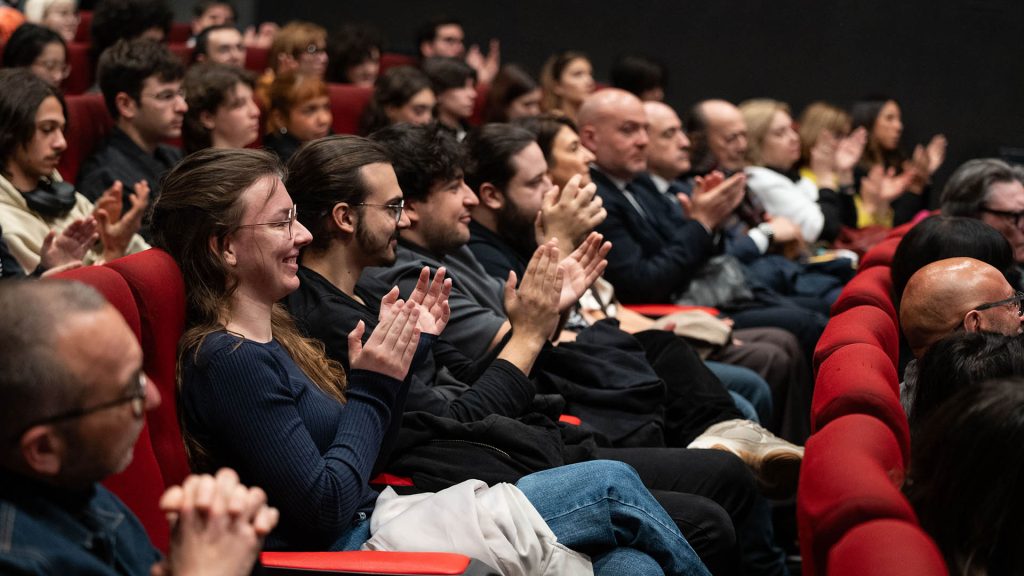
RUFA’s relationship with the industry is also strengthened through participation in major film events. In September 2026, RUFA took part in Giornate degli Autori, held as part of the Venice International Film Festival, with the talk Sound Aesthetics in Cinema. When Moving Images Meet Music, promoted in collaboration with Saint Louis College of Music.
At the Casa degli Autori on the Venice Lido, professionals from the fields of directing, sound design and music composition – including Alain Parroni, RUFA Alumnus, and Mirko Perri, RUFA Visiting Lecturer – explored the relationship between images, music, voices, sounds and soundscapes. The event provided an opportunity to connect education, research and professional practice within one of the key forums for dialogue in the contemporary film industry.
It is also through experiences like these that a project or skill developed during one’s studies can move beyond the classroom, connect with professionals, festivals and distributors, and begin to engage directly with the film industry.
Studying Cinema in Rome or Milan?
The RUFA Cinema degree is available in Rome, in both Italian and English, and in Milan, in Italian.
Rome has a historic relationship with Italian cinema and is one of the country’s leading centres for film and audiovisual production. Milan, meanwhile, offers an ecosystem closely connected to communication, advertising, audiovisual media, new media and the creative industries.
In both cities, studying in a place where these sectors operate and produce work every day allows students to engage with the professional environment while they are still in education.
Is a Cinema degree valuable in the professional world?
The RUFA Cinema degree lasts three years and is worth 180 CFA – Academic Credits. Since 2026, under the new provisions governing the AFAM system, the qualifications previously known as First- and Second-Level Academic Diplomas have respectively been renamed Bachelor’s Degree and Master’s Degree.
Alongside the qualification itself, however, there is another crucial factor for entering the industry: what you can actually do. This is why academic education, on-set experience, a showreel and networking need to develop together.
Frequently asked questions
A Cinema degree combines creative, technical and production skills. On the RUFA Cinema course, students study directing, screenwriting, cinematography, shooting techniques, editing, sound design, production and post-production, combining theory with practical classes, exercises and audiovisual productions.
After a Cinema degree, you can pursue a career as a director, screenwriter, director of photography, assistant director, editor, sound technician or audiovisual production professional. The skills acquired can be applied to film, series, documentaries, advertising, music videos and new digital formats.
The RUFA Cinema degree lasts three years and awards 180 CFA – Academic Credits. The course combines theoretical study, practical activities and the development of audiovisual projects.
RUFA offers a three-year Cinema degree in Rome, available in both Italian and English. The course allows students to explore directing, screenwriting, cinematography, editing, sound and production through classes, practical workshops and projects created as part of a crew.
RUFA also offers the Cinema degree at its Milan campus, taught in Italian. Studying Cinema in Milan means training within an environment closely connected to the audiovisual, communication, advertising and creative industries.