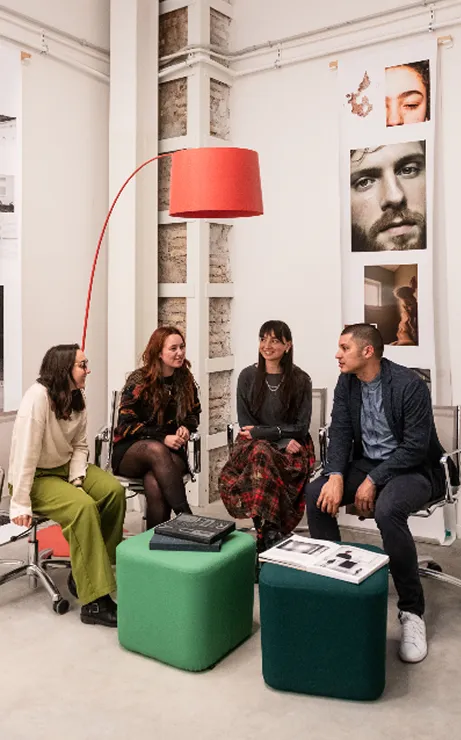
Fundamentals of Painting
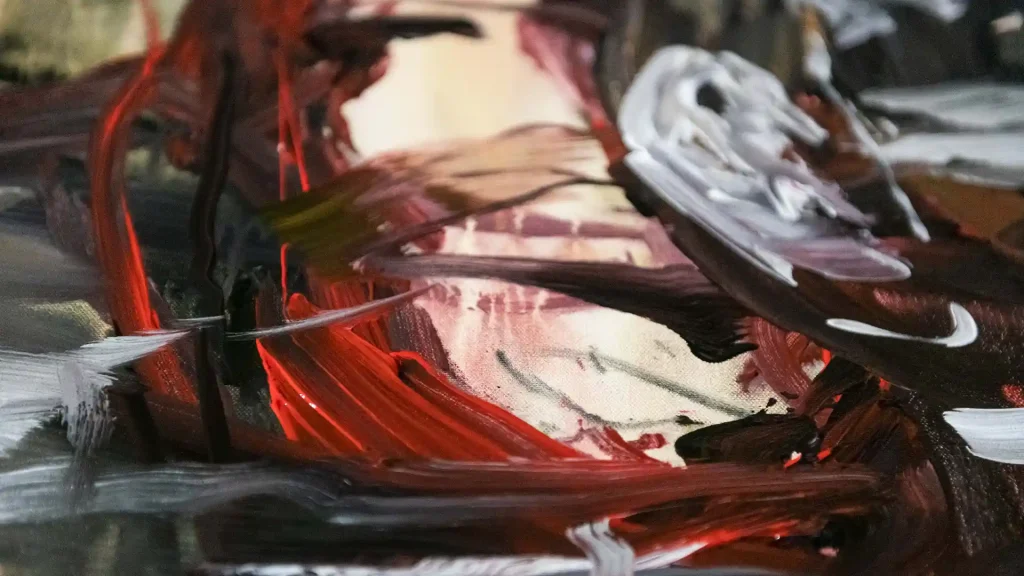
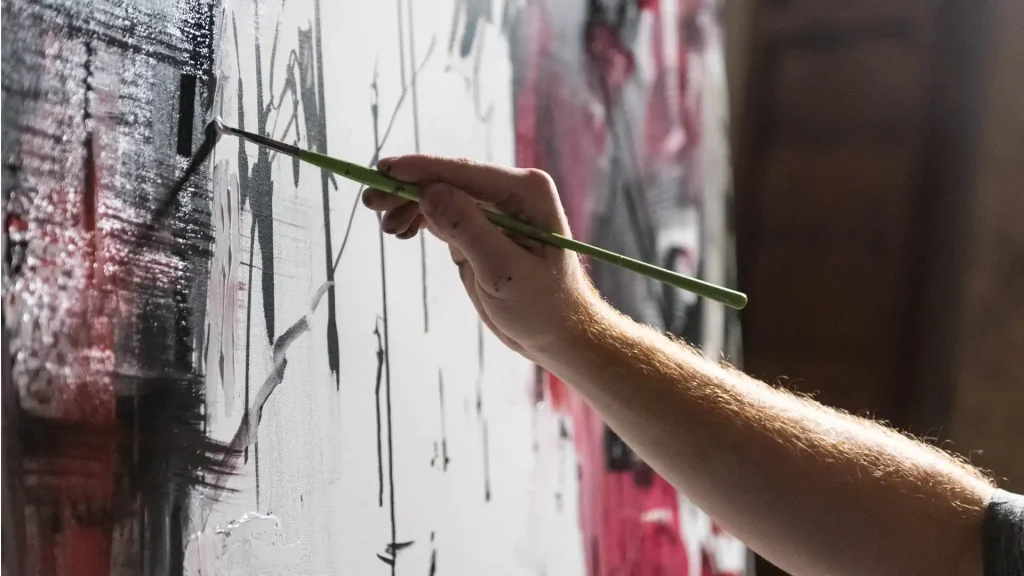
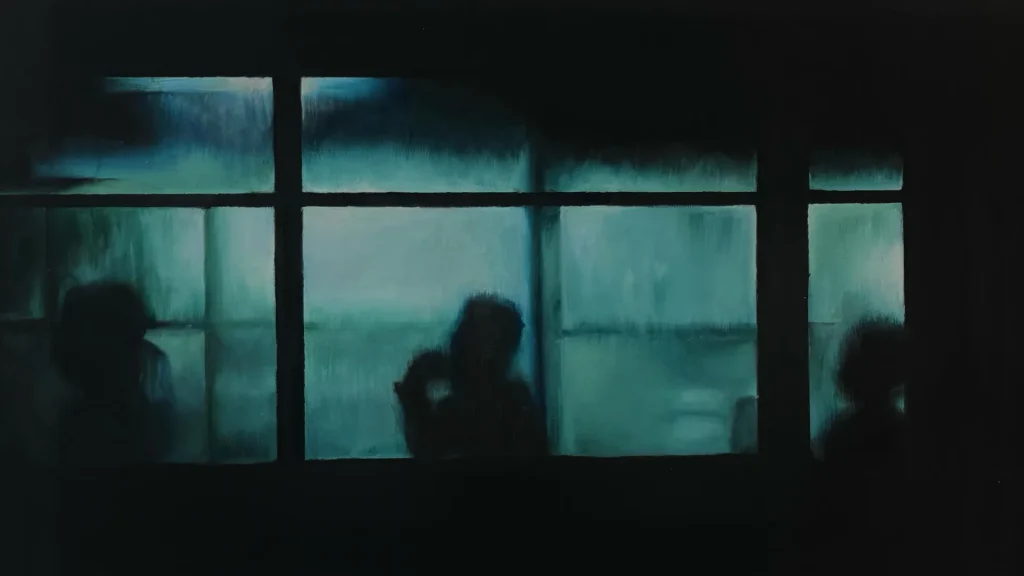
Here you will acquire the foundations of painting practice through a programme combining colour theory, composition, techniques and working processes through theory, workshop activities and experimentation with different materials, tools and visual languages.
A journey of painting research
Guided by the lecturer, you will develop a personal research path aimed at bringing out an authentic vision and a recognisable painting language, transforming technique, observation and sensitivity into a conscious form of expression.
At the end of the course, participants will receive a certificate of attendance, which may be used for the possible recognition of 1 CFA academic credit.
Who is the Painting Fundamentals short course for?
The Painting Fundamentals short course is aimed at those who want to approach painting practice through a group-based workshop programme. It is designed for students, enthusiasts, creatives and professionals who want to acquire solid technical foundations and develop their own personal expressive research.
No previous skills are required. Curiosity, a willingness to experiment and active participation are, however, essential.
Between the autumn and spring sessions, a short winter course in Advanced Painting is offered, specifically intended for students who have already attended the Foundations of Painting course and for those entering the Academy with a solid foundation and an active artistic practice.
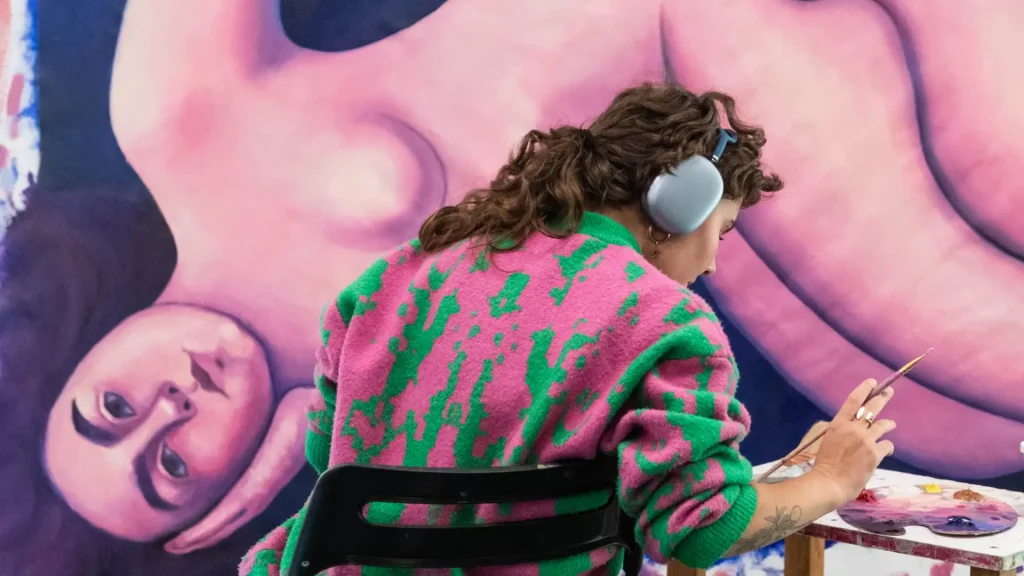
Course type: group – in person
Number of participants: Max. 15
Attendance: weekly, Saturdays from 9:00 am to 1:00 pm
Duration: 8 lessons – 32 hours total
Cost: €490.00 in a single payment or two instalments of €250.00
Materials: to be purchased by participants, see the Programme section
Requirements/materials: none
Language: Italian
Lecturer: Guido D’Angelo
Campus: RUFA – Via degli Ausoni, 7 Rome
Scheduled annual sessions:
FOUNDATIONS OF PAINTING
Autumn Session > October 17 – December 12, 2026
Spring Session > March 13 – May 5, 2027
ADVANCED PAINTING
Winter Session > January 9 – February 27, 2027
Objectives: During the short painting course, each student will have the opportunity to develop their own painting practice with the support and guidance of the lecturer in all theoretical/conceptual and technical aspects. The main painting techniques covered will involve paints with a vinyl emulsion binder. Alongside individual lines of research, exercises on specific themes relevant to the educational programme will be proposed, such as: “landscape between vision and composition”, “self-portrait: seeing the invisible”, “still life: constructing and deconstructing towards abstract form”. Students will also be encouraged to study and explore paintings drawn from art history.
During the course, students will address the following topics and technical applications:
– Colour theory, colour harmony and chromatic relationships.
– The study of pictorial composition.
– Tonal gouache painting with vinyl emulsion paints.
– Painting and gesture with vinyl emulsion paints.
– Painting and matter with vinyl emulsion paints.
Recommended bibliography
Johannes Itten – The Art of Color, Ediz. Il Saggiatore, 2007
Alberto Boatto – Di tutti i colori. Da Matisse a Boetti, le scelte cromatiche dell’arte moderna,
Ediz. Laterza, 2012
Philip Ball – Colore. Una biografia. Tra arte storia e chimica, la bellezza e i misteri del mondo del colore, Ediz. BUR, 2014
Materials for drawing techniques:
1 graphite pencil (choose from Caran d’Ache – Staedtler – Winsor & Newton – Conté à Paris – Koh i Noor – Faber Castell – Derwent), grade: 2B or 4B; 1 white Staedtler eraser (or similar); 1 pencil sharpener; 1 pack of Winsor & Newton willow charcoal sticks (or another brand), medium size; 1 30 ml bottle of Winsor & Newton black India ink; 10 sheets of “carta da spolvero” paper, size 70X100 CM.; one roll of yellow paper masking tape, 3 cm wide.
Materials for the technique using water-based vinyl emulsion Flashe colours by Lefranc Bourgeois;
Colours: 1 titanium white 022; 1 light Japanese yellow 183; 1 carmine red 366; 1 ultramarine blue 043; 1 phthalo blue 036; 1 raw sienna 482; 1 raw umber 478; 1 black 265; 1 500 ml jar of white acrylic gesso, Lefranc Bourgeois. Flat brushes with long handles in hog bristle or strong synthetic fibres (hard type – each brand has its own classification, generally ranging from 0 to 28): 1 medium brush, size 14 or 16; 1 small brush, size 6 or 8; 1 small brush, size 2; 2 flat hog-bristle brushes (one no. 25 or no. 30 and one no. 50 or no. 60 – the Tintoretto brand offers good value for money); 1 steel palette knife (sufficient for taking colour from the jar)
Canvases: One canvas per lesson should be provided (size 50 X 60 cm)
Contact [corsibrevi@unirufa.it](mailto:corsibrevi@unirufa.it) for further information on purchase orders and discounts.
Other materials: large flat plastic plates; water container (such as a deep bowl or jar); fabric rags for cleaning materials and tools.
FUNDAMENTALS OF PAINTING
Autumn Session
OCTOBER
17/10/2026
24/10/2026
31/10/2026
NOVEMBER
07/11/2026
14/11/2026
21/11/2026
28/11/2026
DECEMBER
12/12/2026
Spring Session
MARCH
13/03/2027
20/03/ 2027
APRIL
03/04/2027
10/04/2027
17/04/2027
24/04/2027
MAY
08/05/ 2027
15/05 2027
ADVANCED PAINTING
JANUARY
09/01/27
16/01/27
23/01/27
FEBRUARY
06/02/27
13/02/27
20/02/27
27/02/27
Guido D’Angelo, an artist and lecturer in Painting Disciplines, was born in Rome in 1971, where he lives and works. He graduated with honours from the Academy of Fine Arts in Rome under artist Gino Marotta and obtained his teaching qualification in Painting Disciplines in 2008. In 2009, he completed a Master’s degree in Education Sciences at Niccolò Cusano University. In 1996, he was among the founders of the “SANGIORGIO” group, dedicated to technical experimentation with slide projections in Multiverso, inspired by the historic “Lanterna Magika”. In 2005, in Berlin, he launched PROGETTO ALIACORPORA, a collective project centred on the concepts of Action-Image-Environment. From 2006 to 2010, he collaborated with artist Paolo Cotani. In 2013, he founded the MAGTRE project. In 2020, he founded the KHLAB Laboratorio Kaspar Hauser project. His research focuses on painting understood primarily as a language and a process-based system. His work also extends to installation-based approaches using different materials including rubber, metal, wood and fabric. Since 2018, he has been a lecturer in Techniques and Technologies for the Visual Arts at the RUFA Faculty of Fine Arts.
RUFA Students and Alumni: 50% discount
Former RUFA Short Courses and Summer Academy students: 10% discount
University students: 5% discount (upon presentation of a valid university student record)
Course packages/groups/families: contact corsibrevi@unirufa.it for tailored solutions and free guidance on the best combination of courses for each semester
Request information
Hai domande sul mondo RUFA? Siamo qui per orientArti!
Il nostro team orientamento è qui per te tutto l’anno, pronto a rispondere ad ogni tua domanda.