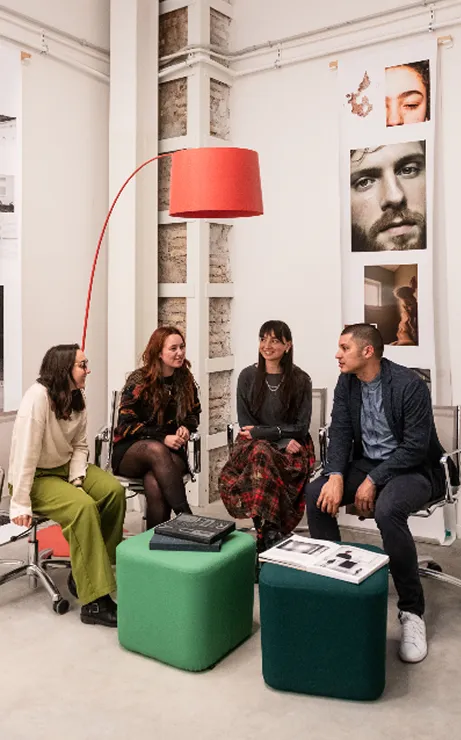
Performance
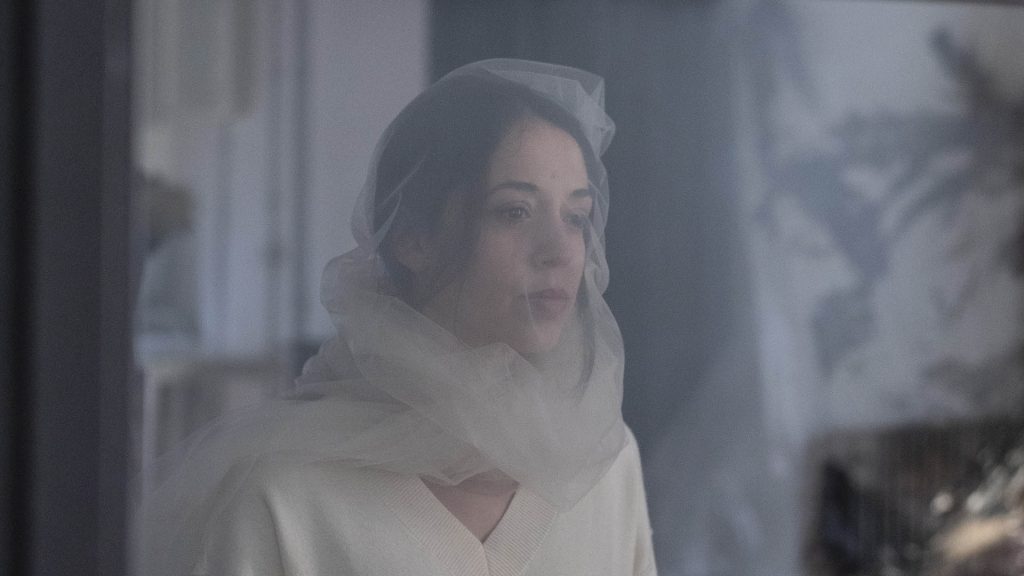

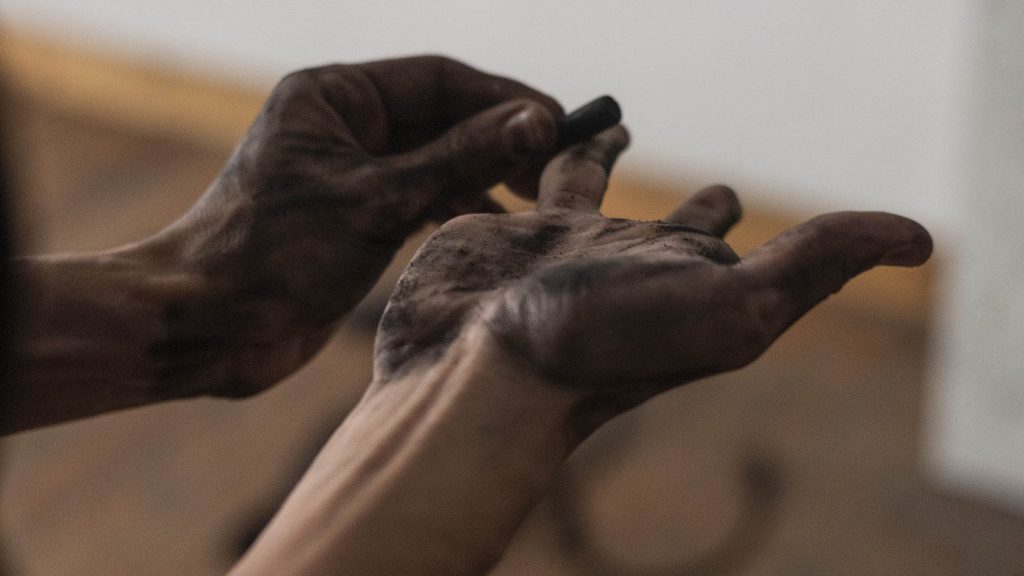
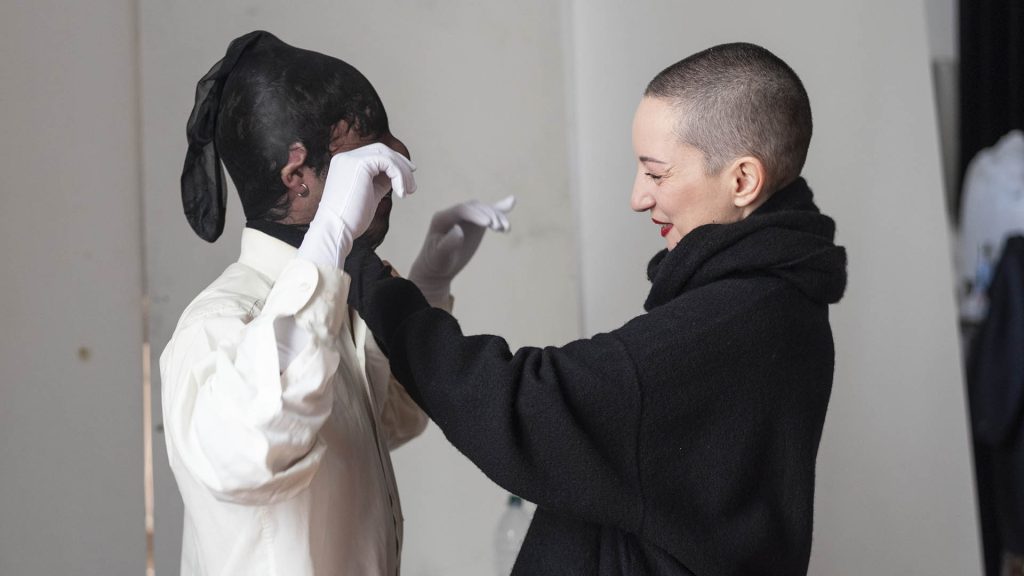
Performance art is action and physical presence in time and space. A fleeting, ephemeral discipline, at times politically incorrect or unsettling, it continues to inspire new generations of artists and influence contemporary visual culture.
Time, space, body
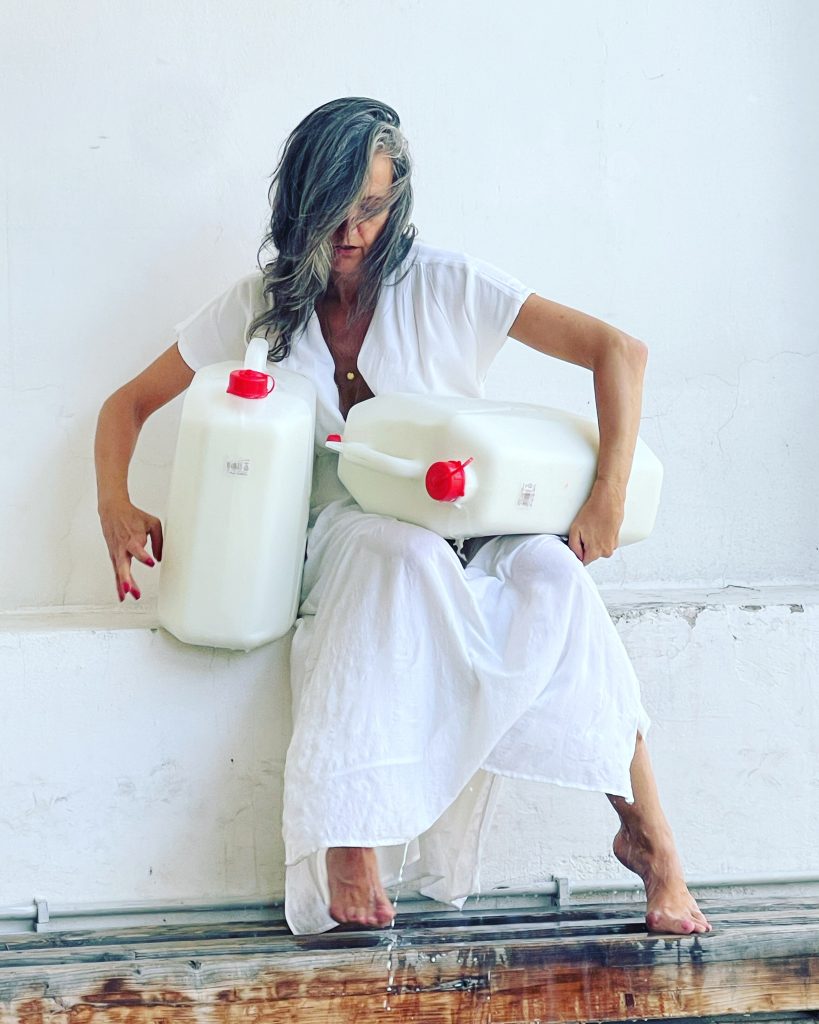
The Performance course, developed from the artistic research and practice of Marta Jovanović, is carried forward by her assistant Chantal Spapens, ensuring continuity with the path established by the artist. The programme focuses both on individual and group practice and on developing critical thinking around the discipline. From the initial idea to a public performance, the classes guide participants through the development of a complete performance work.
The course is open to everyone, regardless of their artistic or professional background.
Approach and objectives
Performance theory and history are integrated into the course structure as essential tools for developing an informed approach, while light physical exercises and trust-building practices form part of the training in every session.
The course does not end with its final presentation. Rather, it aims to open students up to unexplored expressive possibilities, through a body that does not simply tell a story, explain or show, but expresses, evokes and challenges.
Body and authenticity
No previous skills or experience are required, only a genuine willingness to explore and share within the common space of the class: a desire to learn that goes beyond the limits of technique and responds first and foremost to a personal expressive urgency.
The proposed approach deeply combines individual research into expression through the body with the relationship between space and the community that inhabits it. The objective is twofold: on the one hand, to strengthen critical awareness of the discipline; on the other, to support the necessary personal research that accompanies every attempt at authentic artistic reinterpretation.
High-quality performance practice is rooted in the individuality of the person taking action, but must also be capable of engaging with a diverse audience that is sensitive to the languages of the present.
At the end of the course, participants will receive a certificate of attendance, which may be used for the possible recognition of 1 CFA academic credit.
Course type: group – in person
Number of participants: Max. 12
Attendance: weekly, Saturdays from 2 pm to 6 pm
Duration: 8 lessons – 32 hours total
Cost: €490.00 in a single payment or two instalments of €250.00
Materials: none, except for the final performance, to be provided by participants if required by their project
Requirements/materials: none
Language: Italian
Lecturer: Chantal Spapens
Campus: RUFA – Via degli Ausoni, 7 Rome
Important note: The following programme should be considered indicative. The structure, content and exercises may vary depending on the group, the number of participants, specific needs and the natural development of the work throughout the course.
Practical advice: Participants are advised to wear comfortable, layered clothing that allows freedom of movement, as light physical exercises will be included during the lessons.
Lesson 1 — Introduction to Performance Art
Theoretical content
• What is performance art: definitions, contexts and differences from theatre and dance.
• Historical origins: Futurism, Dada, Fluxus, body art.
• Performance as an ephemeral experience: the role of the audience, presence and time.
Practical exercises
• Grounding: breathing and grounding exercises to develop bodily presence.
• Observing/Observing oneself: mindful walking exercises and use of the gaze.
• The body as material: small, slow, repeated actions to understand the body as a language.
Lesson 2 — Body, space and time
Theoretical content
• Analysis of performance space: indoor/outdoor, museum/public space.
• Time in performance: duration, repetition, endurance.
Practical exercises
• Mapping the space: slow exploration of the environment to identify limits, possibilities and points of friction.
• Timed actions: repetition of a gesture for 5, 10 and 15 minutes to perceive time through the body.
• Exercises in stillness: maintaining a position for an extended period to understand tensions and energies.
Lesson 3 — Identity, autobiography and the political body
Theoretical content
• Identity, gender, intimacy and vulnerability in performance.
• The body as a personal and political archive.
Practical exercises
• An autobiographical gesture: identifying a gesture that tells something about oneself and amplifying it.
• Voices of the body: vocal exercises using non-linguistic sounds as a means of expression.
• Micro-narratives: small actions emerging from personal memories.
Lesson 4 — Archive, documentation and traces
Theoretical content
• Documentation in performance: photography, video, text and material traces.
• How to build a personal and professional archive.
Practical exercises
• Writing the action: each participant describes an action they have performed or imagined in no more than 5 lines.
• Documenting others: practical photography and video exercises during short actions performed by fellow participants.
• Self-archiving: creation of an initial archive folder/structure.
Lesson 5 — Developing personal ideas
Theoretical content
• How a performance is constructed: concept, actions, materials, duration and context.
• Artistic references: analysis of relevant case studies.
Practical exercises
• Guided brainstorming: conceptual map of one’s own idea.
• Testing a key gesture: each participant tries out their central gesture in front of the group.
• Circular feedback: respectful and constructive feedback.
Individual development of the performance: concept, intentions and artistic direction.
Lesson 6 – Performance
Presentation of the students’ first performances.
Group discussion and analysis.
Lesson 7 – In-depth exploration and feedback
Critical feedback, further exploration of emerging themes and development of the work.
Final Project
Lesson 8 – Towards the Final Performance
Structuring and refining the final performance project.
Lesson 9 – Final Performances
Lesson 10 – Presentation of the final performances with related documentation.
Final discussion.
MARCH
13/03/2027
20/03/2027
APRIL
03/04/2027
10/04/2027
17/04/2027
24/04/2027
MAY
08/05/2027
15/05/2027
Chantal Spapens is a French-Dutch visual artist and performer who lives and works in Rome. Her practice brings together performance, sculpture and installation, exploring the body as a site of desire, memory and relationships. Through durational performances and the transformation of everyday objects and materials, she reflects on the relationship between caring for others and personal independence, between private life and public exposure, and on the lack of social recognition afforded to domestic labour.
Her research develops in dialogue with feminist thought, particularly with Sara Ahmed and her reflections on the orientation of bodies in space and on the norms that shape their possibilities and desires. Repeated gestures, physical endurance and material processes become tools for making perceptible experiences that are often confined to the private sphere. In her work, the body tests these tensions through action and through encounters with the audience.
She has presented her work at MAXXI in Rome, Fondazione Arthur Cravan in Milan, and as part of the Venice International Performance Art Week.
Alongside her artistic research, she has gained experience in tutoring and facilitating performance-based activities at RUFA, including the Performing Rome project. Her approach combines practical experimentation with critical reflection, guiding participants in exploring the relationship between body, materials and space, and in developing a personal performance language. From spring 2027, she will continue the teaching research developed by Marta Jovanović by leading the RUFA Short Course in Performance, taught in Italian.
RUFA Students and Alumni: 50% discount
Former RUFA Short Courses and Summer Academy students: 10% discount
University students: 5% discount (upon presentation of a valid university student record)
Course packages/groups/families: contact corsibrevi@unirufa.it for tailored solutions and free guidance on the best combination of courses for each semester
Request information
Hai domande sul mondo RUFA? Siamo qui per orientArti!
Il nostro team orientamento è qui per te tutto l’anno, pronto a rispondere ad ogni tua domanda.