

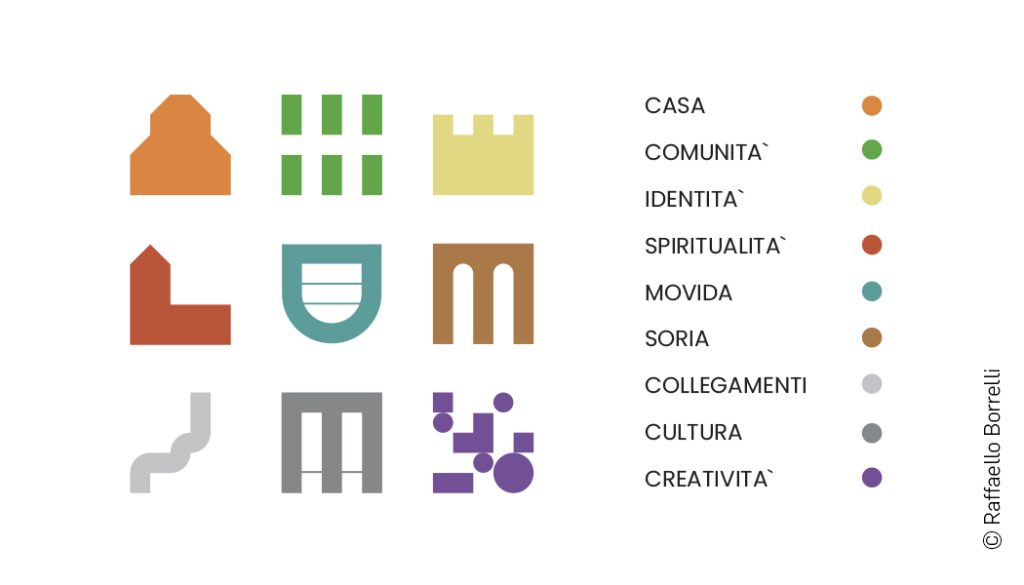
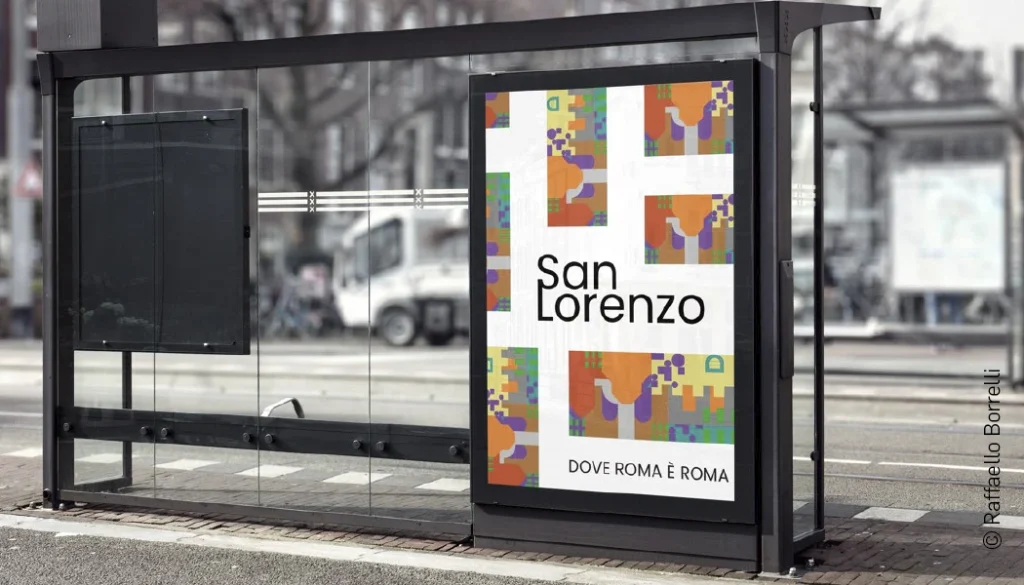
City Branding is a well-attended city branding project for a district which is multifaceted, vibrant, innovative and traditional at the same time. As North European and global experiences can attest, a developed cultural district can be built through definition and identity storytelling. These are key tools to upgrade an area and make it grow both in terms of attractiveness and social cohesion.
Place design projects show how the idea of corporate image has changed. There is a switch from the 1960s Modernism – the Swiss Style – marked by geometric abstactionism, both functionalist and universalizing, as an ethical response to the ‘statuary’ communication particularly dear to the nihilistic nationalisms of the World War II, to the international style of post-war big multinational companies, still influenced by the Swiss Style. After the post-modern rupture with the functionalist rigorism, today we witness a style that leaves behind the formal uniformity and the static and replicable identity – metaphor for Fordism and its standardized mass production – together with post-modern compulsive subjectivism, in favour of artifacts that strive to convey complex concepts such as resilience, ecosystems and community. The 20th century hierarchical tree structures make way for Deleuzian post-structuralist deconstructive rhizomes, so useful today to represent collective subjectivities, fusional experiences and interpersonal identities, rather than the empty metaphysics of the post-modern subject.
In fact, the designers work on the visualization of the limits of form, they determine how and when a structure can be identifiable when it is subject to stimuli varying in intensity over time. Thus, they work on guidelines, on prerequisites to be set and then abandon the prompt control of infinite combinations that variables of the dynamic system can generate without, however, resign themselves to chaos.