

An innovative project for the cultural regeneration of San Lorenzo
Piazze romane
Conceived and developed by RUFA, with the support of the Lazio Region as part of the DTC – Technological District for Cultural Heritage and Activities.
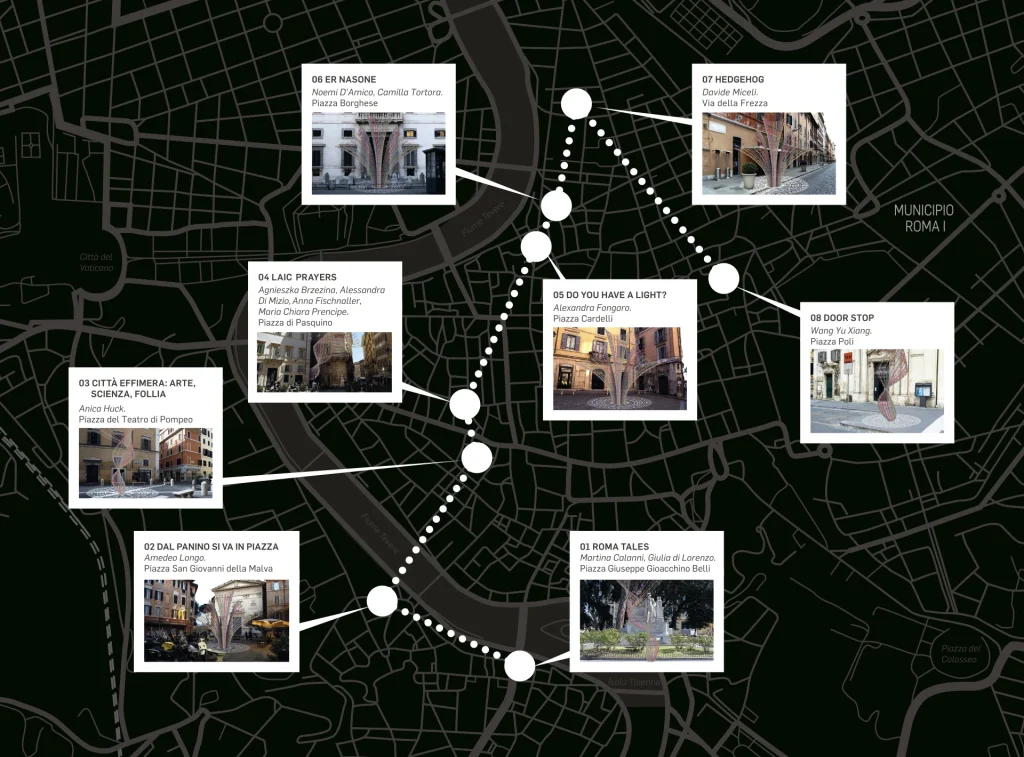
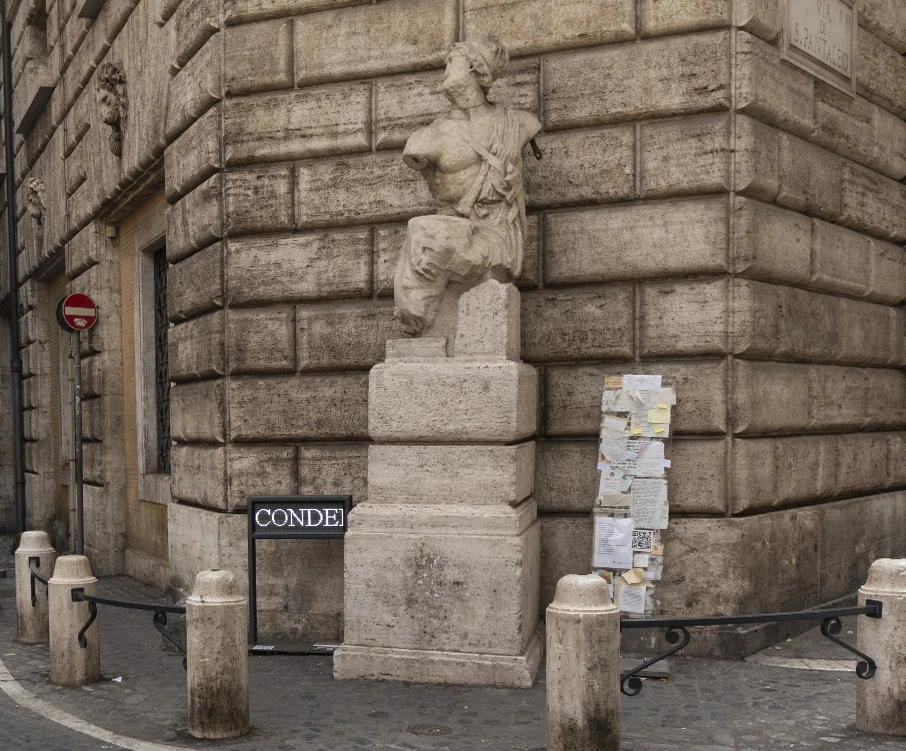
Between 2014 and 2020, the Municipio Roma I Centro worked to support the planning and implementation of redevelopment and maintenance projects for public urban spaces in the historic centre of the Capital. It was within this context that “Roma sei mia” was created: a broad and diverse project designed to serve the public interest and encourage community participation in caring for the local area. The redevelopment of squares, pavements, pedestrian areas and urban sections made eight different sites accessible and attractive: Piazza Poli, Piazza Giuseppe Gioacchino Belli, Piazza Cardelli, Piazza San Giovanni della Malva, Piazza di Pasquino, Piazza Borghese, Piazza del Teatro di Pompeo, Via della Frezza. These are places rich in meaning, sometimes connected to little-known anecdotes and events that reveal the many facets of the city. In order to enhance the value of this experience, Municipio Roma I Centro sought to convey from these same locations a message of cohesion, social interaction and renewal through the languages of contemporary art.
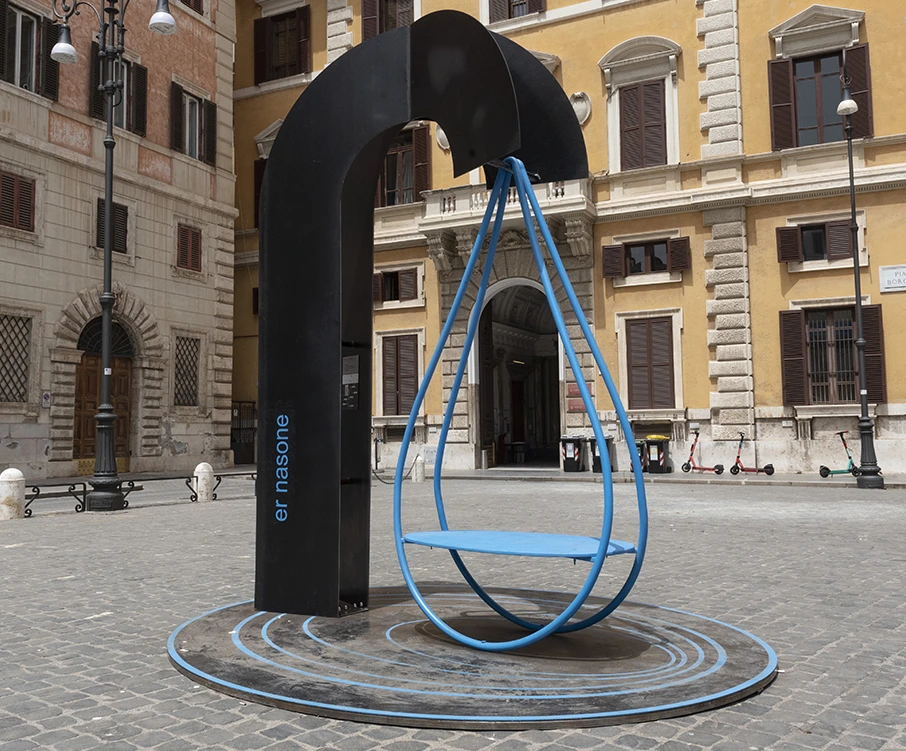
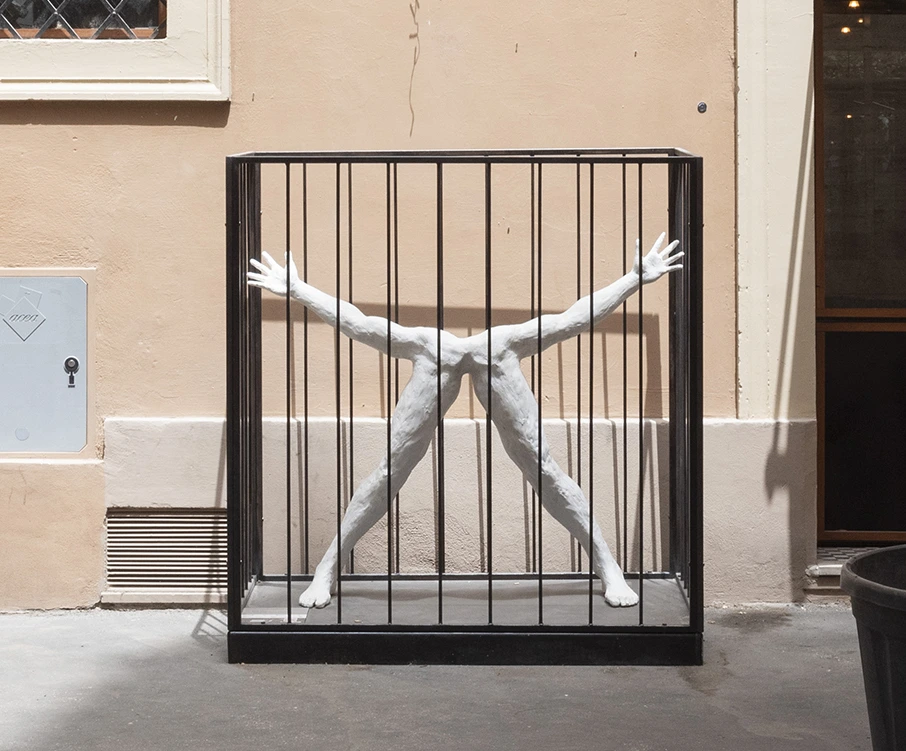
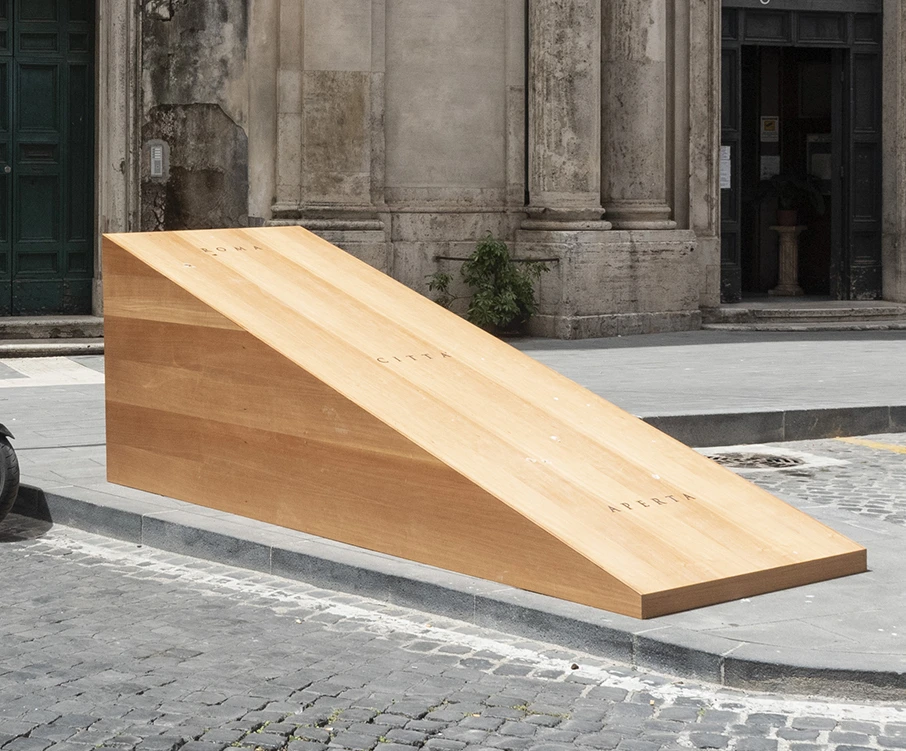
Students training at the Academies of Fine Arts were invited to develop a “site-specific” project, conceived as a collective and contemporary experience, by designing artworks and installations to be temporarily displayed in these designated locations in Rome’s historic centre. The works would then be relocated to the outskirts of the city, in unconventional sites, promoting a different form of cultural engagement and drawing on the dynamism that new generations of artists are able to create.
This led to the development of a particularly compelling proposal: “Lightness, oxygen, breath, life, energy”, inspired by the United Nations 2030 Agenda. An experience that encourages dialogue and the creation of a community of people eager to expand their network of relationships and begin moving forward once again. Contemporary art offers different generations an innovative and inquisitive perspective on the present and the future, developing not only a historical identity, but also the critical attitude that makes independent thought possible.
The route
Travelling is an act that leads to discovery and therefore to knowledge. The “Roman Squares” project is conceived as the ideal setting for a journey of reflection through history, memory, identity and innovation: 4.2 kilometres through the heart of Rome’s historic centre; a 53-minute walk to appreciate the cultural layers that make the Eternal City unique; an immersive experience in contemporary culture. The aim is to engage with the many places of interest and rich significance found within 4 of the 22 districts that shape the toponymy of the Capital: Trastevere (Piazza Giuseppe Gioacchino Belli, Piazza San Giovanni della Malva), Parione (Piazza di Pasquino, Piazza del Teatro di Pompeo), Campo Marzio (Piazza Borghese, Piazza Cardelli, Via della Frezza), Trevi (Piazza Poli).
The method
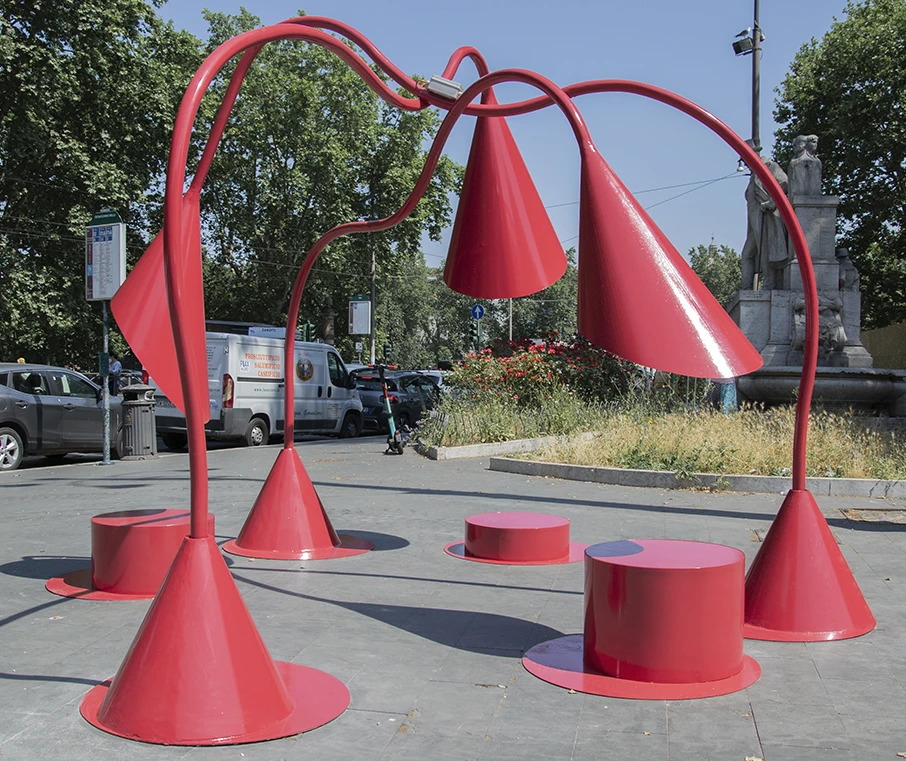
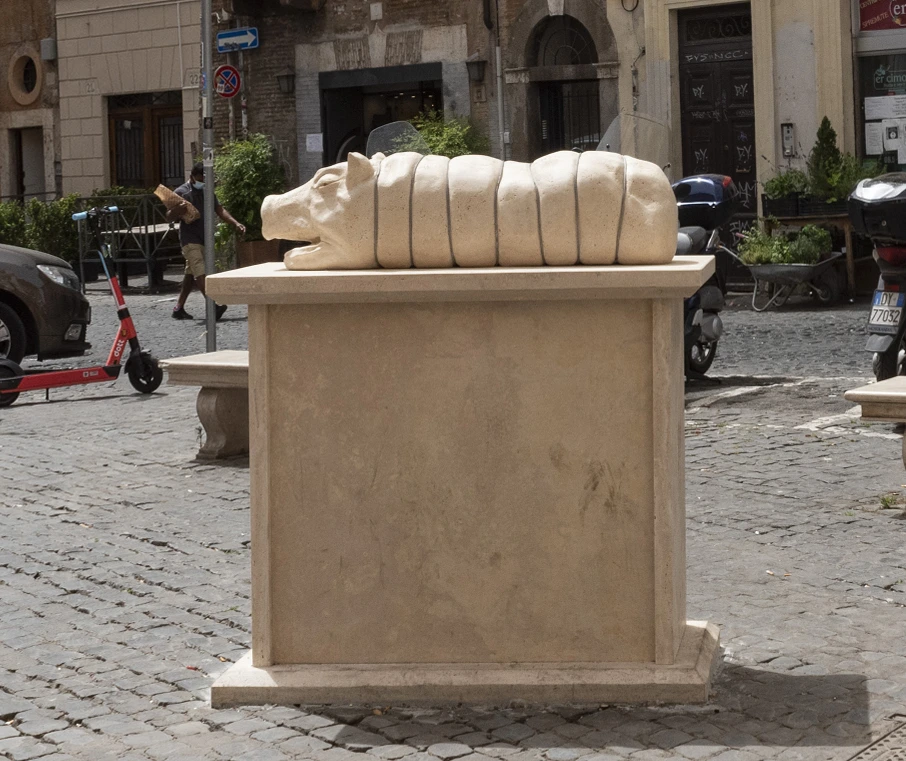
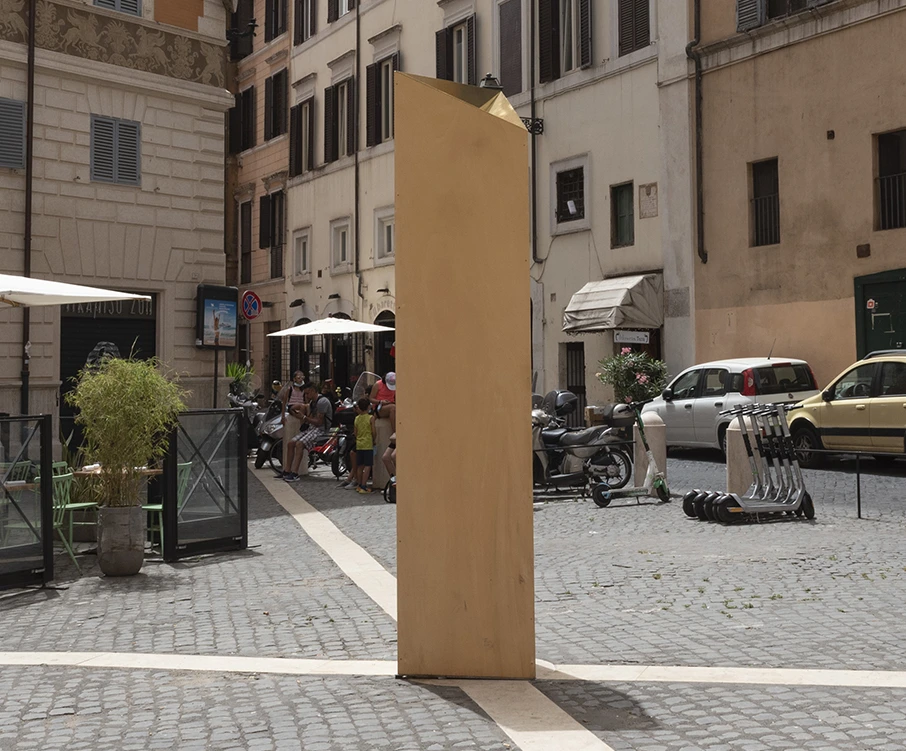
In developing the design proposals, priority was given to the temporary placement of the works and the related need for the structures to be entirely self-supporting. These artistic interventions are conceived as works contextualised within the urban spaces of Rome’s historic centre, selected in order to enhance the redevelopment projects that have been carried out. In considering the relationship between the works and their historical, cultural and artistic context, the meaningful coherence between the location and the theme was regarded as a defining feature of the works themselves.
The works
Project Making of

Backstage press conference
