

RUFA x Movimento Moda Responsabile
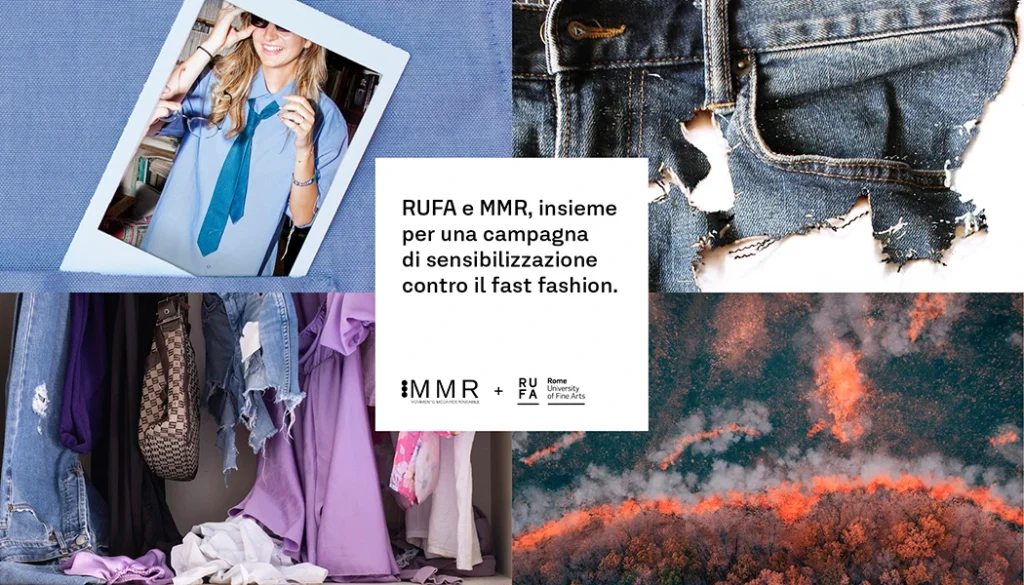
To understand how advertising communication can help promote more sustainable fashion, RUFA students from the Graphic Design course worked on the creation of a creative campaign focusing on the main environmental and social issues associated with fast fashion, in collaboration with experts from Movimento Moda Responsabile and the non-profit association rén collective. This joint initiative arose from the educational activities led by RUFA lecturers Claudio Spuri and Alessandra Giacomelli, giving students the opportunity to reflect on and take a position on real issues that are closely connected to contemporary society. The campaigns were launched on MMR’s and RUFA’s institutional channels during Fashion Revolution Week 2024, a key occasion for reflecting on our environmental impact through our fashion choices.
The young designers faced a challenge that directly affects them: how can communication be used to guide the public towards responsible and sustainable clothing purchases? How can the environmental, economic, ethical and social pollution caused by Fast Fashion be made visible?
The non-profit association MMR (Movimento Moda Responsabile) leads a global movement promoting awareness, information, action and policies aimed at encouraging the wider adoption of sustainable fashion. RUFA students worked to provide the organisation with creative campaigns capable of reaching as many people as possible through the language of advertising, helping to change purchasing habits and consumption patterns.
Fast Fashion Fast Ending
by Carola Autili, Ilaria Bucci and Elisa Drosi.
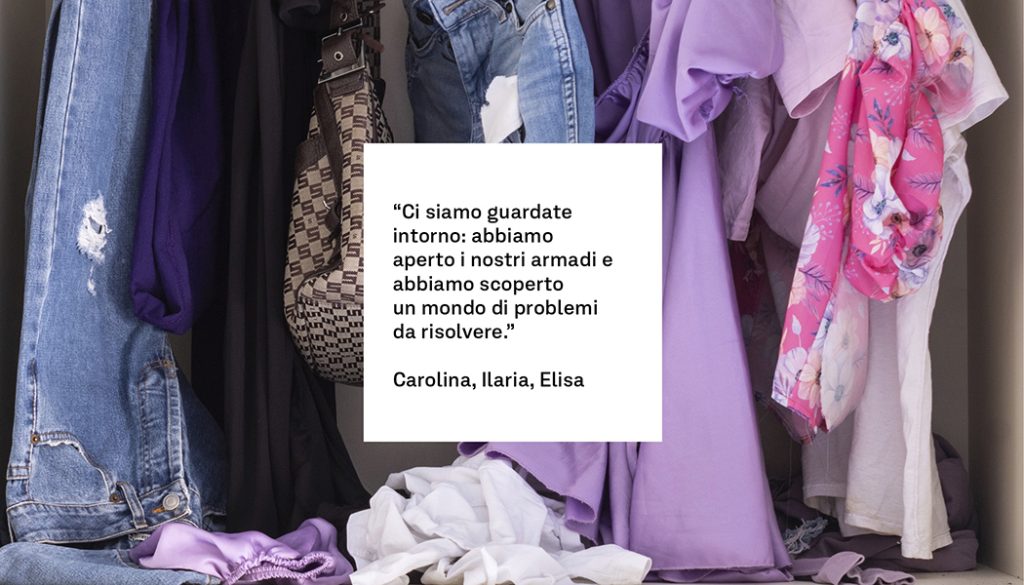
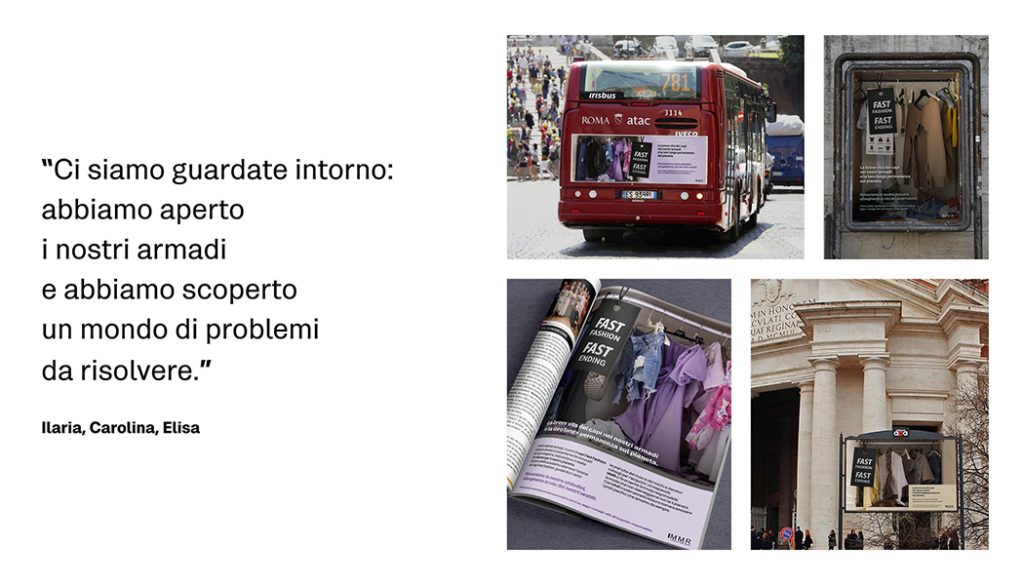
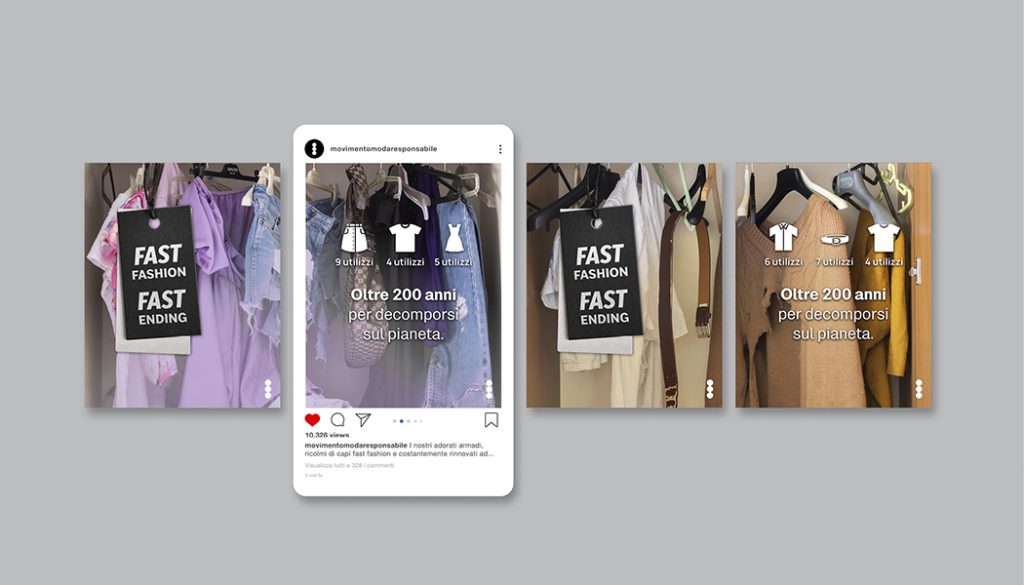
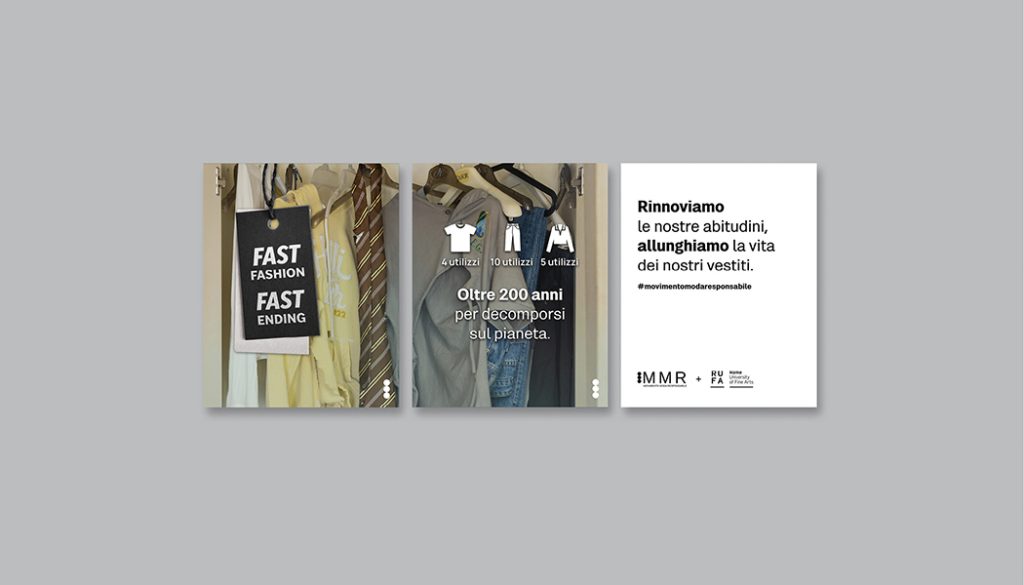
Our campaign focuses on the short lifespan of Fast Fashion products, which we throw away every year after only a few uses, leaving them to pile up in illegal landfills where they continue to pollute the planet for thousands of years. The idea was to present this issue through the metaphor of the death of clothes, represented as a serial cemetery, reflecting the serial and rapid production of these garments. The title, Fast Fashion Fast Ending, is intended to emphasise the concept behind the idea: the speed of Fast Fashion production and the short lifespan of the clothes, while also hinting at how long they remain on the planet.
Ricuciamo il mondo
by Carola Autili, Ilaria Bucci and Elisa Drosi.
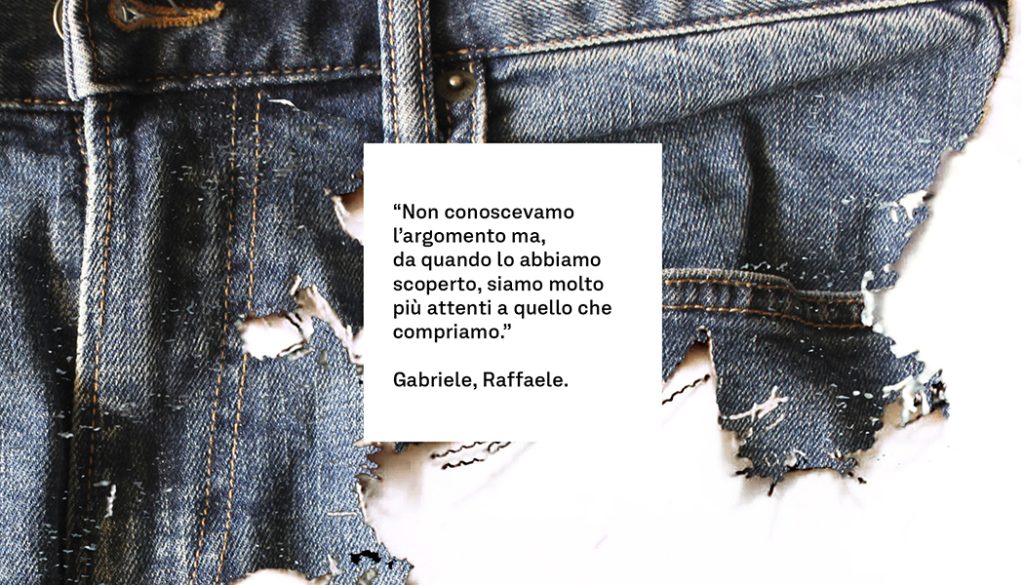
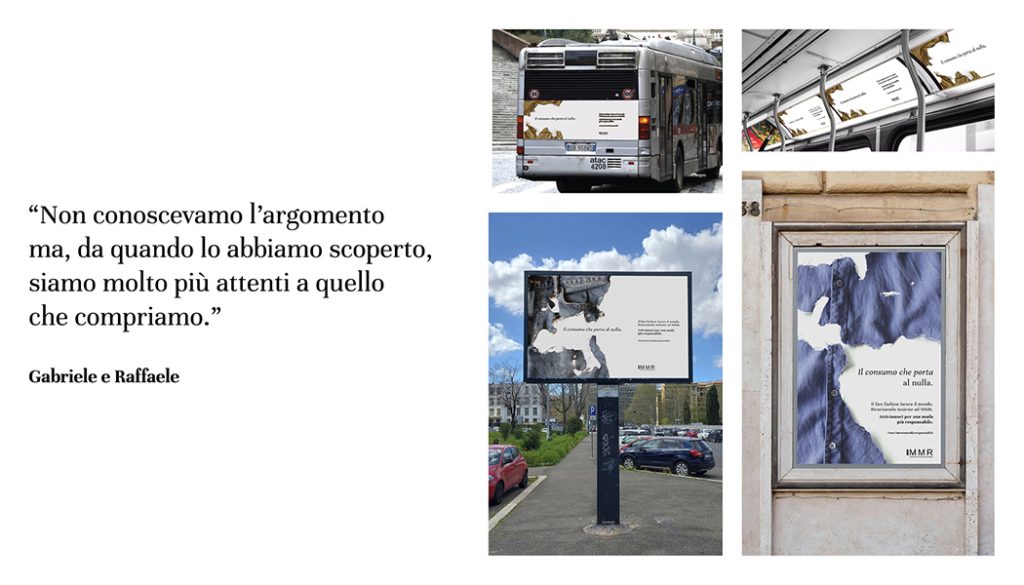
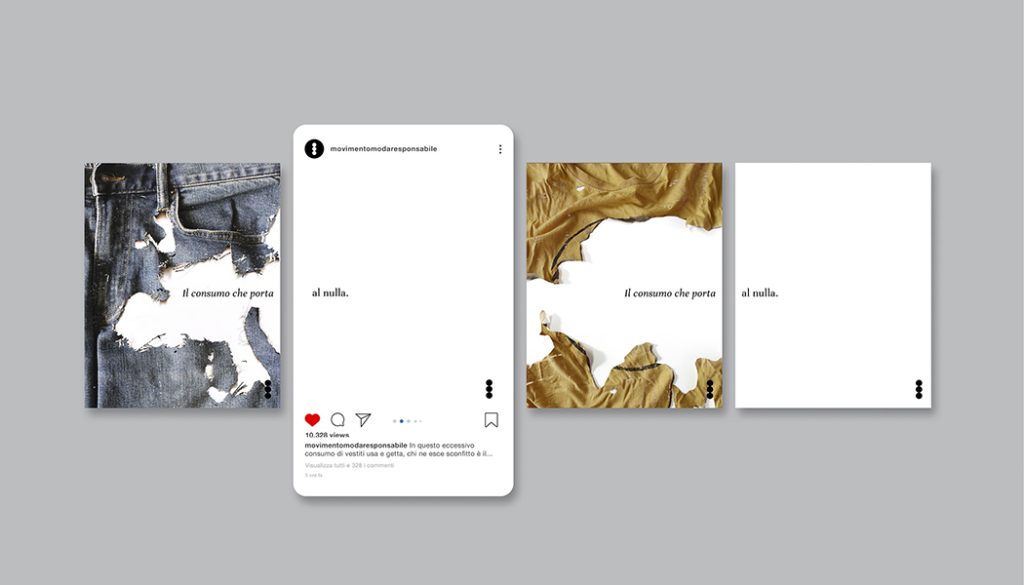
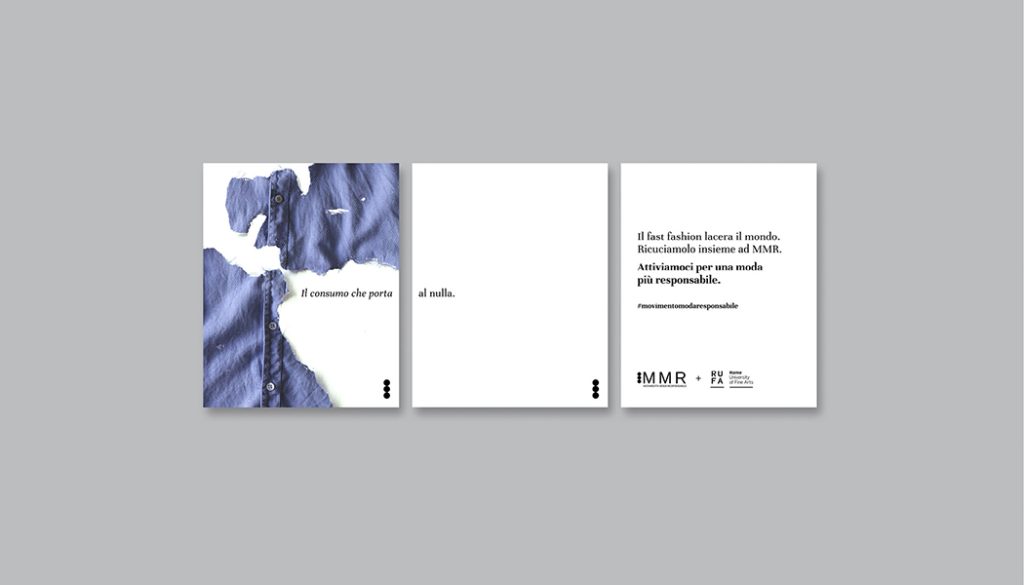
Our campaign focuses on the short lifespan of Fast Fashion products, which we throw away every year after only a few uses, leaving them to accumulate in illegal landfills where they continue to pollute the planet for thousands of years. The idea was to address this issue through the metaphor of the death of clothing, represented as a serial cemetery, mirroring the rapid, serial production of these garments. The title, Fast Fashion Fast Ending, is intended to emphasise the concept behind the idea: the speed of Fast Fashion production and the short lifespan of the clothes, while also alluding to how long they remain on the planet.
I nostri ricordi
by Claudia Fracassi and Gianmario Palombo.
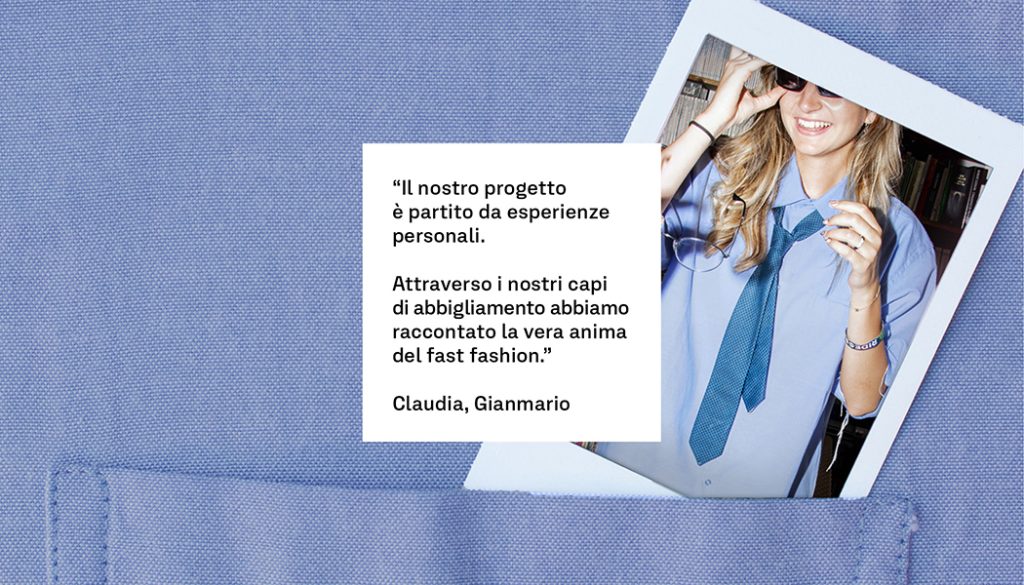
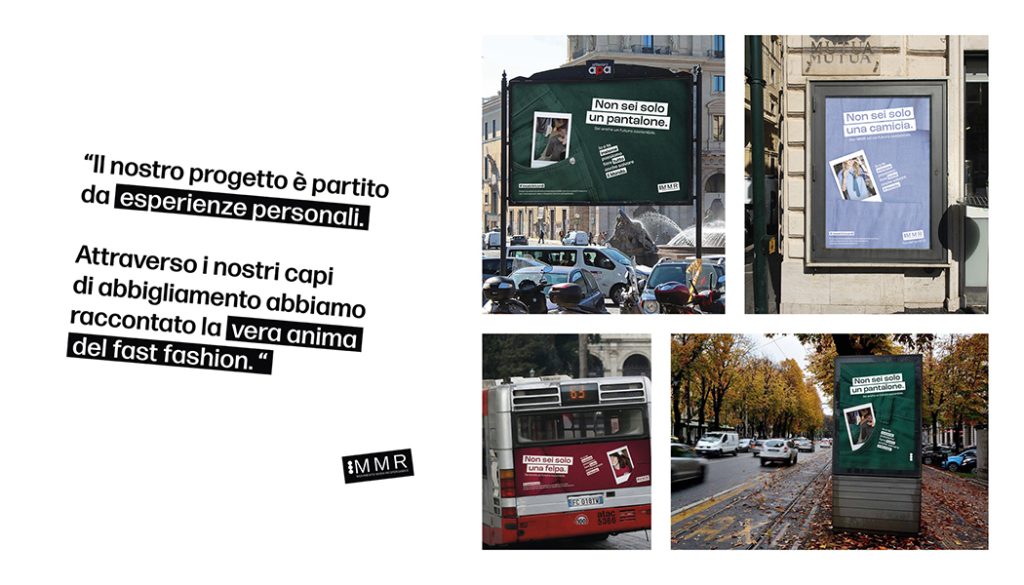
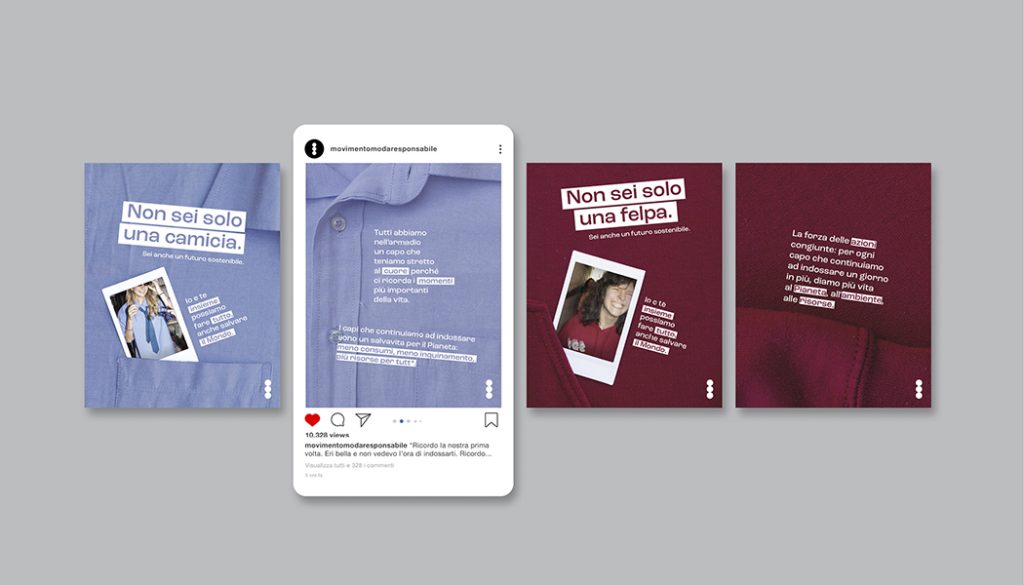
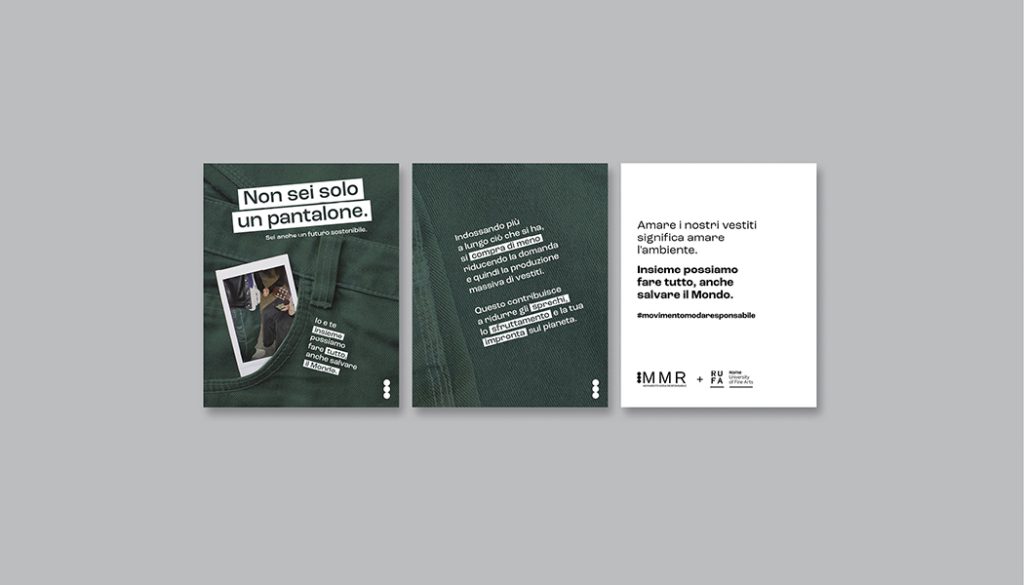
Garments as friends, companions in journeys, stories, loves and adventures. Garments as precious objects to preserve and carry with us through the most meaningful years of our lives.
These garments are certainly not fast fashion items which, due to their inherently poor quality, are unable to withstand time, wear and tear, and the intense use that life demands of them.
This campaign, entitled Our memories, shows in an emotional and impactful way how fast fashion is the enemy of continuity, of emotions, of bonds that endure and hold meaning.
We used a narrative of affection, different and unusual, for a form of communication that aims straight at the heart and conveys a message with a strong social impact.
Problema? Soluzione
by Lisa Romanato and Agnese Troncone.
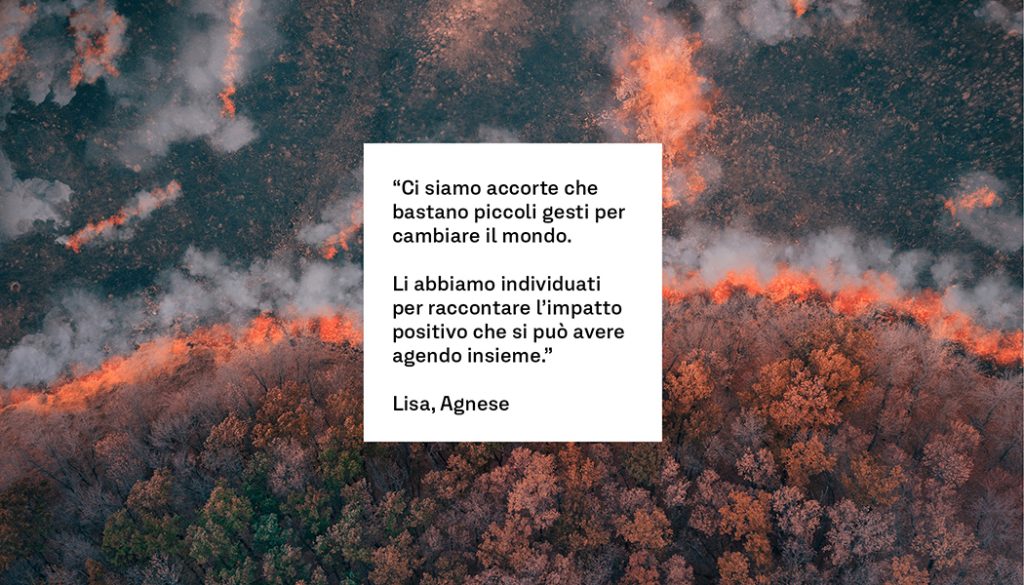
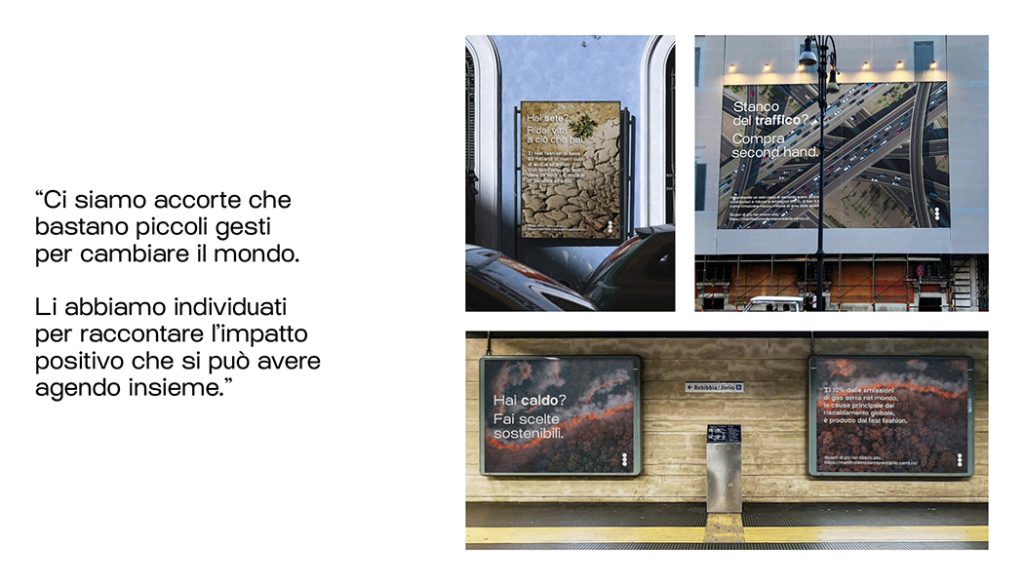
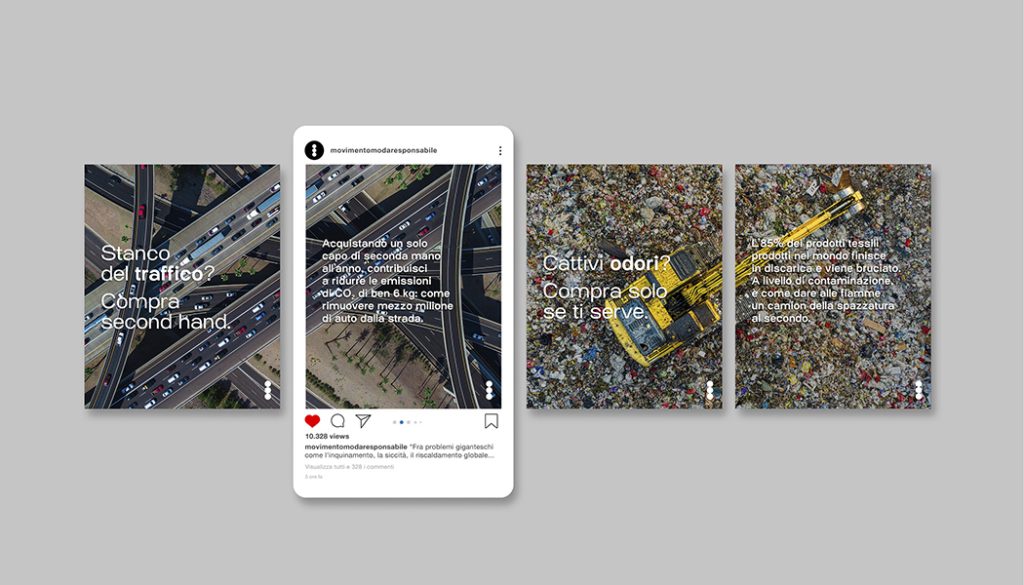
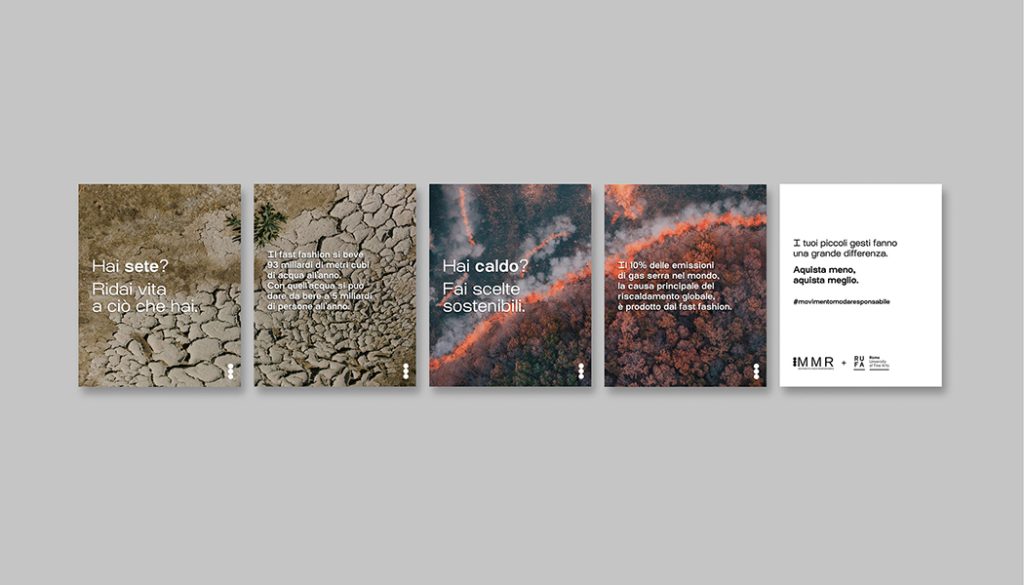
An unexpected, creative and lively campaign that uses the narrative device of surprise to tell the story of the damage and consequences of Fast Fashion. How, in fact, can stifling heat, relentless traffic and the foul smell of rubbish be connected to the fast fashion garments we buy so lightly?
The connection becomes clear when the campaign explains that the pollution and worsening climate conditions we experience every day are also caused by the reckless use of resources driven by the fast fashion industry, which consumes, burns and wastes, altering our everyday actions and making them worse.
This campaign, entitled Problem? Solution, encourages more conscious purchasing, also through the use of second-hand clothing as an effective and fair way to help reduce pollution.