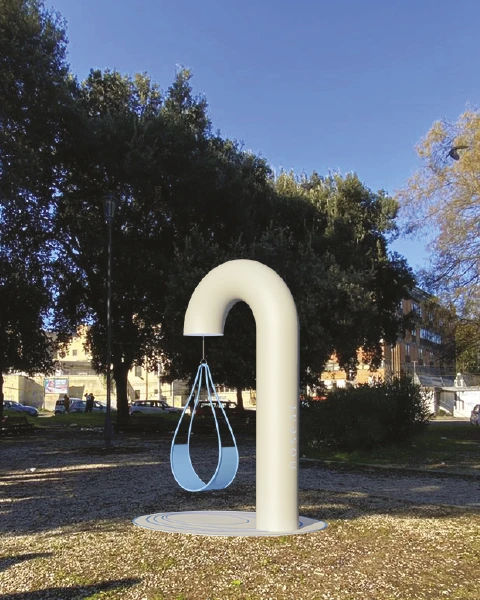
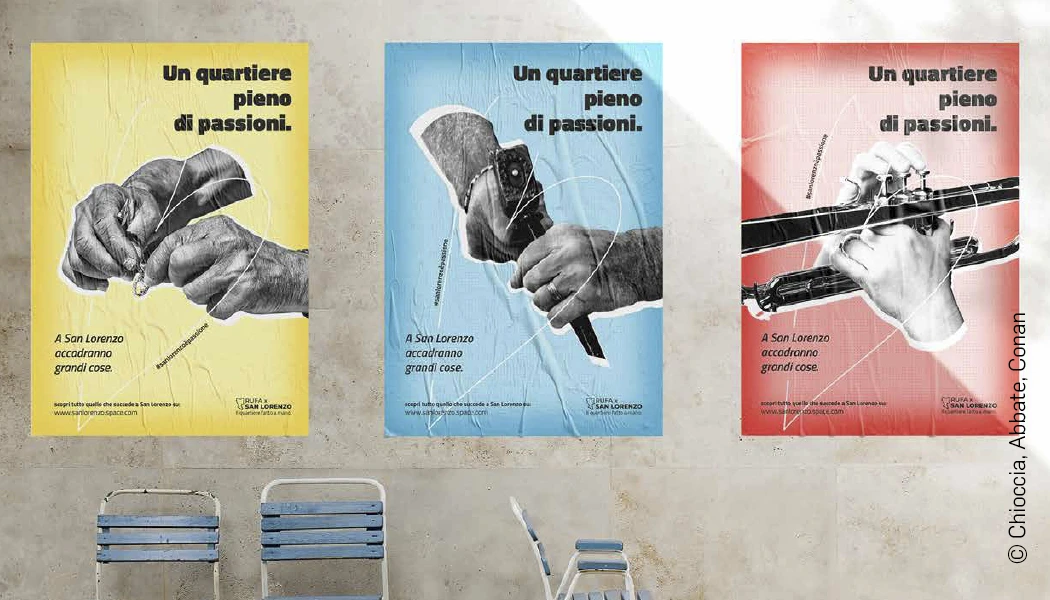
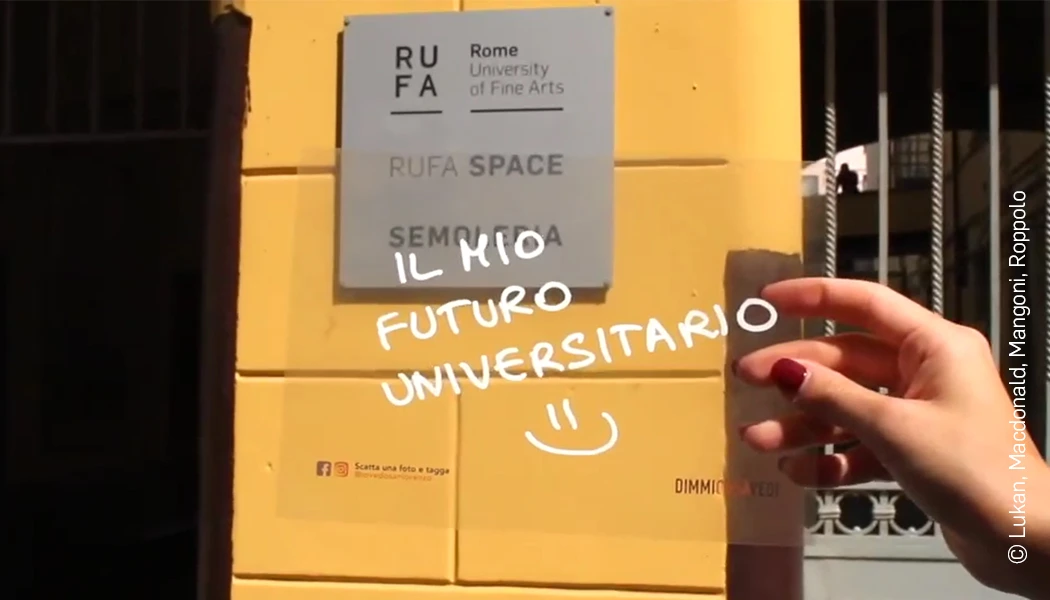
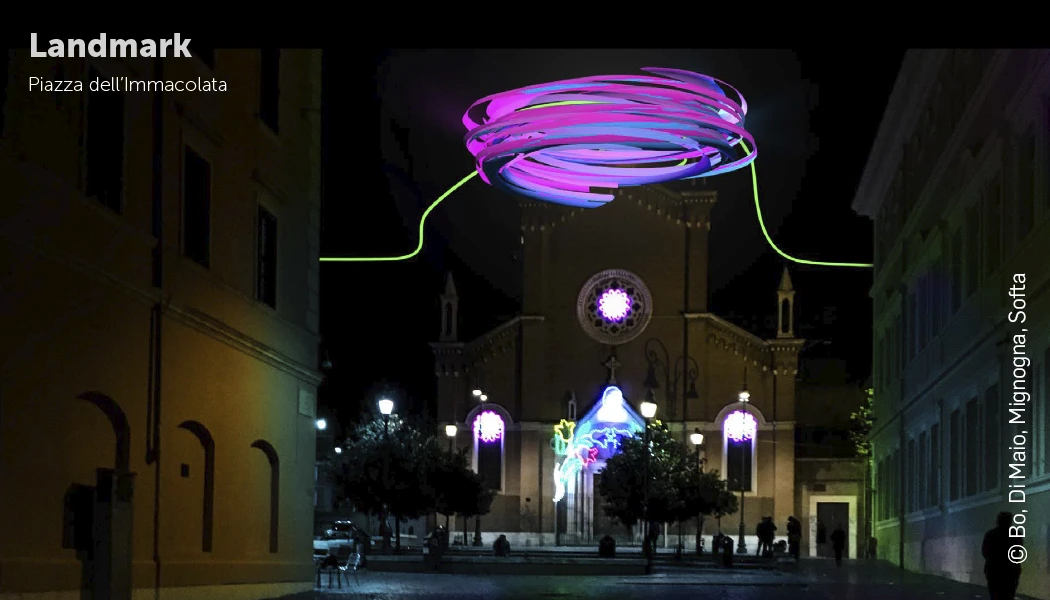
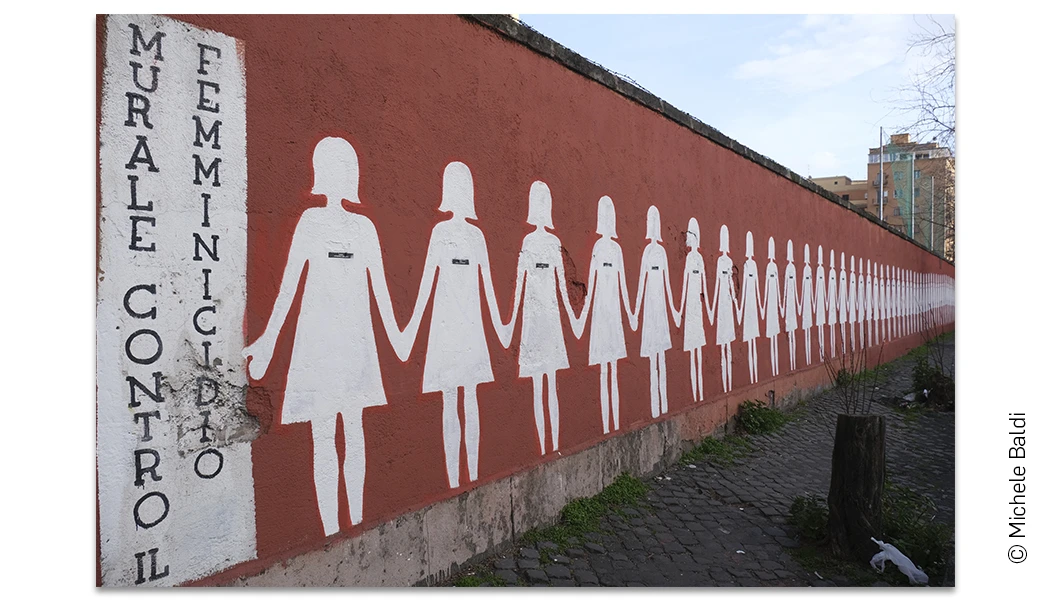
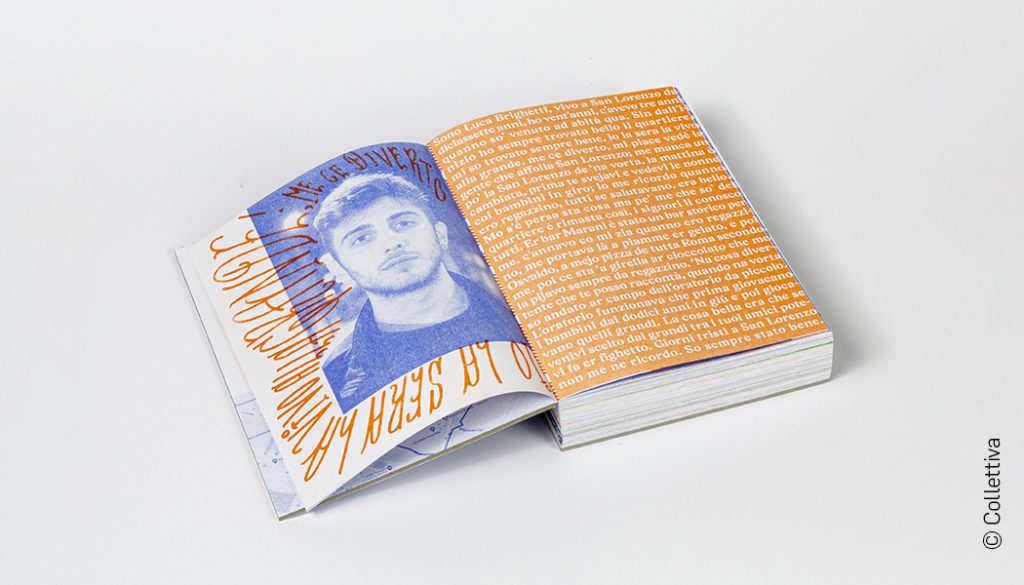
For the 2019–20 academic year, the year of Covid—our own Theban plague—RUFA developed a project focused on the visual identity of the local area, or place identity. RUFA is a community of more than one thousand students and over one hundred lecturers, all engaged in educational programmes in the fields of Art, Design, Communication and Media Art. Given this wealth of expertise, the need emerged to foster dialogue between the different educational pathways, which must influence and enrich one another, and above all to encourage interaction between the specific languages of the various disciplines. A project was therefore conceived involving all the disciplines taught at the Academy, placing the local area—and specifically the San Lorenzo district—at its centre.
San Lorenzo Cultural District
The project
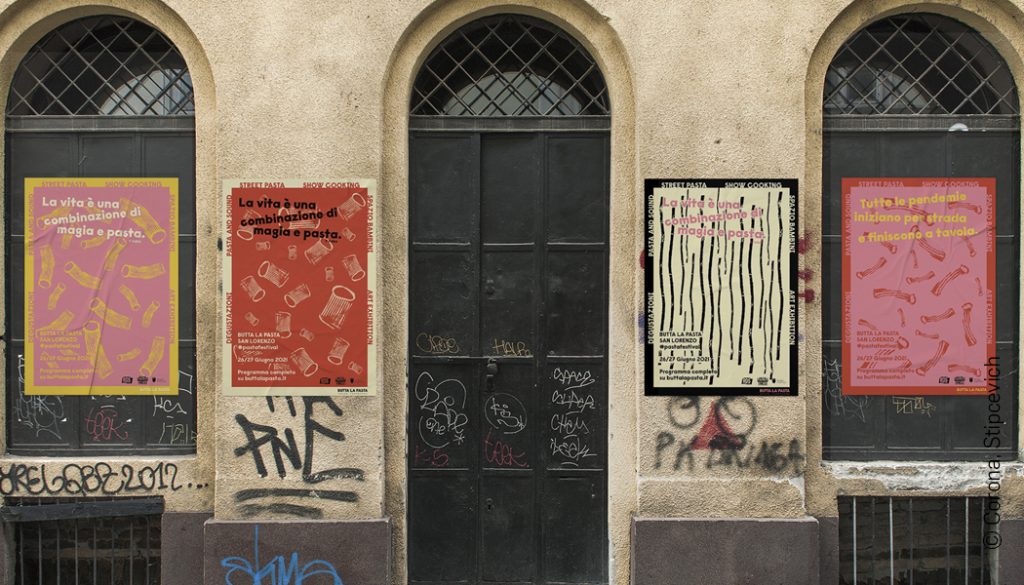
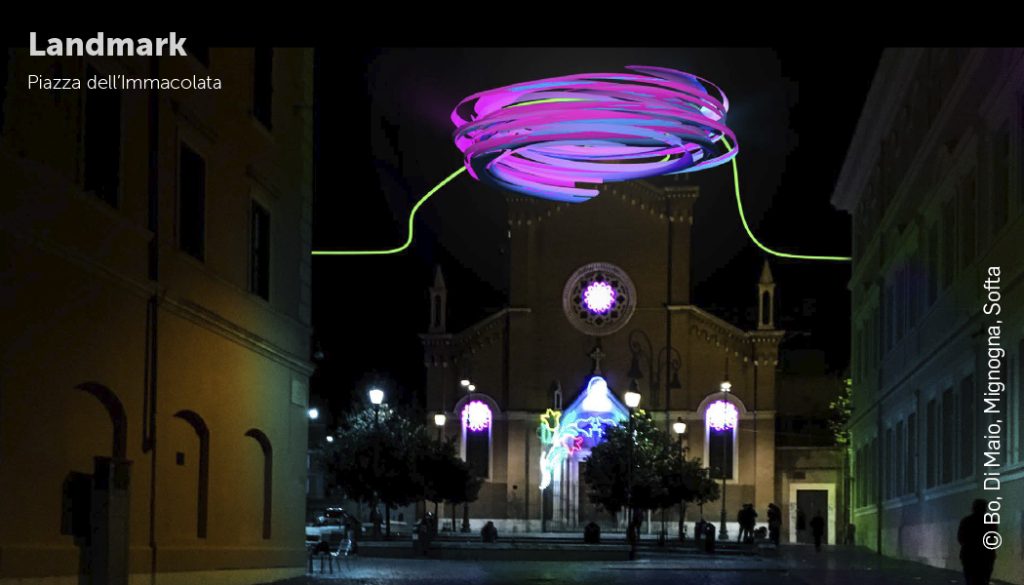
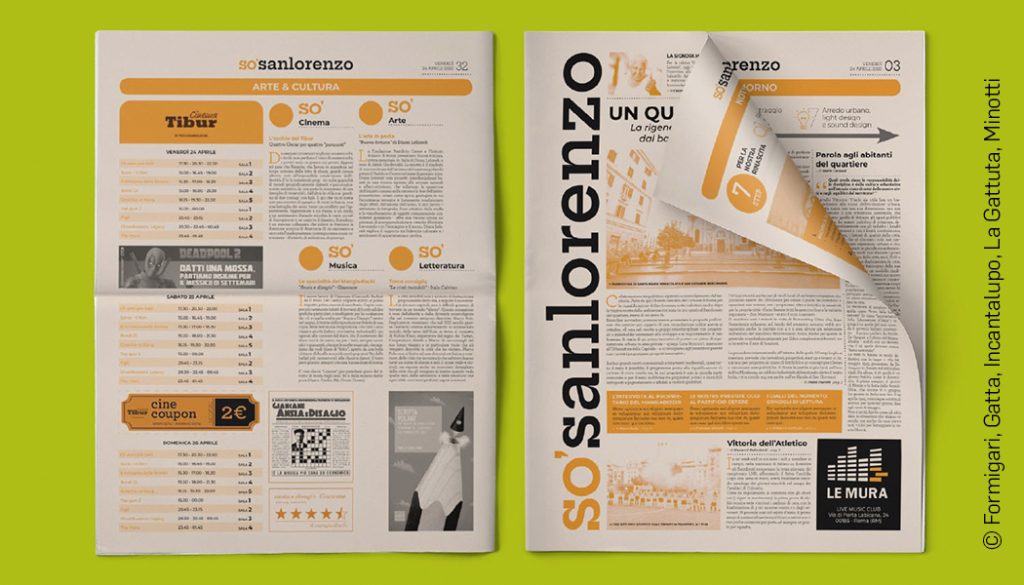
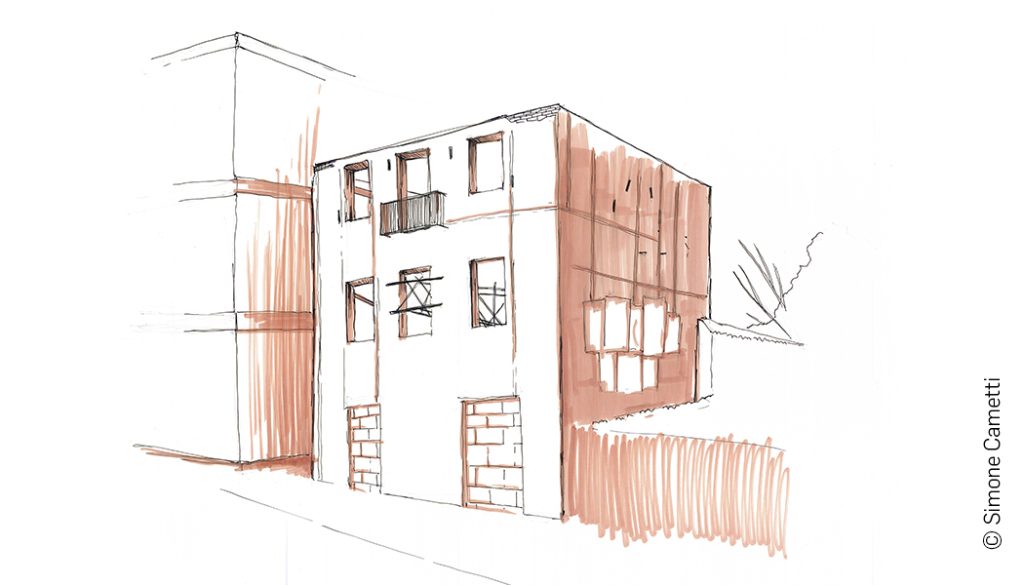
In territorial co-design and advanced cultural districts, citizens and residents become the true protagonists of local development: they were the ones who embraced the projects developed by RUFA students as their own. The aim was not to give the district a new look, but to imagine its future and, through collaborative practices and social innovation (user-centred design), to experiment with new forms of coexistence, considering recreational activities, businesses, the environment, the network of local associations and the district’s economy. Co-design assemblies, as well as informal meetings, discussions and conflicts: this was the ground on which the projects took shape, addressing “design identity”, sustainable cultural production, the reuse of abandoned spaces, site-specific art, street art, app design, photographic reportages, video documentaries, wayfinding, type design, virtual reality, video installations, gaming, web design and everything else that this constantly evolving, “work in progress” research process was able to facilitate. Students therefore left their classrooms, just as residents left their homes, professionals their offices, shopkeepers their businesses and local administrators their institutional headquarters, to come together and imagine their spaces for work, study, everyday life and leisure through art and creativity—the only true driving force behind the sustainable development of our cities. In this sense, the objective became the “right to the city”: without the citizens who inhabit it, without community participation and without public spaces that are actively experienced and shared, so-called “smart cities” have no meaning.+
The Caereris Mundus
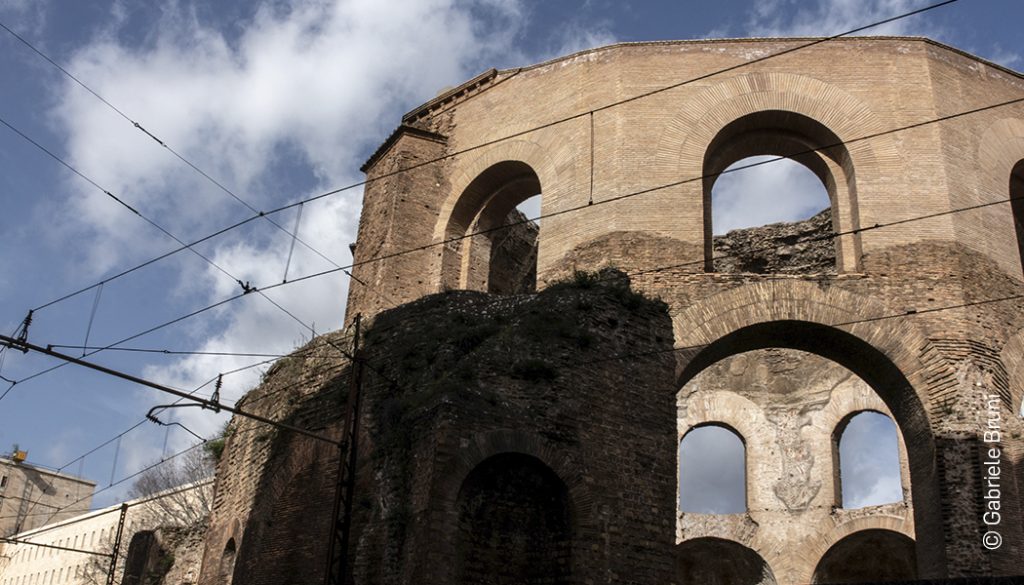
As previously mentioned, RUFA is based in San Lorenzo, in the premises of the former Pastificio Cerere factory. In ancient Rome, Ceres was the goddess of abundance, fertility and harvests, while also possessing an underworld aspect linked to the realm of the dead. For three days each year in ancient Rome, the “Caereris mundus” was opened: a pit which, during those three days, brought the world of the living into contact with that of the dead. The danger posed by the opening of the pit of the dead was not, as we might imagine today through our postmodern narratives, an invasion of zombies or vampires taking over the city—the contamination by the other that drives us to immunise ourselves and close ourselves off from relationships—but the far more real danger that the world of the dead might draw in the world of the living, and that we, having lost every sense capable of humanising our existence, might enter that pit, attracted by nothingness.
In this sense, yes, Rome is a city of zombies: but all “smart cities” are cities of zombies, populated by people who are already dead. Their lives are in the cloud, and their meaning is described by data rather than by the desires of their bodies.
But Romulus did not create a city; he created “the” city, beginning with the Pomerium, with an idea, with a utopian, sacred and symbolic space, imbued with meaning, because the axis mundi passed through its very centre: the line connecting the starry sky with the centre of the earth—the stars, the gods, the world of the living and the world of the dead.
Rome was born there.
Where there is no sacred dimension, where there is no utopia, no city can exist.
Partner
This project will involve a number of Fine Arts and design academies across Europe and will engage students in working within their respective local areas to build cultural districts together with local communities, as described above.
RUFA therefore intends to establish partnerships with European academies interested in working with us to submit proposals under the Creative Europe calls, the European Union’s funding programme for the development of culture and creativity.