On 18 June 2026 at 5:30 PM, as part of the RUFA Culture Fest, RUFA will host the international seminar “How Artists Create: The Hidden Structure of Visual Imagination”, led by Prof. Maria Kozhevnikov, a neuroscientist affiliated with the National University of Singapore and Harvard Medical School.
The event, curated by René Angeramo, Head of RUFA’s Psychological Counselling Service, will feature Prof. Maria Kozhevnikov and represents a particularly significant occasion for the Academy, as it will publicly present the results of an international research project that has directly involved more than 500 RUFA students over recent years, bringing together artistic education, cognitive neuroscience and applied research.
For decades, science has considered visualisation as a general and uniform ability shared by artists, designers, engineers and professionals across different fields. The research coordinated by Maria Kozhevnikov proposes a different perspective: visual imagination is not a single faculty, but rather a structured system of specific abilities that develop differently according to artistic and design practices.
Thanks to an innovative battery of visuo-cognitive tests developed as part of the study, the research team analysed the visualisation abilities of students from different creative disciplines, identifying specific predispositions linked to their educational paths. The findings show, for example, that cinema and sculpture students tend to excel in the mental transformation of shapes, while animation students demonstrate particular strengths in colour imagery and design students in the visualisation of textures and materials.
The seminar will therefore present an unprecedented map of the abilities that make up artistic imagination, showing how creative talent can be understood not as an abstract quality, but as a set of cognitive skills that can be observed, measured and developed over time.
This collaboration enables RUFA to strengthen the dialogue between artistic education and international neuroscientific research, bringing into the Academy new tools and perspectives for a deeper understanding of creative processes.
In this context, the outcomes of the research may become an integral part of RUFA’s orientation activities: the battery of visuo-cognitive tests developed through the study will be used as a support tool during interviews with prospective students, helping to assess and guide more effectively those wishing to pursue an artistic education at the Academy.
«How Artists Create: The Hidden Structure of Visual Imagination»
18 June 2026 | 5:30 PM
RUFA Culture Fest – RUFA Campus – Via Libetta 7, Rome
The talk will be held in English with consecutive interpretation into Italian provided by Irene Capanna.
Free admission.
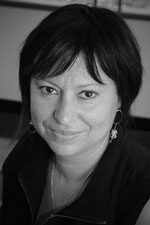
About Maria Kozhevnikov
Maria Kozhevnikov’s research investigates the neural mechanisms of visual imagination and ways to train visualisation abilities. She studies how individual differences in this area influence complex activities such as spatial navigation, learning and problem-solving in mathematics, science and the arts. She also explores methods for training mental imagery and designing immersive 3D virtual environments that adapt to individual differences and learning styles.
She received her PhD from the Technion, Israel, in collaboration with UC Santa Barbara. Since 2001, she has held faculty positions at Rutgers University and George Mason University. From 2005 to 2007, she served as Director of the Science of Learning Centers programme at the U.S. National Science Foundation. She is currently Associate Professor of Psychology at the National University of Singapore, Visiting Associate Professor of Radiology at Harvard Medical School and the Martinos Center for Biomedical Imaging, and Neuroscience Associate at Massachusetts General Hospital.